{npm ’26 • 13}


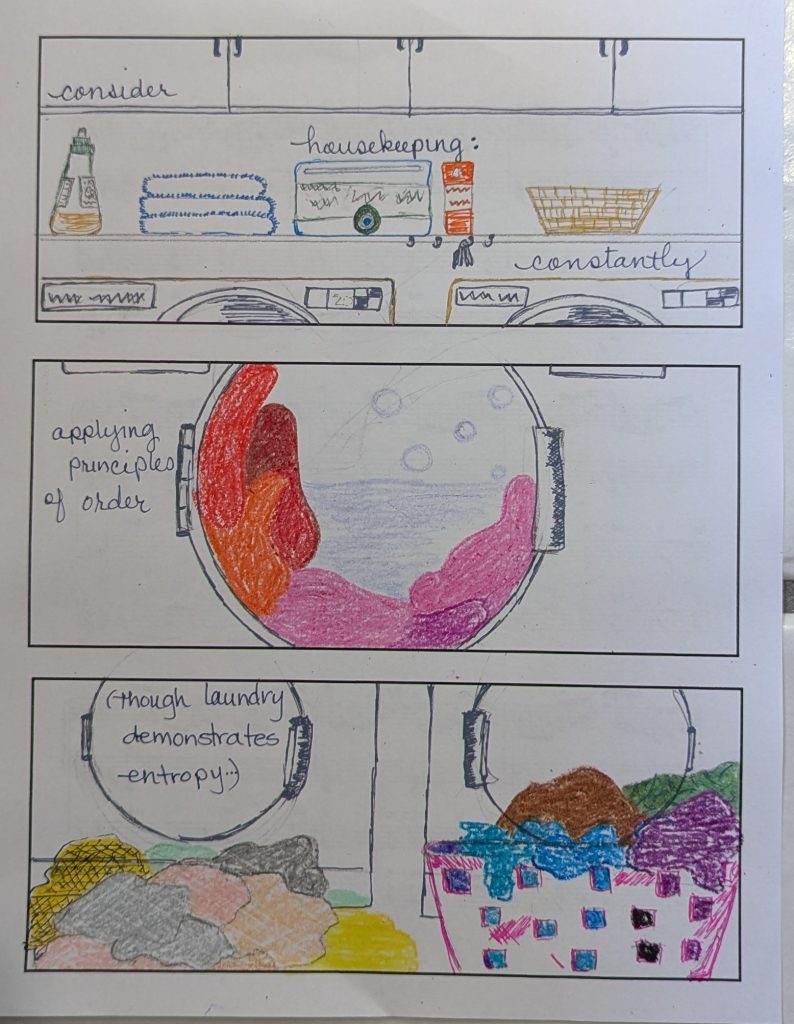
Washday

Consider
housekeeping:
constantly

applying
principles
of order.

(though laundry
demonstrates
entropy…)

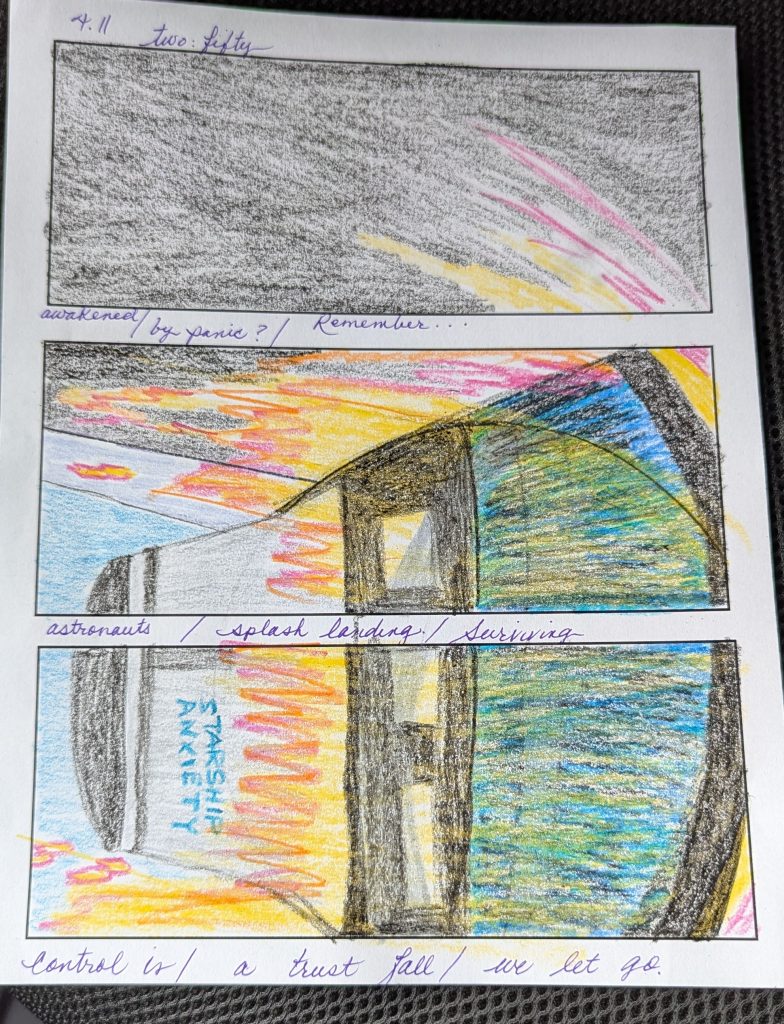
(Since even my washing machines have windows, they seemed fair game for observation.)

Monday, November 13, 1620, the Mayflower came ashore. After they probably kissed the ground in gratitude for someplace solid to stand, the Pilgrim-esses hauled out the wash… because it was Monday, after all, and that’s what one did on Monday.

Every time I manage to do laundry on a Monday I feel some sort of bizarre kinship with hundreds-of-years-ago Englishwomen, who started this, and all who came after… Just trying to impose order on chaos, tying the days of the week to some sort of recognizable pattern, trying to make meaning of drudgery. Good luck to all of us who keep trying…

{constant reader’s reads: a complex western}

Dear TBR,

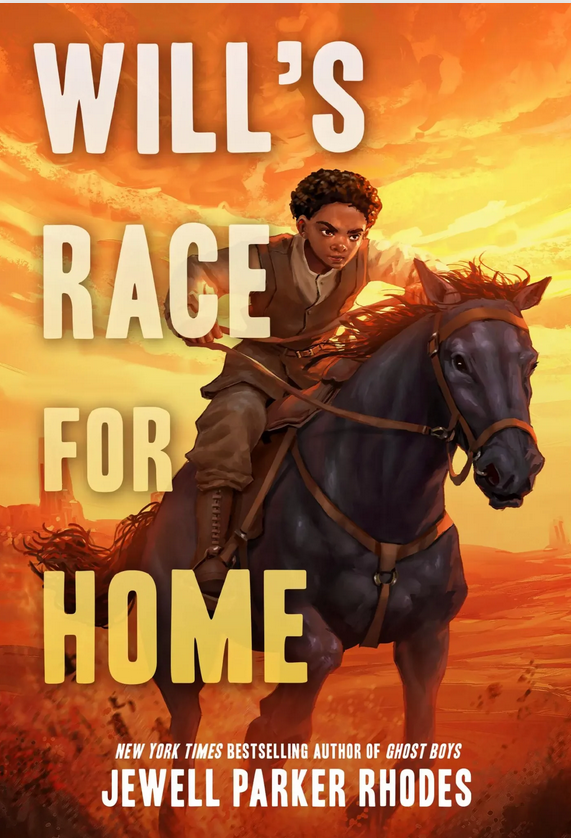
The Indian Appropriations Act of 1889 reapportioned lands once belonging to the Cherokee, Chickasaw, Choctaw, Creek, and Seminole peoples who had been forcibly removed. The Oklahoma Land Rush that same year was an historical event where what was considered some of the best ‘unassigned’ land in the U.S. was up for grabs by non-Native Americans. Historical record tells us that the race started at ‘high noon’ on April 22, 1889, and that an estimated 50,000 people were lined up at the start, seeking to gain a piece of the available two million acres. Jewell Parker Rhodes uses this foundation to tell an excellent story.

Will and his family are sharecroppers in Texas five years after the Emancipation Proclamation. Though their lives changed when Will’s grandfather and father walked away from the Louisiana plantation where they had been enslaved, the changes haven’t been big enough. Sharecropping meant turning over 70% of their crops to someone else – someone who charged them for the seed they used to grow it, leaving them almost no profit. Will’s father finds sharecropping just as unjust as slavery, so when he hears of the Land Rush, it’s a gamble that he absolutely must take.

Unlike Will, who is a bit undecided about life, Will’s father is a long-range thinker; silent, thoughtful, and determined. He hasn’t been soft, or particularly loving towards Will, so when it is decided that Will, rather than his grandfather, will accompany Will’s father on the cross-country trip, Will is both nervous and exhilarated. Could it be possible that they can soon share the type of closeness that Will’s father and grandfather do? Or will the family mule, Belle, remain Will’s best and only confidant?

Along the trail, Will encounters dust, boring scenery, hot days, flooding rains, and Americans – some for whom the possibility of free land brings out their worst, and others who behave honorably. As in any good Western, there are gunslingers, sheriffs, and saloons. Will’s eyes are opened by his travels, and he learns that there are choices which, once made, will change a person – forever. Considerations of the cost of war, what it means to be a man, and how one’s faith can be a prick to the conscience as well as a guide for life deepen this story from mere adventure to something more. Will changes from a boy who thought he knew the answers into a young man who knows that life holds questions that he hasn’t even thought to ask. A great novel for those who like history, Westerns, and complex tales of growing up, Will’s Race for Home should be on your TBR list this year.

Fresh onto the TBR:

  • Gamelit, MCA Hogarth
  • Food for Thought, Alton Brown
  • The Midwatch Institute for Wayward Girls, Judith Rossell

In the words of Hank Green, “The truth resists simplicity.” Never buy the lie that life, with its astoundingly complex array of beliefs and systems, history and sociology, is anything like simple. Neither the story of the theft of the American West nor the story of the settlement of African Americans within the West is a matter of a simple, monolithic truth – that’s why it’s important to read widely and think deeply. Friends, stay reading!

📚 Still A Constant Reader

{constant reader’s reads: another parent trap}

Dear TBR:

I really dislike when I discover a traditionally published Big 5 middle grade book I’ve heard nothing about. Don’t get me wrong, a new book is always a joy, in a way – but in another way, it’s kind of disturbing. Brief research into the film director and novelist who combined to write this would suggest it should have had much more buzz, but the truth is that middle grade gets overcrowded and 2019, when this book was published was a very prolific year for buzzy middle grade publications. At any rate, it was nice to find a wholly new-to-me book that was both touching, funny, and was the reading comp I was looking for.

Bett is named after her maternal grandmother, Betty. Bett with two-t’s is… a firecracker like her namesake – out to grab the world and take it on. She swims, she camps, she surfs, she skis – she takes risks and seeks thrills and would live outside with animals if possible. She gets it from her father, who, after the death of his partner, Phillip, when Bett was just a baby, taught her that life is short, and to grab it with both hands. That’s why when Bett’s dad falls in love, he falls all the way in. The new beau has a daughter just like he does – same age and everything. So, why shouldn’t they be friends? Why shouldn’t they be sisters? Why shouldn’t their first introduction to each other be in the same cohort at summer camp? What could possibly go wrong?

Avery is circumspect, studious and smart – and very much an indoor cat like the father who raised her. Surrounded on all sides by her with adult support staff in the form of nannies and tutors, her father has tried to supply both father and mother, since Avery’s mother is a busy playwright she’s never even met – he’s made sure of that. Avery has asthma, rampant anxiety, especially about large bodies of water and dogs, insomnia, social insecurities galore, and a near-fascination with germs and hygiene. When she is contacted by a girl letting her know that her father is seeing someone, she is first dubious, then cautious – what if this girl is part of some elaborate financial scam!? – and then she’s a horrified that this wildly creative girl whose emails are rife with spelling errors – this is the girl that her father expects her to be best friends with? Nevertheless, she’s polite. Avery does her best to be polite, even when being joined at her favorite summer camp by a girl she definitely didn’t expect.

This book is both charming and hilarious, and the personalities of the girls shine through their letters and writing style – Bett making spelling errors and shrugging, Avery almost visibly wincing. Grandma Betty’s yearning for a life bigger than what she’s found as a retiree in Texas reads as legit, as do the unspoken ambitions and needs of the other adults in the book. Though those are solely shown rather than discussed, this is clearly a book about children and the ways in which their lives are intersected with an essentially controlled by their adults. Some of what’s here would not be obvious to a younger reader not as adept at reading between the lines, but it adds ballast to the girls’ personalities, as they know their adults and read them well, and try to explain them to each other. Romances – friendships – and relationships of all kinds wax and wane throughout the narrative, reflecting the natural ways people go in and out of each other’s lives.

There’s a lot to love about this novel, with its high concept yet heartfelt plot, though it does have its small criticisms. I did wish that Bett’s characterization wasn’t so much dialed to ‘does-what-she-wants sassy’ and leaving out the biracial part of her identity. While the Brazilian part of Bett’s family was her surrogate, her father is listed as African American, as is Grandma Betty. Bett mentions once that she’s alone as a girl of color at the chi-chi summer camp where the girls are sent… and that’s it. I can’t imagine her adults wouldn’t take some aspects of Black culture as a part of their lives together. The paperback cover shows her with a small cloud of curly hair, but though she’s on her own all summer, she never does her hair – it’s not mentioned as anything she has to take time and care with, though Avery mentions that it’s curly. It comes across as if Bett’s dad is a hunky, impulsive gay himbo who works in pool construction – blue collar work – and he’s taken up with a wealthy white architect, the type of person builders, Bett explains, usually fight with. It’s also notable how much the men cry, which veered closest to cliché than any other part of the book I read. The inevitable book-ending wedding aside, this is a love story on several levels – between consenting adults, of course, but also between two girls who choose friendship and its vicissitudes and themselves most of all over whatever their parents, teachers, camp staff, and other friends plan for them – which is a triumph of its own. Self-determination, self-awareness, and in the end, selflessness make all the difference. I’m glad I read this book.


Fresh onto the TBR:

  • To Ride a Rising Storm, Monoquill Blackgoose
  • Books & Bewitchment, Isla Jewell
  • The Merciful Crow, Margaret Evans


Until the next book, 📖

Still A Constant Reader
{come for the poetry friday roundup! stay for the peeps wrestling the raccontino!}

Welcome to Poetry Friday!

Poetry Peeps! You’re invited to our challenge for the month of July! Here’s the scoop: We’ll going to write brief poems called Sedokas. A Sedoka is an unrhymed poem made up of two three-line katauta with a 5/7/7, 5/7/7 syllable count. Since a Sedoka has only six lines, you can totally do this! Of course, we’re continuing our theme of being ‘in conversation,’ next month as well (and since Mary Lee has invited us to join her at A(nother) Year of Reading for protest Poetry on Independence Day next Friday, this might be a great short form to use for that!). Are you in? You’ll have a month to craft your creation(s), then share your offering on July 25th in a post and/or on social media with the tag #PoetryPals. We hope all of you will join the fun!


Whew – just like that, summer has come in, and wow is it trying to redefine the definition of “heat” in much of the United States. To those of you prostrated before your AC and fans, we see you. Normally it’s California sweltering with no mercy, but so far this year we’ve had a really slow beginning to the more vicious heat – which leads us to believe we’ll be in steaming puddles by August, but let’s kick that can of sweat down the road, shall we?

Meanwhile, THIS is the place for Poetry Friday links!

Click, Friend, And Enter


Can I take a moment to revisit my Poetry Peeps invitation for last month and snicker? I wrote, “We’ll going to write a couple of couplets and make a Raccontino. Never heard of the form? No worries. If you can count to two, you can play with this delightful form.” Can anyone tell I’d forgotten that I’d struggled with writing a Raccontino before? The Poetry Sisters did, in fact, attempt them before. In 2015 I bleated, “This raccontino stuff is BLOODY DIFFICULT.” …Heh. So much for the ‘delightful form,’ huh? And yet: while it’s definitely complicated, this time around, it hasn’t been that bad.

From Process…

In Italian, a raccontino is a narrator or storyteller, so it stands to reason that the Raccontino form tells a story. From the title, which some poets compose as part of or an entire sentence, to the couplets, to the end words of the odd-numbered lines, each element tells a small story that braids together into a whole. I came back to this frequently.

When we gathered for our drafting session, the Poetry Sisters recalled our previous processes. Last time I tried this, I tried writing the odd-numbered end line phrase first, the even-line rhyme scheme second, and the title/rest of the poem after that. That worked for most people, except I could only think of long quotes/sentences for my end-line story, so ended up with ten thousand couplets. (I started over a lot, and whined a lot more.) We got a giggle remembering how last time Sara jiggered the end lines only after writing the poem – yet somehow made that chaos work into a beautiful, heartfelt piece. Those who can throw down with chaos do, I guess!?

…to Poetry

This time around, I started with a handful of end-line quotations to use, but some of them were a little too close to the bone, and I abandoned the very first poem I wrote mid-word. What is it about poetry that sometimes leads it to be …well, too true? Anyway, I turned to my back-up phrases and hoped they were a bit more generic. The title of the first one I got through was based on something my little sister said, and the rest is realism based on a comment about ability/mobility and arthritis from another poet in our circle. I liked how they came together.

Because a Raccontino calls for only one rhyming application, as I wrote that second poem, I found myself struggling with the meter. I could write a …decent enough collection of words within the boundaries of the rules, but I spent a lot of time cherry-picking and fussing, trying to find a flow. I gave it up as “good enough” when somehow, a third poem just… suggested itself. I came up with it because I went back to reread my 2015 post and words in conversation with the concept of “it’s a jungle out there,” arrived from the title of my first poem. (And, hand to God, as my friend L says, I didn’t even realize that the first part of the end-line words, “Undeclared, this war rages on, grab hands, stay close” were written in reference to the 2015 undeclared war against ISIS in Iran and Syria until I was writing this right now. Plus ça change, plus c’est la même chose, non? God save us from ourselves.) Because it’s a jungle out there, we need to live with honest hearts and true, and keep each other close… still holding hands before we jump, which I unthinkingly reechoed from the past. Just for fun, I’ll share both finished poems, but the last is definitely today’s winner for me.

I’m Not Lazy, I’m In Power Saving Mode

We ran full-tilt, but now we take it SLOW –
(Our changing bodies outside our control.)

We hustled once, but forced, we’re slowing DOWN,
Extending Pain-Free days is now the goal.

It’s galling when the doctor croons, “Hey, YOU,”
And lays out reasons, with her words cajoles,

Assigning PT. We relearn to MOVE:
(Make no mistake, pain’s jail without parole.)

Our choices going… gone – Have yours gone TOO?
Does freewill feel like what your body stole?

We whine, but truth to tell, life changes FAST
Who knows – someday we might again feel whole.

This chronic pain crap may leave you downcast.
But keep the faith: Life’s mysteries are vast.

You’ll notice I’ve included a little envoi as if this were a sonnet. I don’t know – somehow today it felt like envoi were necessary? Additionally, the image is of the Bay Bridge in SF – not the well-known and fancily painted Golden Gate, but the plain old Bay Bridge which carries much of the common daily commuter traffic – not the 59th Street Bridge, but probably as pedestrian for people just getting to work or cycling across one bit of water to get somewhere else. Maybe the drivers are not yet feeling groovy, but having the potential for it…I like that link to joy in the ordinary.

Other Raccontino wrestlers are perhaps feeling pretty groovy or reveling in the ordinary as they share their forays into this form. I got a tiny preview Sunday and know that Tricia’s efficiently composed poem is here. Sara probably chose more chaos here, Mary Lee – always prepared – is here. Laura’s short and to the point is here, and we can’t wait to see what Liz has done. Karen rose to the challenge and wrestled her Raccontino here. Michelle K’s poem has punch, and we have a newcomer – let’s welcome Diane and her Raccontino to the Peep Squad. Margaret’s poem is here, and Carol V’s lovely poetry-filled post is here. More Poetry Peeps might swing by with their Raccontinos (Raccontini?) and I’ll round ’em up here by the end of the weekend.

Life, Improvised

So, how does it start? You, what, simply hold
Your heart on your sleeve and hang it out there
To sweat in the spotlight – your fate in its hands?
Sounds awful! Exposed! Most people’s nightmare.
A big life says, “Yes.” Acceptance adds, “And?”
An honest life asks that you lay yourself bare.
Why skulk in the shadows when courage cries, Jump!’
Living your truth means that you build wings midair.

Freefall has its benefits — and by and by
You’ll forget about falling. You’ll have learned to fly.


My nephew graduated from high school nine days ago, and turned eighteen seven days ago, so the imagery of jumping into life – nervous, but holding hands – improvising, and learning to fly is definitely on my mind. The younger set remind us we all need a little help to get aloft – our neighbors, our chosen family and friends, and the community we need to keep close, now more than ever as the clouds close in. Elf’s fledgling flight might be a ragged one, with a bit of frantic flapping and barely missing crashing into windows at first, but if he falls, I’m counting on the rest of us to raise him up and run until he finds the wind again – into whatever extraordinary life is allotted to him. Whatever your age, may your circle do the same for you. May we never discount the power of community.

Look for the interconnected stories you’re telling, or have been told, and see where your narrative intersects. Remember that Yes. and And? are invitations to acceptance and connection. Know how well you are loved – and may it fuel you to love in return.

Happy weekend. Be well and do good.

{npm♦4/24}

songs & philosophies

“Should auld acquaintance be forgot and never brought to mind?” – lyrics recorded by Robert Burns.

“Those who cannot remember the past are condemned to repeat it.” – George Santayana

“I wish I were in the land of cotton, old times there are not forgotten.” – Daniel Decatur Emmett

As a fifth grader carefully shaping cursive letters for our daily penmanship exercise, I was often struck by the quotations we were copying. Like so many 80’s men, my fifth grade teacher was an eager early adopter to the computer, and had us doing simple coding the last period of the day, but first period was for penmanship and famous quotations – things he insisted would benefit us greatly in the digital age. We coped quotations from Rudyard Kipling, Robert Service, Ellen G. White, and Winston Churchhill. “Remember where you came from so you appreciate where you’re going,” he was fond of saying. The words ran over us like water, wearing grooves into our brains. Remember. Remember. Remember.

Only now as the American past faces deletions and revisions through the intense ethnocentrism of our current administration do I realize where the Santayana quote fails. Too many of us remember the past – but not everyone agrees on how far ‘past’ it should be.

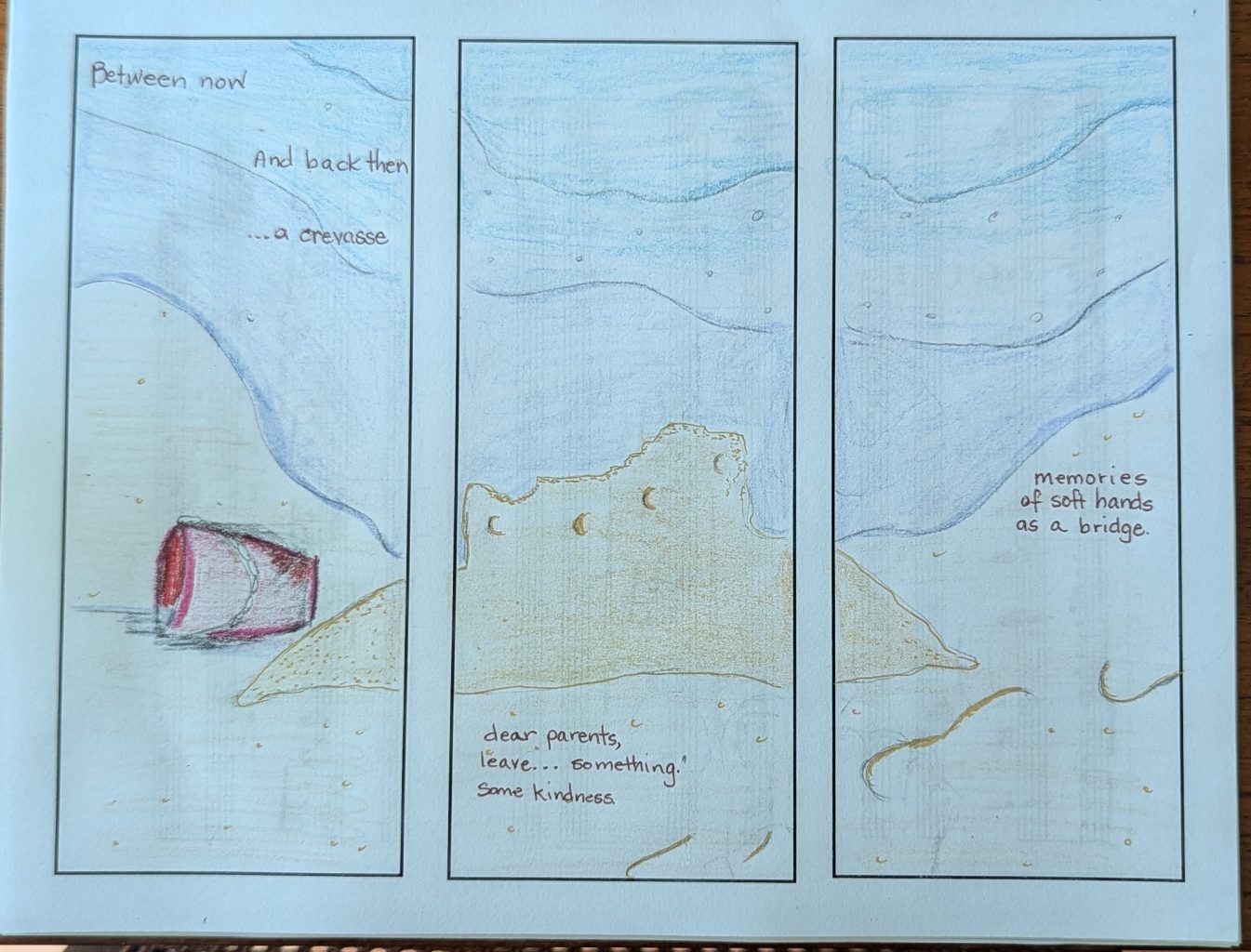
rising behind you
softness from red soil, sunward
pasts wrenched from sharp bolls


{npm kidlit progressive poem}

It’s time! The lovely progressive poem has “progressed” for twenty days, and now it’s my turn! Here’s the panoply of poets playing this year:

April 1 Linda Mitchell at A Word Edgewise
April 2 Tricia at The Miss Rumphius Effect
April 3 Robyn at Life on the Deckle Edge
April 4 Donna Smith at Mainely Write
April 5 Denise at https://mrsdkrebs.edublogs.org/
April 6 Buffy at http://www.buffysilverman.com/blog
April 7 Jone at https://www.jonerushmacculloch.com/
April 8 Janice Scully at Salt City Verse
April 9 Tabatha at https://tabathayeatts.blogspot.com/
April 10 Marcie at Marcie Flinchum Atkins
April 11 Rose at Imagine the Possibilities | Rose’s Blog
April 12 Fran Haley at Lit Bits and Pieces
April 13 Cathy Stenquist
April 14 Janet Fagel at Mainly Write
April 15 Carol Varsalona at Beyond LiteracyLink
April 16 Amy Ludwig VanDerwater at The Poem Farm
April 17 Kim Johnson at Common Threads
April 18 Margaret at Reflections on the Teche
April 19 Ramona at Pleasures from the Page
April 20 Mary Lee at A(nother) Year of Reading
April 21 Tanita at {fiction instead of lies}
April 22 *Patricia Franz
April 23 *Ruth at There’s No Such Thing as a Godforsaken Town
April 24 Linda Kulp Trout at http://lindakulptrout.blogspot.com
April 25 Heidi Mordhorst at My Juicy Little Universe
April 26 Michelle Kogan at: https://moreart4all.wordpress.com/
April 27 Linda Baie at Teacher Dance
April 28 Pamela Ross at Words in Flight
April 29 Diane Davis at Starting Again in Poetry
April 30 April Halprin Wayland at Teaching Authors

(EDITED TO ADD – tomorrow’s line will be found at Rose’s blog, and the poem will go forward from there. Please skip Patricia for now. Thank you!)

For those of you new to the process: this NPM children’s poetry celebration was originally begun by Irene Latham, and the mantle taken up by Margaret Simon, who wrangled this year’s distracted poets into a cohesive whole. Linda M. started us off with a gloriously open April window…

From Process…to Poetry (Line)

April thus far has been a particularly scattered month for me, but reading poetry has been particularly grounding, especially seeing this poem grow in creation. In this April garden, nothing yet has come to grief. It is full of the actions of joy. As I breathed the “gift of the lilacs,” and imagined myself painting and breathing and dabbling and gamboling, I thought about what we verb-y activities we haven’t yet done in this poem – eaten, spoken, shouted, screamed/squealed, or slept (we’re playing in this garden alone, which is its own kind of delightful). I also meditated on the scents on my back porch just now of an evening – orange blossoms from my dwarf citrus tree. It almost feels like we opened that April window into a glorious morning, and now… taking my cue from the thanks at the “day’s end,” and “long-ago springs,” as well as Cousin Mary Lee’s flowering shrubs, I decided to forget about eating (I couldn’t figure out how to fit it in 😂) and drink in a sense of peace and rest. That’s what this April garden has given to me this month. Since we’ve stayed in four lines per stanza, I’ll add an ellipse and begin a new one…and then it’s over to you, Patricia Rose!

Open an April window
let sunlight paint the air
stippling every dogwood
dappling daffodils with flair

Race to the garden
where woodpeckers drum
as hummingbirds thrum
in the blossoming Sweetgum

Sing as you set up the easels
dabble in the paints
echo the colors of lilac and phlox
commune without constraints

Breathe deeply the gifts of lilacs
rejoice in earth’s sweet offerings
feel renewed-give thanks at day’s end
remember long-ago springs

Bask in a royal spring meadow
romp like a golden-doodle pup!
startle the sleeping grasshoppers
delight in each flowering shrub…

Drinking in orange-blossom twilight

{npm♦4/21}

At each head-shaking headline, I wonder where these people came from.

The verb ‘graft’ is a word that means ‘corruption,’ and comes from an earlier English word for a ditch, a moat or ‘a digging.’ By 1906, in American English, it was used in the noun form and by 1915, the verb, adding weight to the already extant phrase “confidence trickster.” A grifter was a chiefly a liar, a conniver, a person involved in the graft and corruption of another, which was a low activity for lowlifes, as low as a ditch, or a moat, or a digging. We’re watching, and history is recording, how such low lives are lived, low and digging lower, together in their muck…

nota bene

Grifter,
Like calls to like:
As magnets call iron
Like waste attracts flies, fools gather
To you.


{pf: poetry peeps pass notes to superman}

Welcome to Poetry Friday!

Poetry Peeps! You’re invited to our challenge for the month of April! Here’s the scoop: We’ll be in conversation with a vintage, antique, or just plain old photograph. Of course, your photograph needn’t be from either of these archival photography sites, but take a poke around, and see what you find. Your poem should be based on an image which is at least, say, forty years old, or at least something you consider “old.” Once you’ve got your image nailed down, you’ve got a month to craft your creation(s), then share your offering on April 25th in a post and/or on social media with the tag #PoetryPals. We hope you’ll join the fun!


When we chose these poems to be in conversation with, I was excited – because the poems were offbeat and a bit amusing, and I thought this would be easy.

Literally EVERY TIME I THINK THAT I should snap my wrist with a rubber band or something. Writing poetry is never a slam dunk when I think it’s going to be. Never. Ever. Why do I keep deluding myself this way???

From Process…

Clifton’s “four notes to Clark Kent” addresses the idea of a rescuer through varying personal lenses. Though she is still writing to him, Lucille Clifton seems to have misgivings about the dude who can leap tall buildings in a single bound… I mean, what good is that, her first poem seems to ask, when she’s dealing with more immediate issues between the four walls of her home? Who can save her from all of the broken dreams and emotional paucity that waits there, him? No – she doesn’t think so. She names him “tourist;” reminding the reader that he’s not from Metropolis – he’s a stranger, a literal alien. While she’s hanging by her fingernails from the edge of a ledge, waiting for rescue, he’s just visiting, isn’t he? Maybe he’s not really there to save her after all. While in her third poem, she appears to forgive him – and forgive herself – for just human and other. The idea of the Superman mythos has inflated him past life-sized and she graciously allows him to shrink. By her fourth poem, she openly decides he’s pretty hot, but I still don’t get the idea that the poet feels he’s all that super – just cute. She calls him by his Clark Kent moniker, referencing his other persona solely as an adjective rather than a name, which I found interesting.

I shared some of Clifton’s misgivings about Mr. “faster than a speeding bullet.” I didn’t grow up on Superman comic books, and the blandly handsome, lantern-jawed superhero in the movies didn’t particularly …convince me, as a kid. As a fellow four-eyes, I was completely OVER the trope of “dreamboat without his glasses,” and thought Clark and Superman looked exactly alike – because they WERE, of course.🙄 Further, his mild-mannered, awkward persona grated on my nerves (I somehow missed the point that he was acting so people wouldn’t equate him with his outgoing alter ego). He was noble to the point of ridiculousness, and I didn’t resonate with him as an American icon. Like Smokey the Bear, he somehow seemed to be just another childhood talking head in cartoon form who told you how to behave. He never seemed particularly heroic to me, so I realized that Clifton’s doubting had infected me, too. Who was this guy who was supposed to save us? And who were we, just …sitting there, waiting to be saved?

…to Poem

When we got together for our Sunday poetry chat, Cousin Mary Lee said she couldn’t find a lighthearted bone in her body and didn’t feel like she could speak to the poem. At which point I thought, “Oh, humor was an option!?” I didn’t have any lighthearted thoughts on Superman either. In my initial draft I had taken a deep dive into the idea of saviors, the idea of Americans exceptionalism, of Americans striding in to play savior – after like as not having started the conflict. I wrote about the learned helplessness of people who have lived with privilege for so long that they don’t ever think anything can happen to them, and about the non-SUPER-ness of people who stop voting and such. *cough* The poem was taking me somewhere I didn’t want to go, so I thought I’d sit down and try being funny – just – out of nowhere. I wanted to write about the really cheesy 80’s Superman movies I didn’t watch until decades later (they DID NOT age well). I wanted to write about Spanx underpants over spandex leggings and capes (“No capes!” screams Edna Mode in my brain) and battling wedgies while leaping over tall buildings in a single bound. I did NOT, however – I restrained myself! Sara probably did too. Tricia definitely wrote something classier, as did Laura. Mary Lee’s poem is here, and here’s Liz’s poem, Michelle K’s poem is here. More Peeps may be checking in throughout the day, so don’t miss the whole Clark Kent roundup. And for more poetry that fortunately doesn’t have anything to do with spandex and capes, visit the Poetry Friday round-up Marcie Flinchum Atkins’ blog. Thanks for hosting today, Marci.

While I didn’t write about wedgies, I did try to write amusingly, so… I thought about Lois Lane, who tried so hard to be cool about Superman, but… she just was not.

Notes Passed To Lois Lane (Probably by her editor, Perry White)

A bird, a plane – wait, what?
This SUPERficial scrawl
Is not your best reporting, Lo,
This needs an overhaul.

He’s SUPERMAN, he…does!
From dawn ’til dusk he slays
the dangers to Metropolis
that threaten disarray –

We stan a Man of Steel
God knows I respect hustle…
Just… write less on forehead curls
And shoulders bunched with muscle…

Okay, okay, I know and YOU know that Lois Lane Would Never, she was a thorough-going professional. But it still made me smile.

I’ll be honest – I couldn’t salvage this other poem. The ‘serious’ one was plunging down a lot of rabbit holes I don’t have the energy to follow, so I sort of tried to pull back on some of the over-emoting, and left it where it lay. Reminding myself that this poem is in conversation with the others is what helped me stay more on track — and while this doesn’t yet say what I need it to, it’s a start. If nothing else, I do believe that if we don’t hang together, we’re all going to hang separately, and despite my little red hats, I mean that across aisles and political divides. This is bigger than the red v. blue v. green color war, I’m afraid.

Notes In The Margin of The Daily Republic

Not any man would do, we’ll want SUPERman:
SUPERlative – from cape to brawny chest.
Spotlighting our best selves, and our SUPER land,
Our destiny to be forever blessed.
Granite jaw and steady stare – he’s sensational.
SUPERbly snaring manhood in his trap
With orphan-makes-good tropes. He’s educational
He models how to rise on our bootstraps…

Why an alien would show up when we’re losing,
To fight the thugs Metropolis can’t stop
No one ever seems to ask. It IS confusing
…The comics show folks screaming “Help!” nonstop,
And the victims standing, looking ’round for saviors,
Wringing hands instead of maybe calling cops…?

In MY book I’ve inserted on page borders,
Small hands cupped ’round a tiny screaming face
Which shouts, “People! Don’t just stand and wait for orders!”
In YOUR Daily Republic – your birthplace!
For future’s sake, speak up – protect what matters
Resist and rail against the treasonous.
One rock is small – a rock slide buildings shatter…
Join hands. We’ll be the ones to rescue us.

I’ll be ready Poetry Friday notes from a short beach glass hunting sabbatical, but I’ll definitely get around to answering any messages. I hope you take – and are taking – some time away to get outside and witness this slow turning of the seasons, as the earth wakes and stretches toward the possibility enshrined in Spring. Turn off the noise for a while, and just be – and then breathe. I plan to not just touch grass but touch rocks, possibly newts and beetles. (Anything squishier may require gloves.) While it’s true that no one is coming to save us, with any luck, and a bit of cooperation, there’s still enough to save of ourselves. Happy Weekend.