{constant reader’s reads: a procrastination smörgåsbord}

Dear TBR,

The book world is such a fun place, and people in their fandoms are crazy in a good way. Going out into that world sometimes is a good reminder of why we write, of who our readers are, and how awesome this whole job can be.

Of course, stories like Maggie Tokuda-Hall’s remind us of how NOT awesome it can be, but it’s usually publishers/politicians and not readers who are responsible for that…!

It’s been a good reading month, though busy; work is moving right along at a good clip. Hopefully I’ll eventually noodle through things in a timely fashion, but until then I’m procrastinating reading like mad.

THE RENAISSANCE OF GWEN HATHAWAY: RenFaire novels are a particular love for me; Jen DeLuca’s WELL MET series is a particular favorite of mine (and I’m hoping someday Grinnell Russian Lit professor Kelly Herold will someday finish her portal RenFaire novel which includes time travel and a lovely villain). I love Renaissance Faires more in theory than in practice, however, because they never feel like a place for people of color, celebrating, as they are, a mostly made-up history of a time which didn’t feature people of color. This novel does, however, have a Black girl in it as a love interest – AND there is size and queer representation, as Gwen is a fat heroine being wooed by Arthur, a thin and somewhat nerdy boy with two Dads. I love Arthur. I want to hug him and squeeze him and call him George. He made me cry by being awesome. Gwen is dealing with her first Renaissance Faire after her mother’s death, and is trying to take her place as the jewelry maker for the family’s stall. Her father, who, like her, is mostly non-communicative and not apt to try anything new, are really struggling, and the story of how they struggle through this year anniversary of the death of the bright and beating heart of their family is worth reading.

LUCY CLARK WILL NOT APOLOGIZE: Lucy Clark’s parents are absolutely insane. They are… self-help gurus, and nutters who – okay, only *I* think they’re nutters, but I’m not a huge fan of people who treat self-help like a new religion. ANYWAY. It’s mostly Lucy’s Dad who is very popular on the self-help circuit, and Lucy is basically neglected, sent to an absolutely hideous boarding school, and then when she gets into trouble, not only is her best friend withdrawn from the school, she is suspended and sent to one of her Dad’s protegees, who is supposed to be a positive influence on her. That person is supposed to find Lucy something to do that will turn her onto a new path. That new path comes in the form of being a companion to an elderly woman named Edith.

Rather than the awful-piled-on-awful task that Lucy fears, Edith turns out to be AMAZING, with an amazing best friend, fun and quirky inhabitants of the New York converted mansion in which they live, but there’s one small snag: Edith is convinced someone is trying to kill her. Convinced. Eventually, Lucy begins to believe that something is …up. But, who is trying to scare an old lady? And why?

This is a meandering mystery with a lot about being enough, about having self-esteem, about not apologizing for surviving and standing up for yourself. The boarding school and teacher are SERIOUSLY OTT awful, Lucy, though sixteen, is almost written as a middle grade student, her emotional inner life seems to be so simplified, and the denizens of Edith’s house seem to come straight out of a Ransom Riggs novel – they’re all so quirky as to not seem real. But, it’s a fun, slightly Gothic mystery nonetheless.

NIC BLAKE AND THE REMARKABLES: I couldn’t really review this novel until I’d had my moment interviewing the author — and while I made a point of not discussing spoilers then, I *really* want to avoid them now. Nic Blake is homeschooled, Black, and Gifted. REALLY Gifted — in a way that’s like magic, only stronger. (As the author says “Wands are evil in this book… take that the way you will.”) Nic’s family has an ancestral gift which manifests as power to do things. The people – her enslaved ancestors – could fly. They flew away from slavery and lived in a place called Uhura, which in Swahili means “freedom.” Nic doesn’t know much about the details, though. She’s never been to Uhura. She lives with her Dad, and the two of them move a lot. Most of the people they know are Unremarkables; ordinary humans without the Gift. The reason for that, and the reason her next-door neighbor can tell her new puppy is a Hellhound is part of a lot of other secrets and surprises are found as they put their all into doing something that feels impossible for a couple of kids — saving Nic’s father from a fate worse than jail.

Way back in the day, the Wizard With the Scar books were praised for hooking the reader with myriad New Things Per Page. The author has all of that going on, plus multi-layered bits of Black history, emotional resonance and themes of self-esteem, being “enough,” and using your God-given gifts, even if you aren’t particularly remarkable. This is going to be a very, very popular fantasy series.

WHISTLEBLOWER: I have a *lot* of mixed feelings about this indie book. I have a lot of mixed feelings about being a whistleblower, too, I guess. Sometimes knowing that Something Should Be Done about a thing, and actually setting out to do it are two very different things. In this New Adult novel, college student Laurel feels somewhat invisible and unmoored at her college. She’s made it onto the paper — but she’s basically coasting through life, showing up late, hung-over, or both, to almost everywhere. It’s …fun? But “fun” for a college junior is wearing a bit thin. It’s almost a relief to Laurel to get the story she’s pitched to the paper rejected — it’s the kind of story she figures the paper won’t really run with, because it’s based on hearsay, because she stayed out too late partying and couldn’t come up with anything stronger. She’s disgusted with herself for not taking herself seriously enough to do her best — but then, her story gets scooped by a stronger, sharper writer — and in a twist, that other girl gives her credit for the idea. Their editor decides that they both should investigate to uncover whether or not what they suspect is true. As it turns out, Something Rotten is happening at the college with the football coach, the man whose finger is on the pulse of so many futures. Laurel just wants to help the people he’s hurting, but the golden boy quarter back of the football team is baffled, hurt and infuriated. He swears the coach isn’t who Laurel thinks he is. Laurel swears otherwise. They set out to prove each other wrong – and of course catch feelings along the way. Suddenly it’s turned out that Laurel is a whistleblower — and she’s not sure that’s what she ever intended to be.

This story was a little scary to read, as I think the world is actually uglier than the way the author portrayed it and I worry when people downplay things. Young women get death threats these days from looking at someone wrong — I think the author deliberately brushed lightly over quite a few things which I felt were more serious. I also felt like Laurel drank way too much — and that’s my Old Lady coming out, I’m sure, but she didn’t seem safe enough to kick back and not have all her senses about her. The jocks and sycophants surrounding her were some nasty people and I kind of wish the author would have taken things more seriously — BUT, this was meant to be somewhat light and not erring on the side of too message-y. Did I like it? I’m not sure yet – a very mixed bag, but also interesting and thought-provoking.

Fresh onto the TBR:

  • Enter the Body, by Joy McCullough
  • Both Feet in the Grave, Jeanine Frost
  • The Secret Service of Tea and Treason, by India Holton
  • In Memoriam, by Alice Winn


Until the next book, 📖

Still A Constant Reader
{constant reader’s reads: cultural connections}

Dear TBR:

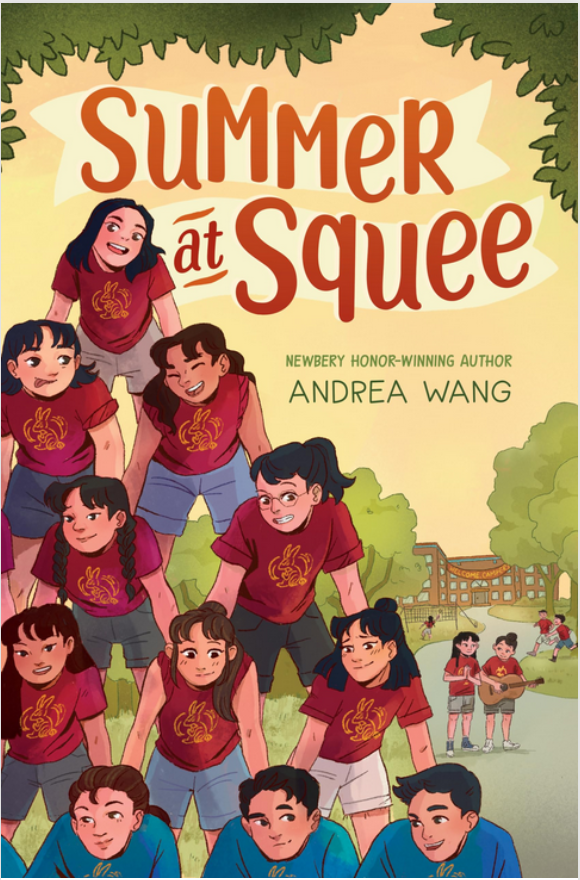
The Read Harder Challenge that Book Riot does every year hasn’t been something I’ve felt too much need to participate in, because it was originally started to expand people’s reading horizons, and… I like mine where they are? Meaning, I do make a point of trying to read a leeeetle nonfic, quite a few books by writers of other ethnicities and cultures, including queer and disabled cultures, and a couple of books in translation per year. That said, this book snuck up on me. It’s …brilliant. And? I wish that there had been – or were – Squee Camps for all kids in a racial minority with a 90’s hyphenated identity (I say this acknowledging that some people reject the labels of “Whatever-American” and just say Black or whatnot). I worked at a summer camp for six years, and served on its board for a few years, so I’m all about summer camp books, but this one is a step above! If I’d read it in junior high, I would have wanted to be Chinese-American, just to include myself in the sense of belonging that the characters in this book eventually find.

Phoenny Fang isn’t ready for her last summer at Chinese cultural camp. The Summertime Chinese Culture, Wellness, and Enrichment Experience – “SQUEE” to those in the know – ages out its campers in the eighth grade, and so, this summer is IT – it’s going to be the BEST summer of Phee’s life, and she’s here for the special camp things – the crafts, the games, and the bonding. With her squad of ten close friends, she expects to have the Best Time, Ever. Of course, being that this is real life, nothing goes as planned. For one thing, Phee and friends are NOT in the same dorm. She’s rooming with her best friend, fortunately, but some of the rest of the girls she’s been hallmates with since forever are on aren’t close by. Second, there are two new girls in her the group, and it’s clear that they’re hostile. They hate camp, they hate cultural Chinese stuff, and they seem to hate Phee especially. EVERYTHING Phee does is wrong – including Mandarin words in conversation. Asking questions about their Chinese names. Even smiling at one of the new counselors in training – who has also been smiling at Phee, which makes her feel…feelings. Phee is spiraling. Not being with her friends, not getting her first choice in activities, and dodging weird feelings and hostile new girls is making what should be fun hard. Squee has always been a haven that Phee as looked forward to every year. Why are these new girls even at SQUEE if they hate Chinese culture so much? Why is everything coming apart?

Phee’s plate seems overfull already when the SQUEE socials are attacked by anti-Asian trolls. Suddenly there are new safety rules, a craft making holders for security whistles, and a renewed sense that the real world is intruding. All Phee wanted was to have the best camp experience ever, to end her time as a SQUEE camper on a high note, just like the previous summer. But, when it becomes clear that she’s trying to hang on to something that will never happen again, that she’s trying to keep Squee exactly the same as it always was – even when the new girls’ experiences make it clear that it needs to evolve and expand – Phoenny realizes that in order to have a memorable final summer at SQUEE like she wants, things have got to change.

One of the things I love about this book is that it is honest and speaks genuinely about the experience of being a hyphenated American. Phoenny is unhappy about the changes that have come to the camp, but one of them is Hall Meetings, where the campers give Snaps, Squawks and S’Ups each evening to kind of discuss their day. Snaps are compliments – and everyone is required to share those, Squawks are complaints, and S’Ups are questions they have for their counselors. As it turns out, these Hall Meetings are where the author put some of the most baldly honest interactions between the characters. Some might argue that the conversations between the characters aren’t quite realistic, and that no tween is that honest or articulate, but I would argue that this being a work of fiction for middle grade/junior high kids, that honesty is important. Here the characters discuss their feelings about being at a cultural camp when they’re Chinese kids adopted by white parents, they discuss cultural heritage trips, which are a real life joint effort by the government of China and the U.S. to encourage Chinese-born Americans to return to visit, and they discuss the pitfalls of speaking Cantonese or Mandarin well, or not at all. They discuss feeling like a “bad Asian” because of the perception of their white peers — or of their Chinese relatives at times — that they don’t know enough, aren’t acting Chinese enough, and aren’t good enough as they are. Most hyphenated-Americans I know would cherish these types of conversations if they allowed themselves to be honest enough to have them. This book would work best, to my mind, for OLDER MG readers. I would LOVE to read this book with a book club or a social studies/literature class – the discussion prompts here are worth gold.

Acknowledging that there are hundreds of new books from various children’s lit publishers every year, I was nonetheless annoyed that I had missed this one. Where are its accolades and fans? This is just as important a book as many other books coming out in March 2024 which have gotten ALA props. Still, this won has a ⭐️ Kirkus, was featured on The TODAY SHOW: Read with Jenna Jr. 2024 Summer Reading List, is a 2025 Charlotte Huck Honor Book for Outstanding Fiction for Children, a Junior Library Guild Gold Standard Selection, and was honored as a Horn Book 2024 Summer Reading: Middle School selection. So, okay. I am now officially less annoyed. Respect to Andrea Wang, and here’s to more excellent books like this one.

Fresh onto the TBR:

  • Somebody’s Daughter, Ashley Ford
  • The Friend Zone Experiment, Zen Cho
  • The Tribulations of Ross Young, Supernat PA, A.J. Sherwood

We are more than our outsides, more than looks that tags us with a label and put us in a box. Here’s to books to help us remember we all have worthy insides. Stay reading!


Until the next book, 📖

Still A Constant Reader

{constant reader’s reads: a girl who shines}

DEAR TBR:

This is the year’s first novel-in-verse that I’ve read – and boy, does it shine.

The year is 1963 and fifth grader Cooper Dale is not looking forward to her school year. She has The Mean Teacher, and she’s dreading dealing with Ms. Keating, whom everyone says is just terrible. Cooper hates being the only Colored girl in her class, and hates how everyone looks at her when the history lesson is on slavery. Only the summer before, four girls only a little older than she is were killed in a church bombing by the Klan. The world seems full of scary, mean white people who hate her for being the color she is, and it’s dispiriting and exhasuting. What makes it all worse is a boy named Wade Carter, because Wade just can’t seem to leave Cooper alone. He is a bully, and his bullying is almost always racial in nature, taking the form of microaggressions that are not terribly micro, when taken together. Wade wears Cooper down. She loves her family, loves their gatherings, and otherwise loves her culture, but at school, she dearly wishes that she were white and could blend into the crowd.

Cooper is a worrier, and like many kids in early middle grade, though her worrying is part of her growing up and growing to see adults – and the larger world – as entities separate and with their own backstories, those worries sometimes consume her. She worries about her parents, and wishes they didn’t have to work so hard. She worries about disappointing them, and worries about seeming likeable. She worries that her siblings and cousins and extended family will be ashamed of the way she thinks and feels – and sometimes acts. Cooper feels like it’s harder to be herself – whoever that is – because her parents have told her repeatedly that she needs to “shine” in all that she does. To Cooper, that means that she should make straight A’s. She struggles with this. More, as Ward’s pestering gets under her skin, Cooper struggles with her behavior, earning herself a smack with a ruler from her scary teacher, her parents’ disappointment, and worse – her own. Why can’t this year be easy? Though Cooper’s dearest wish is to be just treated like everyone else, that’s never going to happen for the lone Black girl in a white-dominated school in 1960’s America. What Cooper finally determines is that her only option to counteract her frustrations are to shine, like her mother says she should. She’ll be so good that no one can ignore her. Cooper asks the input of her older siblings, and her cousins on how they succeed and deal with things, and vows to make her shine brighter. Ward Carter’s family hiring her mother as household help while Mrs. Carter is ill IMMEDIATELY makes that 1000% harder.

Still, as the school year goes on, through its ups and downs, Cooper begins to faintly understand that what she really should be looking to be is radiant – not just shiny on the outside, but radiating light and goodness and kindness from the inside that isn’t just external polish. And when real-world trouble touches their school community, Cooper finds out that radiance can’t be easily extinguished.

This book is accessible in terms of having short, spare poems, tons of historical references, from the Kennedys to Crayola’s “flesh” tone’s shift to peach, Ed Sullivan introducing the Beatles, and a classmate whose interest in African culture and language really reflects the shift to the nascent 60’s attitudes of “Blackness” as divorced from the outdated terms “Negro” and “Colored.” Cooper is a young, but thoughtful fifth grader, and the novel takes the far-ranging themes of racism and prejudice and recolors them through the lens of forgiveness, family, and community. No one is perfect in this book – but no one and nothing is irredeemable, even bullies. Vaunda Micheaux Nelson subtly weaves a steady emotional pulse of a coming of age book with the everyday banalities of the fifth grade to create a quiet but memorable novel in verse that has a lot of heart.

Fresh onto the TBR:

  • Somebody’s Daughter, Ashley Ford
  • The Friend Zone Experiment, Zen Cho
  • The Tribulations of Ross Young, Supernat PA, A.J. Sherwood

In a world that seeks to dull us, may we ever be the radiance that it needs. Stay reading!

Still A Constant Reader

{constant reader’s reads: a complex western}

Dear TBR,

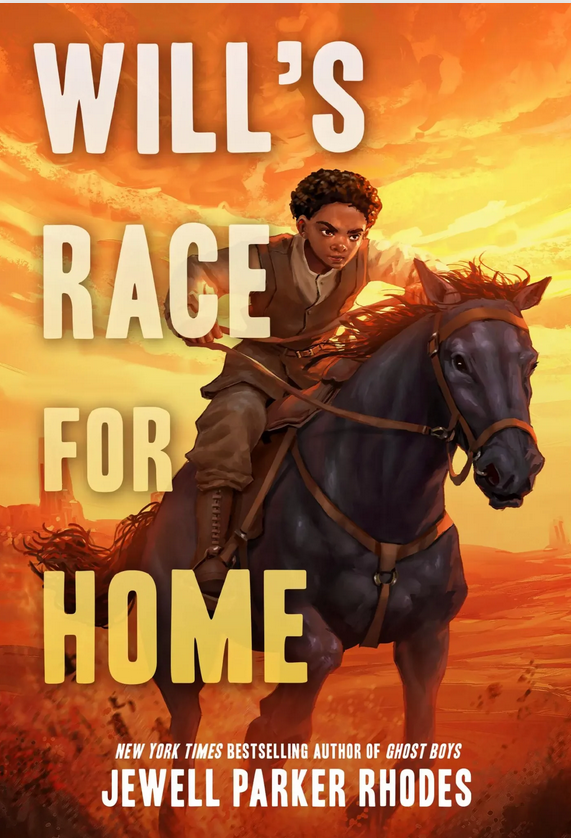
The Indian Appropriations Act of 1889 reapportioned lands once belonging to the Cherokee, Chickasaw, Choctaw, Creek, and Seminole peoples who had been forcibly removed. The Oklahoma Land Rush that same year was an historical event where what was considered some of the best ‘unassigned’ land in the U.S. was up for grabs by non-Native Americans. Historical record tells us that the race started at ‘high noon’ on April 22, 1889, and that an estimated 50,000 people were lined up at the start, seeking to gain a piece of the available two million acres. Jewell Parker Rhodes uses this foundation to tell an excellent story.

Will and his family are sharecroppers in Texas five years after the Emancipation Proclamation. Though their lives changed when Will’s grandfather and father walked away from the Louisiana plantation where they had been enslaved, the changes haven’t been big enough. Sharecropping meant turning over 70% of their crops to someone else – someone who charged them for the seed they used to grow it, leaving them almost no profit. Will’s father finds sharecropping just as unjust as slavery, so when he hears of the Land Rush, it’s a gamble that he absolutely must take.

Unlike Will, who is a bit undecided about life, Will’s father is a long-range thinker; silent, thoughtful, and determined. He hasn’t been soft, or particularly loving towards Will, so when it is decided that Will, rather than his grandfather, will accompany Will’s father on the cross-country trip, Will is both nervous and exhilarated. Could it be possible that they can soon share the type of closeness that Will’s father and grandfather do? Or will the family mule, Belle, remain Will’s best and only confidant?

Along the trail, Will encounters dust, boring scenery, hot days, flooding rains, and Americans – some for whom the possibility of free land brings out their worst, and others who behave honorably. As in any good Western, there are gunslingers, sheriffs, and saloons. Will’s eyes are opened by his travels, and he learns that there are choices which, once made, will change a person – forever. Considerations of the cost of war, what it means to be a man, and how one’s faith can be a prick to the conscience as well as a guide for life deepen this story from mere adventure to something more. Will changes from a boy who thought he knew the answers into a young man who knows that life holds questions that he hasn’t even thought to ask. A great novel for those who like history, Westerns, and complex tales of growing up, Will’s Race for Home should be on your TBR list this year.

Fresh onto the TBR:

  • Gamelit, MCA Hogarth
  • Food for Thought, Alton Brown
  • The Midwatch Institute for Wayward Girls, Judith Rossell

In the words of Hank Green, “The truth resists simplicity.” Never buy the lie that life, with its astoundingly complex array of beliefs and systems, history and sociology, is anything like simple. Neither the story of the theft of the American West nor the story of the settlement of African Americans within the West is a matter of a simple, monolithic truth – that’s why it’s important to read widely and think deeply. Friends, stay reading!

📚 Still A Constant Reader

{constant reader’s reading: title ix contenders}

Dear TBR

Though I wanted to be, your girl is NOT a ball-and-bat-and-sweats-and-spike girlie. I played football in junior high because I was fast and aggressive and very, very angry so bashing my body into boys without getting a felony count seemed like a good idea, until I was yanked unceremoniously off the team by my father. It was fine, really – while I did my best, sports are one place where my spatial disability makes me trip a lot, run left when I should run right, be clueless about yardage and — yeah. Football plays make as much sense to me as knitting patterns, so it wasn’t going to have lasted long anyway.

But I WANTED to be a sporty girl. And reading these two books about the team solidarity and body-mind connection that sports require are giving pure Title IX.

IT’S ALL OR NOTHING, VALE,, by Andrea Beatriz Arango

Vale – or Valentina Marí Camacho – is a Puerto Rican girl from Virginia who has been competitively fencing for years and years and years. Fed on a steady diet of “pain is just weakness leaving the body,” “winner’s don’t quit,” and told so long that “it’s all or nothing,” Vale has honed herself to be determined, 100% serious effort. She’s never been good at anything, really, unlike her brother, but she’s good enough at fencing to have been tagged to go to the junior Olympics. As an athlete, she’s at the top of her game and fiercely proud of it. But an accident on the back of her father’s motorcycle breaks her leg in multiple places and suddenly Vale is out of competition for four long months.

Her return – which is where the book begins – is not the glorious sprint she envisioned, but a pained limp. Her parents argue constantly about whether or not she should sit down, use her cane, do yoga, or try whatever random internet-sourced cure that Vale’s mother has found. Her Papí, meanwhile, believes nothing but that she is fine, and that she will be back to 100% if she just puts in the time. Her mother her to be hyperfragile and her father believing she’s indestructible has more to do with them than with Vale, but she’s unable to see that, because the family cannot themselves articulate their own feelings – or fears. Vale returns to her fencing group unsure if “disabled” is a bad word, hearing whispers of dolor chronico, and terrified but unable to share it. And to her shock, the forceful, graceful effort that fencing requires seems no longer available to her, even with Vale giving it 150%. And to make everything exponentially worse, Cuban Myrka Mareero – a gorgeous, pink-haired newcomer, has not only taken Vale’s spot, she’s also got her attention in a way that Vale isn’t sure she’s ready to deal with. At ALL.

SO much to love in this book – from the stunning cover to the liberal use of Spanish, which challenged me but left carefully placed context clues for if I couldn’t remember a vocabulary word. I don’t think I’ve ever read a MG story about chronic pain, injury, and perfectionism that hit me in the same way, and the fact that the novel doesn’t end with a conclusion “and then Vale decided X, and she lived happily ever after” is one of its major strengths. The novel is merely a moment in a long process which is just beginning – a truth so important which we need more novels which center. Healing and survival are always-in-progress things.

OUT OF OUR LEAGUE,, edited by Dahlia Adler & Jennifer Iacopelli

Reading an ensemble book like an anthology is usually an uneven experience for me – some stories I love so hard that I could squeeze them, and other stories rate little more than a “Meh” or a baffled question as to how they were included. This anthology of sixteen short stories about female athletes held far more winners than expected, and is HANDS DOWN the best sports anthology I’ve ever read. I can’t talk about all of story, I’ll highlight a few I especially enjoyed:

“Safe at Home” by Jennifer Iacopelli opened the book strongly with a story of sisters pitted against each other in the under18 amateur baseball championship. Even going viral for footage of her stealing home – making her older sister, Meredith, drop the ball as she bashed into her – wasn’t the major victory Molly Hancock expected it to be. She’s always felt less-than her brilliant, accomplished older sister, and making the winning run for her team is quickly overshadowed, first by her getting into her university of choice, then next by the whispers of sports commentators. Male sports commentators. She dropped the ball to give her sister the win. Isn’t that sweet? Of all the things Molly expected to be wondering about, that was never a question.

“Sidelined” by Maggie Hall pits friends Ollie and Lexie against each other on the basketball court and for Oliver, on the football field. In just a few short weeks, their winning combination will be dissolved – while they go to colleges on opposing sides of the map. Lexie is settling – but she doesn’t want to acknowledge it. She’s been offered a basketball scholarship, and thought it’s not really her game – she’s her high school star, and they offered, and she’s an athlete, right? Leaving her dearest friend and her brother behind shouldn’t make a difference, if she gets to come out ahead and compete, right? …Right?

“Power Ten in Two” by Leah Henderson was utterly delightful – Emersyn knows all there is to know about her sport, and she’s been playing against high school students since she was a seventh grader. She’s a senior headed for a Division 1 soccer team in college, and a true believer in her coach’s mantra of Outplay. Outwork. Outlast. Outshine. Nothing matters more than winning… but when Emersyn but when she gets dumped in with a jayvee crew team for two weeks, she knows less than the newbies. How could her coach do this to her? Why is she in the WORST boat? And, what the heck is a ‘power ten?’ Emersyn has to learn – and quickly – what she’s with the rowing team to learn – but fortunately for her, it isn’t to win against impossible odds.

Volley Girl, by Dahlia Adler made me smile because every summer camp, whether its a sports camp or not, has some similarities. Camp Ilan is coming to a close for Azi, and all the memories she’s made with her girls, all the horrible volleyball coaching she’s endured, every fight she’s broken up, every hour spent perfecting her serve – pretty soon none of that is going to matter to anyone in the larger world. It’s hard to embrace the idea that winning isn’t not only not everything, that sometimes it’s not anything – and that there’s more to life, but Azi is going to try…

Fresh onto the TBR:

  • Sea Legs, Jules Bakes
  • On the Hippie Trail, Rich Steves
  • I Got Abducted By Aliens And Now I’m Trapped In A Rom-Com, by Kimberly Lemming

Even if some of us weren’t meant to be sports stars, we can all look up and find our own guiding stars – which in these books were literally playing for love of the game – and for love of self, which turns out to be an unbeatable combination. Stay reading!

📚 Still A Constant Reader

{constant reader’s reads: another parent trap}

Dear TBR:

I really dislike when I discover a traditionally published Big 5 middle grade book I’ve heard nothing about. Don’t get me wrong, a new book is always a joy, in a way – but in another way, it’s kind of disturbing. Brief research into the film director and novelist who combined to write this would suggest it should have had much more buzz, but the truth is that middle grade gets overcrowded and 2019, when this book was published was a very prolific year for buzzy middle grade publications. At any rate, it was nice to find a wholly new-to-me book that was both touching, funny, and was the reading comp I was looking for.

Bett is named after her maternal grandmother, Betty. Bett with two-t’s is… a firecracker like her namesake – out to grab the world and take it on. She swims, she camps, she surfs, she skis – she takes risks and seeks thrills and would live outside with animals if possible. She gets it from her father, who, after the death of his partner, Phillip, when Bett was just a baby, taught her that life is short, and to grab it with both hands. That’s why when Bett’s dad falls in love, he falls all the way in. The new beau has a daughter just like he does – same age and everything. So, why shouldn’t they be friends? Why shouldn’t they be sisters? Why shouldn’t their first introduction to each other be in the same cohort at summer camp? What could possibly go wrong?

Avery is circumspect, studious and smart – and very much an indoor cat like the father who raised her. Surrounded on all sides by her with adult support staff in the form of nannies and tutors, her father has tried to supply both father and mother, since Avery’s mother is a busy playwright she’s never even met – he’s made sure of that. Avery has asthma, rampant anxiety, especially about large bodies of water and dogs, insomnia, social insecurities galore, and a near-fascination with germs and hygiene. When she is contacted by a girl letting her know that her father is seeing someone, she is first dubious, then cautious – what if this girl is part of some elaborate financial scam!? – and then she’s a horrified that this wildly creative girl whose emails are rife with spelling errors – this is the girl that her father expects her to be best friends with? Nevertheless, she’s polite. Avery does her best to be polite, even when being joined at her favorite summer camp by a girl she definitely didn’t expect.

This book is both charming and hilarious, and the personalities of the girls shine through their letters and writing style – Bett making spelling errors and shrugging, Avery almost visibly wincing. Grandma Betty’s yearning for a life bigger than what she’s found as a retiree in Texas reads as legit, as do the unspoken ambitions and needs of the other adults in the book. Though those are solely shown rather than discussed, this is clearly a book about children and the ways in which their lives are intersected with an essentially controlled by their adults. Some of what’s here would not be obvious to a younger reader not as adept at reading between the lines, but it adds ballast to the girls’ personalities, as they know their adults and read them well, and try to explain them to each other. Romances – friendships – and relationships of all kinds wax and wane throughout the narrative, reflecting the natural ways people go in and out of each other’s lives.

There’s a lot to love about this novel, with its high concept yet heartfelt plot, though it does have its small criticisms. I did wish that Bett’s characterization wasn’t so much dialed to ‘does-what-she-wants sassy’ and leaving out the biracial part of her identity. While the Brazilian part of Bett’s family was her surrogate, her father is listed as African American, as is Grandma Betty. Bett mentions once that she’s alone as a girl of color at the chi-chi summer camp where the girls are sent… and that’s it. I can’t imagine her adults wouldn’t take some aspects of Black culture as a part of their lives together. The paperback cover shows her with a small cloud of curly hair, but though she’s on her own all summer, she never does her hair – it’s not mentioned as anything she has to take time and care with, though Avery mentions that it’s curly. It comes across as if Bett’s dad is a hunky, impulsive gay himbo who works in pool construction – blue collar work – and he’s taken up with a wealthy white architect, the type of person builders, Bett explains, usually fight with. It’s also notable how much the men cry, which veered closest to cliché than any other part of the book I read. The inevitable book-ending wedding aside, this is a love story on several levels – between consenting adults, of course, but also between two girls who choose friendship and its vicissitudes and themselves most of all over whatever their parents, teachers, camp staff, and other friends plan for them – which is a triumph of its own. Self-determination, self-awareness, and in the end, selflessness make all the difference. I’m glad I read this book.


Fresh onto the TBR:

  • To Ride a Rising Storm, Monoquill Blackgoose
  • Books & Bewitchment, Isla Jewell
  • The Merciful Crow, Margaret Evans


Until the next book, 📖

Still A Constant Reader