{poetry…comics…?! npm ’26}

NPM ’26 ♦ Sing On, O Mighty Pen

In 2007, my friend Sarah and I saw artist, author, puppet maker, and all-round personified avatar of art Yuyi Morales in San Francisco. (It was at Alma Flor Ada’s Reading the World conference, a single day event put on by the International & Multicultural Education Department of the University of San Francisco from about 1998 – 2009. It was life-changing, and I don’t say that lightly. That year we also heard from the glorious Ashley Bryan of blessed memory, and the incisive and intimidating Jane Yolen). During her talk, Artista Morales spoke about creation as an act of faith, and how her act takes belief in herself, persistence and determination. On a handout with some of her drawings, she shared her prayers to Señor Tlalocan, the Aztec god of rain, lightning, and fertility who “makes things sprout.” Her hope and determination that her creativity and her art would flourish have stuck with me, all these years later. And so I think of Sra. Yuyi today this month as I write my “O, mighty pen” project. Because, even if I feel like an imposter as a poet, my pen is mighty, and with it, my creativity has – and will – sprout.

Of course, I feel like even more of an imposter as an artist.

…and yet, I’m lifting my mighty colored pencils this month and taking on one more challenge. In 2023 as part of his classroom visits to schools, poet and illustrator Grant Snider put up a Substack called How To Make Poetry Comics. He reposted it last year, and I was intrigued. It is brilliant in its simplicity – and very direct about what poetry comics are, and are not to him. I’ve seen Grant Snider’s work and followed his Instagram for quite a while now, and I really like how he takes concepts and mulls them over in such a small space, so… thoughtfully and lyrically. Looking at his work, I’ve felt like four small squares – or three small panels – are surely not too much to fill, even for a person with a visual-spatial difficulty… right?

So, that’s this year’s project. Poetry + Art. Poetry Comics. Words and doodles.

Despite Grant Snider’s instructions, sometimes my art will be illustrating my poems instead of the other way around, but other times, I’m going to try and let the form direct the focus. To begin with, I’ll take it easy on myself, and just share a few of the tricube and haiku poems that strike me during the incredibly busy (!!!!) Easter weekend ahead, but later I’ll make sure and use all of his prompts – Four Senses, Here & Now, Horizontal/Diagonal/Vertical Movement, Zooming In/Zooming Out, Poem + Comic, Haiku – and then as I get braver, I’ll see where my pens and pencils take me from there…

O, Mighty Pen, don’t fail me now.


As always Jama-j has the full National Poetry Month in Kidlit rounded up here.

{pf: poetry peeps offer up the ovillejo}

Welcome to another Poetry Friday Adventure!


Poetry Peeps! You’re invited to our poetry challenge for the month of MARCH.

Here’s the scoop: we’re writing ekphrastic poems, which might pair beautifully with your plans for National Poetry Month (I’m attempting poetry comics). Ekphrasis is a Greek word which means “description,” and you’re invited to choose your own image from anywhere – personal pictures or otherwise. Are you in? Good! You’ll have the month to craft your creation and share it April 24th in a blog post and/or on social media with the tag #PoetryPals. We hope you’ll play along!


From Process…

Greeting, Poetry Friends! If this form was a challenge to you – well, I can’t exactly say ‘mea culpa,’ but I will own that this month, this form is one I chose…possibly unwisely, since, once again, I based my choice on cleverness and appearance… Or, in other words, because, it looked easy. I mean, it had Rules! A clear Rhyme Scheme. There was Meter and Boundaries! Except for that bit about the quatrain written in trochaic tetrameter, it was even straightforward. What could possibly go wrong?

Well… the first issue was my assumptions. Spanish is a romance language, so surely this form, first popularized in Spain, was going to be a lyrical, dance-y walk in the park, no? Er… no.

The second issue was time – and just how much this form insisted on consuming… in terms of how long I spent thinking about trochaic tetrameter and remembering what that was.😂 It’s been a minute since grad school, and I can’t honestly say when last I spelunked into the cavernous depths of poetic meter. Perhaps as an undergraduate…? In any event, a quick search reminded me – of Blake’s Tyger, of the fairies and the witches speeches in Shakespeare’s Scottish play and in “A Midsummer’s Night Dream,” and of the hard syllabic pulse of Hiawatha, which Longfellow likely meant to mimic Native American drums. The skip-stumble “falling” cadence of tetrameter in lieu of the more regular pentameter might have been second nature in 16th century Spanish, which is the original language of the ovillejo, but it was afterthought enough that I decided against attempting to use it consistently, feeling that the redondilla refrain at the end was difficult enough. The final line of the quatrain wherein previous lines are recycled came with difficulty, and the Poetry Sisters discovered during the group write that if one did not give any thought to it ahead of time, it would All Go Very Badly. We all agreed on the wisdom of beginning the poems there…

…To Poetry

…so, I did. The first time. But, I admit that I’m contrary enough to have tried just writing the poem straight out – surely that’s what Cervantes did? Writing the poem straight out required a lot more piecing things together and fussing, and revising, revising, revising – but both poems had some dissonance, written from front or back. This poem was 9/10ths revision – and I’m grateful to like pieces of both, but this was not the unqualified win that I assumed. Which, given assumptions? Is my own fault. 😂

In the spirit of applying maximum rules in order to achieve some measure of success, I tried a theme-focus first. Twilight – whether civil, nautical, or astronomical – is one of those fascinating liminal periods that lend themselves well to poetry. Since our Poetry Friday hostess is already celebrating her book of the same name, I tried to lean in as much as I could to that changeable transitoriness. The other Poetry Sisters went other directions, of course. Sara’s poem leaned into answering a question. Mary Lee joined in on theme. Laura’s fierce poem is here, while Liz’s exploration is here, and Tricia’s offering is here. You’ll find Karen’s poem here, and Denise’s poem is here. Michelle K’s poem is right here, and Margaret’s ovillejo is here. Linda B’s poema is here, and Carol V’s ovillejo offering is here – and Carol L joins us here. It’s so nice to see so many participating! More Poetry Peeps may offer their own ovillejos throughout the weekend, so do pop by for the full roundup.

The next poem I tried to come to with fewer expectations. It obviously needed to be… the opposite of liminal. I wanted it to be unsubtle, blatant. High noon, no shade. I also decided to pry my grip off of the rules for this one. In spite of this, the second poem still has elements of twilight (which happens twice a day, despite many of us only acknowledging the evening one) and took a ton of revision and probably more time than I would normally give a poem that is meant to just be a challenge. …I’m still not fond of the dissonance the form created, so stubbornly, I kept polishing. Eventually I discovered that enjambment is actually a saving grace of this form, and I was able to move away from trying to make a workable rhyme scheme towards focusing on a smoother poetic arc and making more meaning. This is where I quit:

“NIGHT SONG”
for Marci Flinchum Atkins

Light slips its leash and starts to slide –
Eventide.
In slate and *mauve, dusk’s shadow grows.
Afterglow
Veils twilight, takes its light inside,
Beautified.

Day breathed its last, and night replied
A lingering note. As warm light drained,
Cool starlight rose up in refrain:
Eventide. After glows, beautified.

(Mauve here is pronounced the way I learned it – in French, so its long /o/ matches ‘stove.’ And, no, I don’t know why it matters.)

☀️MERIDIAN
Near solid, nourishing seeds, slow,
sun seeps, then glows.
Light tips. Sparks, shaken out and stirred –
The living, served.
No shade, just brightness unconfined
in “Sunshine.”

A subtle scent – soil, blade, and vine,
The warming earth and air duet
at Equinox. Its minuet
Sweeps and grows, and serves up sunshine.


Despite the second image not matching the poem (pictures of noon are …somewhat boring), this has been a fun project. An excuse to dig into snapshots from the past – that picture of Keflavik is one of my favorites – an excuse to try a new form – a good time, even when it doesn’t go as I envisioned – and an excuse to do poetry in community with my peeps and the Sisters. I’m looking forward to taking this viewpoint of the harmony between words and images into my NPM project next month. And however you plan on moving through April – in anticipation of renewal and hope, through a steady, measured practice of daily poetry, or in an exuberant exploration of simply sipping poetry from all corners, I wish you warming winds and calm skies, elegant elucidation and resonant rhymes. Happy National Poetry Month to come! Remember, you are well-loved.
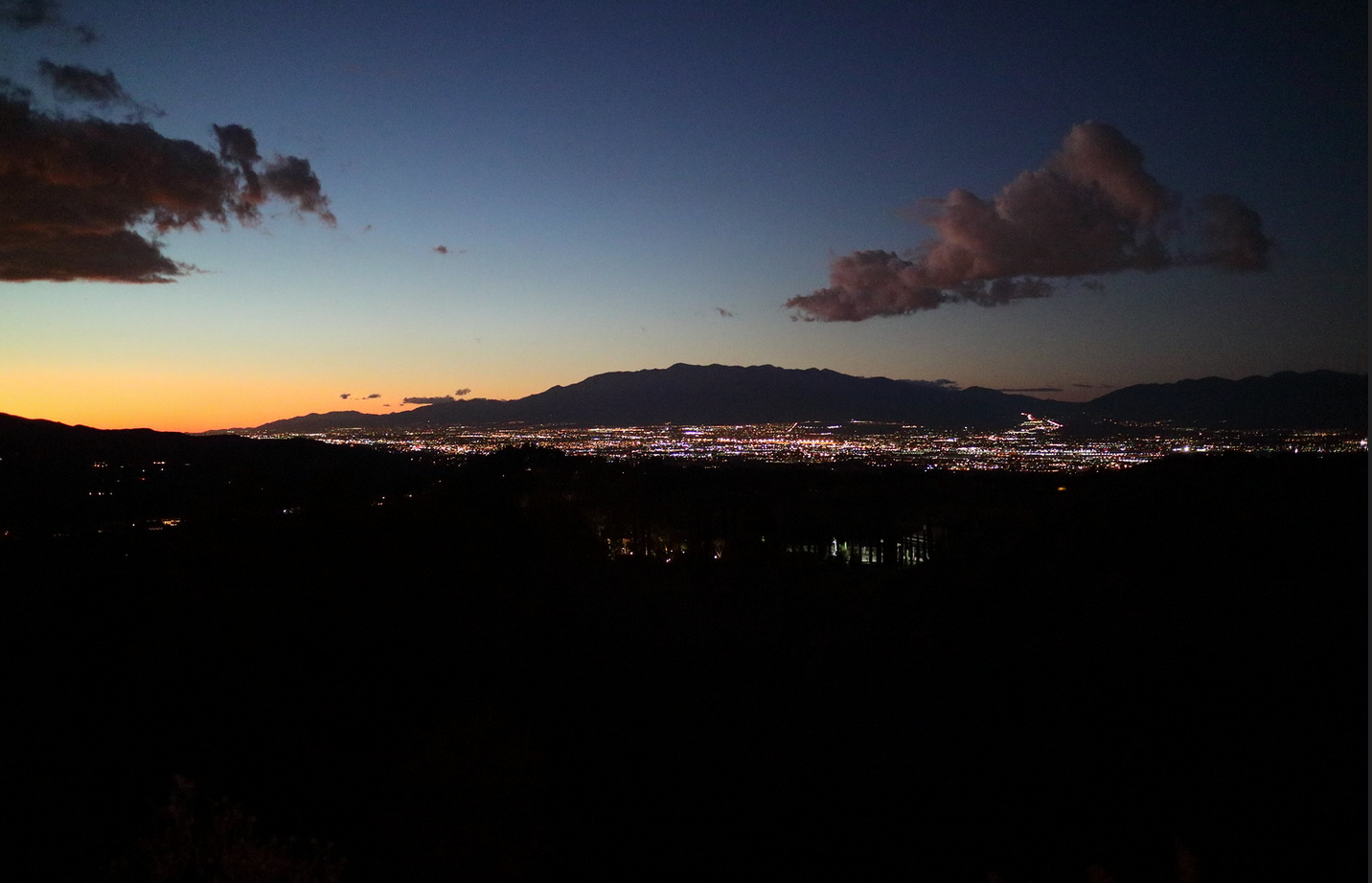
©2015, David T. Macknet

{poetry friday: comfort in community}

You’ve Arrived! Welcome to Poetry Friday!

Poetry Peeps! You’re invited to the Poetry Sisters’ challenge for the month of MARCH.

Here’s the scoop: we’re writing tight little bundles of poetry called Ovillejos! That’s exactly what the word means – a bundle of yarn. This Spanish form bundles together ten lines, made up of 3 rhyming couplets interspersed with three verrrry short lines, and a quatrain. The last line is a “redondilla,” a “little round” that collects all three of the short lines and casts off the poem, as it were. The Ovillejo plays with repetition in a way that will allow some cleverness and wordplay. I’m excited to dig into a new-to-me poetic form, first popularized sometime between the late fifteen hundreds by Miguel de Cervantes (he lived between 1547-1616 so it’s been a minute – may as well make it popular again) – and might even throw in a Spanish word or two, just to challenge myself. Are you in? Good! Take this week to craft your creation and share it March 27th in a post and/or on social media with the tag #PoetryPals. This form looks like fun, so we hope you’ll us!


This is THE PLACE! for poetry links!

Click here to enter


The events of January, 2026 were the crucible from which formed the Hennepin Avenue United Methodist Church’s Singing Resistance, a Minneapolis-based, grassroots movement using song to protest the illegal federal agent activity in that state and throughout the nation. Time after time in our nation’s history, protest singing has been a tool for organizers, as a form of embodied protest – from “Yankee Doodle,” sung in protest against British imperialism in the 1700’s to “The Battle Hymn of the Republic,” sung by marching suffragists and labor organizers, to “We Shall Overcome” sung through the years by protestors for civil rights in the early 1900’s to “No nos moverán” sung by Dolores Huertas and the UFW movement, and more. Every major sea change in American politics and society has come with a soundtrack of people singing together.

However, in the past several decades group singing has waned outside of religious circles. Even in some religious spaces, singing has largely become a competitive reality TV type of thing where “the best” is elevated and ‘the rest’ are meant to sit in properly awed silence. In today’s atmosphere, the commonly sung American folk song had all but vanished. Dorian Lynskey, author of “33 Revolutions Per Minute: A History of Protest Songs,” theorized in an interview that American individualism in music also has its role in this musical shift. Older songs used the word “we.” “We shall overcome.” “We shall not be moved.” Or, “All we are saying is give peace a chance.” He observed that the spirit of “we” as found in community and cooperation is largely absent in modern pop music.

…but now as the old protest songs are being taught to new voices, and as new troubadours arrive, necessary change is coming with them. Now we’re reaching across aisles, across cultures and preferences, trying to anchor ourselves, our country, and each other.

A song heard at almost every singing protest, many of you are already familiar with Heidi Wilson’s “Hold On.” The words are simple, the tune adapting easily to harmony, and it has reverberated – from the U.S. to Cornwall to Wales and Ireland to Australia and beyond. A new generation of singers is carrying this song with them, and like a stone dropped into a pond, its message of quiet, almost prayerful endurance is rippling outward.

And when you learn from writer and composer Heidi Wilson the impetus behind the song she wrote in 2020 (thank you, Liz, for sharing this), you’ll understand what a gift it truly is. In the words of the Spiritual-turned Southern-ism (or vice versa), “Trouble don’t last forever.” Or, from the Christian Bible in the book of Psalms, “Weeping may endure for a night, but joy comes in the morning.” So, while everything looks rough, feels rough, is indisputably rough – hold on.

Hold On

Hold on, hold on

My dear ones, here comes the dawn

Heidi Wilson,
Plainfield, VT 2020
(Sheet music free at the link above, but please compensate and support the musician as you can.)

A song is simply a poem set to music, and this one is a direct, unrhymed lullaby that grounds us in persistence and courage. It’s a seed to pull us through the last, dark days of winter, a promise of renewal and green sprouts, baby goats and, someday, an end to this moment. This is a song that calls us to community. I am challenging myself to find other song-poems like this – and I hope you do so, too. And as you do, hold on, dear ones. Hold on to who you are, what you know to be right, and how you live – with open hands, helping your neighbor and community, and uplifting sanity and kindness. Hold on – to each other, too, to community, and to creating the world we want with our hands linked. And in doing so may we each in our own ways hold up our arms to carry the dawn as it comes.

Happy Friday, friends; you are so well-loved.