Welcome to another Poetry Friday Adventure!
Poetry Peeps! You’re invited to our poetry challenge for the month of MARCH.
 Here’s the scoop: we’re writing ekphrastic poems, which might pair beautifully with your plans for National Poetry Month (I’m attempting poetry comics). Ekphrasis is a Greek word which means “description,” and you’re invited to choose your own image from anywhere – personal pictures or otherwise. Are you in? Good! You’ll have the month to craft your creation and share it April 24th in a blog post and/or on social media with the tag #PoetryPals. We hope you’ll play along!
From Process…
Greeting, Poetry Friends! If this form was a challenge to you – well, I can’t exactly say ‘mea culpa,’ but I will own that this month, this form is one I chose…possibly unwisely, since, once again, I based my choice on cleverness and appearance… Or, in other words, because, it looked easy. I mean, it had Rules! A clear Rhyme Scheme. There was Meter and Boundaries! Except for that bit about the quatrain written in trochaic tetrameter, it was even straightforward. What could possibly go wrong?
Well… the first issue was my assumptions. Spanish is a romance language, so surely this form, first popularized in Spain, was going to be a lyrical, dance-y walk in the park, no? Er… no.
The second issue was time – and just how much this form insisted on consuming… in terms of how long I spent thinking about trochaic tetrameter and remembering what that was.😂 It’s been a minute since grad school, and I can’t honestly say when last I spelunked into the cavernous depths of poetic meter. Perhaps as an undergraduate…? In any event, a quick search reminded me – of Blake’s Tyger, of the fairies and the witches speeches in Shakespeare’s Scottish play and in “A Midsummer’s Night Dream,” and of the hard syllabic pulse of Hiawatha, which Longfellow likely meant to mimic Native American drums. The skip-stumble “falling” cadence of tetrameter in lieu of the more regular pentameter might have been second nature in 16th century Spanish, which is the original language of the ovillejo, but it was afterthought enough that I decided against attempting to use it consistently, feeling that the redondilla refrain at the end was difficult enough. The final line of the quatrain wherein previous lines are recycled came with difficulty, and the Poetry Sisters discovered during the group write that if one did not give any thought to it ahead of time, it would All Go Very Badly. We all agreed on the wisdom of beginning the poems there…
…To Poetry
…so, I did. The first time. But, I admit that I’m contrary enough to have tried just writing the poem straight out – surely that’s what Cervantes did? Writing the poem straight out required a lot more piecing things together and fussing, and revising, revising, revising – but both poems had some dissonance, written from front or back. This poem was 9/10ths revision – and I’m grateful to like pieces of both, but this was not the unqualified win that I assumed. Which, given assumptions? Is my own fault. 😂
In the spirit of applying maximum rules in order to achieve some measure of success, I tried a theme-focus first. Twilight – whether civil, nautical, or astronomical – is one of those fascinating liminal periods that lend themselves well to poetry. Since our Poetry Friday hostess is already celebrating her book of the same name, I tried to lean in as much as I could to that changeable transitoriness. The other Poetry Sisters went other directions, of course. Sara’s poem leaned into answering a question. Mary Lee joined in on theme. Laura’s fierce poem is here, while Liz’s exploration is here, and Tricia’s offering is here. You’ll find Karen’s poem here, and Denise’s poem is here. Michelle K’s poem is right here, and Margaret’s ovillejo is here. Linda B’s poema is here, and Carol V’s ovillejo offering is here – and Carol L joins us here. It’s so nice to see so many participating! More Poetry Peeps may offer their own ovillejos throughout the weekend, so do pop by for the full roundup.
The next poem I tried to come to with fewer expectations. It obviously needed to be… the opposite of liminal. I wanted it to be unsubtle, blatant. High noon, no shade. I also decided to pry my grip off of the rules for this one. In spite of this, the second poem still has elements of twilight (which happens twice a day, despite many of us only acknowledging the evening one) and took a ton of revision and probably more time than I would normally give a poem that is meant to just be a challenge. …I’m still not fond of the dissonance the form created, so stubbornly, I kept polishing. Eventually I discovered that enjambment is actually a saving grace of this form, and I was able to move away from trying to make a workable rhyme scheme towards focusing on a smoother poetic arc and making more meaning. This is where I quit:

“NIGHT SONG”
for Marci Flinchum Atkins
Light slips its leash and starts to slide –
Eventide.
In slate and *mauve, dusk’s shadow grows.
Afterglow
Veils twilight, takes its light inside,
Beautified.
Day breathed its last, and night replied
A lingering note. As warm light drained,
Cool starlight rose up in refrain:
Eventide. After glows, beautified.
(Mauve here is pronounced the way I learned it – in French, so its long /o/ matches ‘stove.’ And, no, I don’t know why it matters.)

☀️MERIDIAN
Near solid, nourishing seeds, slow,
sun seeps, then glows.
Light tips. Sparks, shaken out and stirred –
The living, served.
No shade, just brightness unconfined
in “Sunshine.”
A subtle scent – soil, blade, and vine,
The warming earth and air duet
at Equinox. Its minuet
Sweeps and grows, and serves up sunshine.
Despite the second image not matching the poem (pictures of noon are …somewhat boring), this has been a fun project. An excuse to dig into snapshots from the past – that picture of Keflavik is one of my favorites – an excuse to try a new form – a good time, even when it doesn’t go as I envisioned – and an excuse to do poetry in community with my peeps and the Sisters. I’m looking forward to taking this viewpoint of the harmony between words and images into my NPM project next month. And however you plan on moving through April – in anticipation of renewal and hope, through a steady, measured practice of daily poetry, or in an exuberant exploration of simply sipping poetry from all corners, I wish you warming winds and calm skies, elegant elucidation and resonant rhymes. Happy National Poetry Month to come! Remember, you are well-loved.
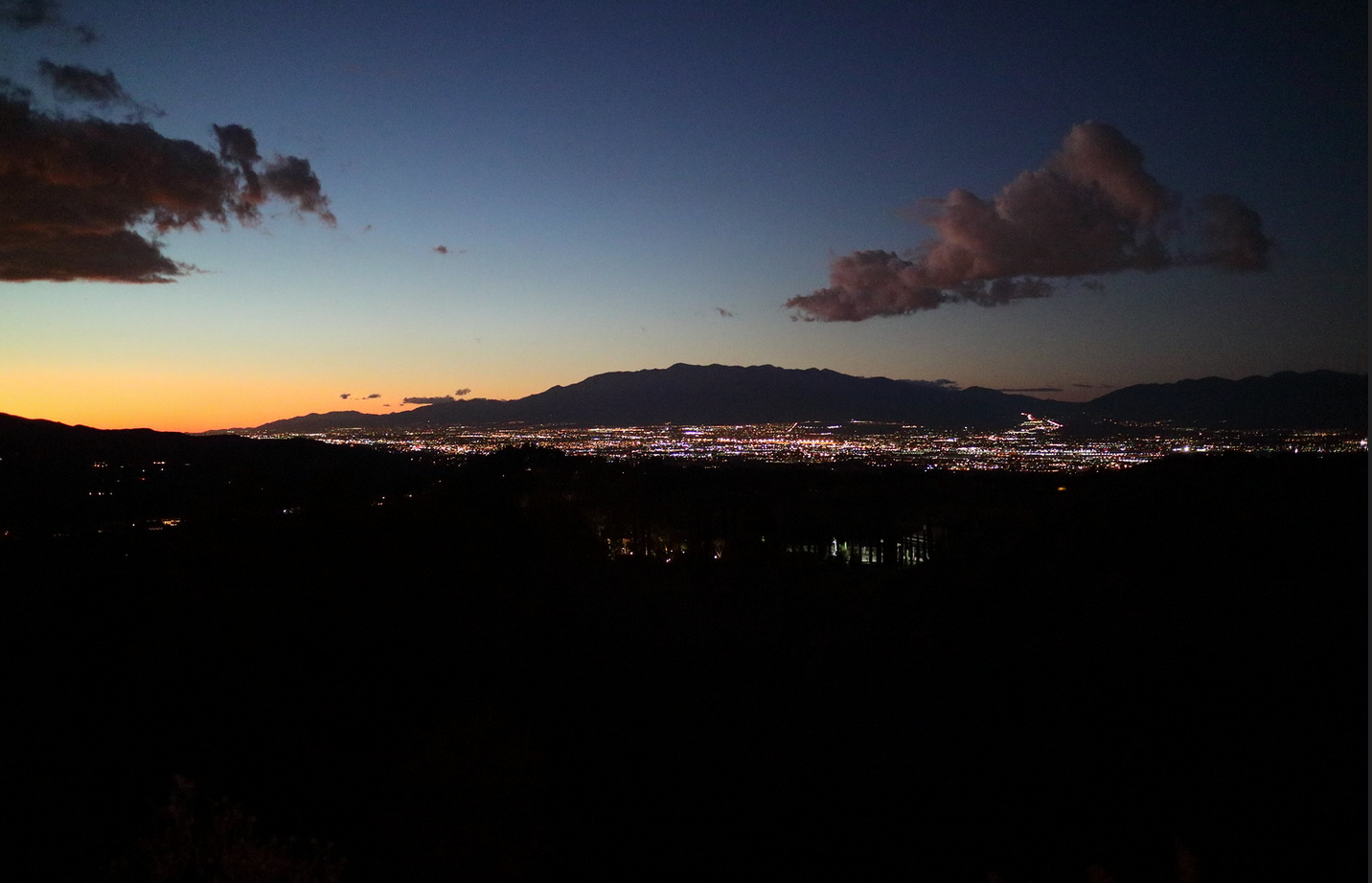
©2015, David T. Macknet
“Light slips its leash and starts to slide – / Eventide.” These lines are like some magical liquid. I love the metaphor, but the way you’ve made it just flow…incredible. I want to soak in your first poem, and your second one makes my brain light up. I agree with Sara about the Kenyon vibes (also my favorite poem of hers and one of my favorites, period). <3
@LauraSalas: Thank you! – I kind of like your idea of a magical liquid. I tried to make the poem boneless, in a way – the slide of the sun into dawn or dusk is so seamless and we can barely sense it happening, so that seemed to need to be present in the text through the words I chose.
Tanita, what a gift to Marcie your “Night Song” is. The word choice is magical, and I love that you told us to pronounce mauve rhyming with stove because it does go very well in that line with “grows.” I always appreciate your commentary. This week it tended to remind me of all that I didn’t know I didn’t know. Your second poem, bending the rules is a delight too. Thanks for always including the links to all those who write with you. It makes me feel special.
@Denise Krebs: I’m glad you join us so often! It’s important to me to narrate my efforts because when I was first invited to join my Poetry Princesses I had such a huge case of Imposter Syndrome that I basically said every week, “Well, I’m not a poet.” I don’t think anyone is… but if we all try and write a poem, et voila – we have completed the first and only qualification… Learning how much we don’t know is just a bonus. 🙂
So many wonderful poems this week on twilight. I really love Night Song and this line:
Cool starlight rose up in refrain
In your second poem, I love the rhyme of duet and minuet.
I wasn’t happy with your choice when started playing around with this form, but I grew to enjoy the challenge. Funny enough, this form was a Monday poetry challenge (remember when I did those?) back in 2016. Almost no one tried it out. THAT should have told me something!
@MissRumphius: OH! I remember the Monday challenges! I love that you forgot how much you didn’t love this form until presented with it again. Hah! Despite the inevitable whining I do, I eventually come around to finding the challenging bits most of the fun. (Except for sestinas…)
Love that “lingering note…” and so many beautiful images in both of these poems! How lovely to write the first one specifically to Marcie. Congrats to all of you who took up this challenge – love the ingenuity and spunk of this community! :0)
@Robyn Hood Black: Thank you for the kind words! Thank you for reading – and wading in the waters of poetry with us.
Thanks for your April wishes, Tanita, and sending more back to you as well! I’ve repeated this in other comments, and your post is no different. I’ve adored reading everyone’s words about this challenge, and for Marcie’s, too! Your “Nightsong” is so special, makes my heart go faster because I so love those times of day, both early & late. “Light slips its leash and starts to slide –/Eventide.” makes me want to shout “hurrah”, then “Sparks, shaken out and stirred–/The living, served.” touches the importance of sunlight beautifully! Thanks for this challenge, bringing so many intriguing ideas to ponder! Happy April, too!
@LindaBaie: Thank you so much.♥
Beautiful poems, Tanita! And thank you for sharing so much about your process. Fascinating and helpful.
@rosecappelli: Thank you! I’m so glad it’s helpful.
Sigh…”Day breathed its last, and night replied” — You nailed the form, Tee!
Patricia
@PJNunz: Thank you!! I feel like this form allows you to revise endlessly, so I’m just glad I ran out of time to keep tinkering…!
Tanita, I am sorry that I had a difficult time trying to comment on your fabulous poems and photos. I hope this comment goes through. Thank you for adding my name to your #PoetryPals. It is always a delight to work alongside you and the other Poetry Sisters. Night Song swoons in nature’s movement. The lines move smoothly with imagery that can be seen without the photo even though it is a beautiful pic. Its single are precise and interesting. Moving on to Meridian, its minuet sweeps is a beautiful line.
Happy writing during National Poetry Month.
@CVarsalona: Hooray, your comment came through! And thank you so much for the kind words. Happy NPM to you, too.
Blown. Away.
Your description of your process always puts me to shame because you are so thorough, so conscientious, and so GOOD! ❤️
“Night Song” is perfectly dreamy (and perfectly paired with that photo.) I’m a night owl, always have been, and the time when “Light slips its leash and starts to slide –” … well, sign me up.
@Karen Edmisten: Thank you… I took that snap of a little pond on the backside of our development when we lived south of the SF Bay, near the San Mateo Bridge and its accompanying salt marshes. We got visitors from a nearby bird sanctuary which made for some exciting migration viewing.
Tanita!!! Thank you so much! This is beautiful! “Eventide” what a beautiful word! And “light slips its leash”. Every word in this is exquisite!
@MarciFlinchumAtkins: I’m so glad you like it!!
It must say something about me that I’ll take twilight over noon any time. Same with your poems. Both are masterful and lovely, but “Night Song” is breathtaking to me. Your word choice, the flow, the attention to detail (long o mauve matters for the internal rhyme!). I love learning from you!
@Cousin MaryLee: … It’s ridiculous to worry about seeming”extra” but, yes – the internal rhyme as I want it to sound is part of the poem. I take it back – it matters and I’ll just be my extra self.
First, admitting that I tossed trochaic tetrameter right out the window. It was just a bridge too far to me this time. But you handled the whole form so masterfully!! Your three short lines — single words — SLAY ME. They are just perfect, Tanita…
@LizScanlon: I won’t say I’ll play with this again soon, but reading everyone’s made me think how mine can work better. It turns out the single word tetrameter was actually easier to make sound smooth, so I’ll definitely try that again…in a year or so…
I’ll take some of your “Meridian” sunshine, as a “minuet” please, lovely sounds unfolding here! And, some,
“Eventide. After glows, beautified,” especially “beautified,” lovely images too! Touché Tanita, nothing fills the soul like those sunsets and sunrises…
@MichelleK.: I enjoyed playing with my thesaurus for these poems – sunrise and sunset are one of my favorite topics so this was a treat.
Twilight always makes me think of that Jane Kenyon poem, “Let Evening Come…” and yours has the same vibe, inviting us to contemplate beauty even as the light slips away. And to write another poem, about the complete opposite light of noon….brilliant!
@SaraLHolmes: That is probably my all-time favorite Kenyon poem of so, so many. In that poem, I love the inevitability of the ending – speaking of ‘explore all endings’ – and the way she is braced for it. I tried to kind of embody that with breaking up the word “afterglow” into ‘after’ and glows – because what comes next can still have its beauty…