{“a little racism in the Adirondacks”}


Berkeley 15

Occasionally, I have the distinct pleasure of meeting absolutely unique people, and I met this adorably dimpled person for the first time the other night at supper in Berkeley. He happened to be all of seventeen, full of wit and cracking wise all evening, making the assorted adults about him guffaw intemperately. A very good time was had; a brief blip of sanity in amongst ALA meetings and packing and sightseeing and preparing to leave the state and the country.

Adorably Dimpled (whom we’ll call AD for future reference) is one of those outdoorsy people was relating to us the tale of his canoeing trip through the Adirondacks, and how well it had gone. He added that he and his rowing partner had at one point stood in the canoe, poling along and singing out all the Italian words that they knew, gondolier style – which were sadly limited to rigatoni, zabaglione, bruschetta, antipasti… Yeah. It was fairly pathetic, but it amused them, so they carried on… until they rounded a corner and met up with another canoe full of people conversing … in … Italian.

Mortified, they sat down and shut up.

AD chuckled ruefully, recounting the tale. “It was terrible,” he recalled. “We thought we could get away with a little racism out in the Adirondacks, but no.” The complete incongruity of this statement of course broke up the whole table and we all laughed some more. But, AD’s claim of racism has stayed with me… and rattled around like a dried pea in my brain.
Berkeley 2

I was nineteen when a social worker I knew prodded me into being part of a study at Boston University’s Sloan Epidemiology Center. I’m still a part of that study, which has turned out to be a huge and important one about the health of women of color across the United States. Biannually, the several hundred thousand women in the group answers questions about their health, visits a lab to give blood, or agrees to give Sloan access to their cancer records or their blood pressure readings, and &tc. This is a comprehensive study, and includes mental health, and every other year or so, when the questionnaire comes out, I’ve been asked about my experiences with things that threaten mental health — things like domestic abuse, self harm, assault, and… racism.

At nineteen, I returned a survey which said that I had never experienced racism. I know – highly unlikely, right? Yet, it was important for me during that time to be able to say that, no, there was no racism. It supported my worldview, which stated that The World Is An Okay Place. If I believed otherwise, I would have been too petrified to go out in said world — so I went with the “I don’t see color and no one has seen mine” fabrication with which so many young people have attempted to navigate their world. But, the survey kept asking that question, year in, year out. Asking. And asking. Insistently. There’s a reason for their questions, of course; the NYT reported recently on some of the findings from this study and others like it. The questions are important – vital. The survey designers always vary it — as all psychological tests do — they ask in terms of the workplace or in terms of feeling safe, or in terms of shopping experience, or in terms of school days. But, they keep asking.

I have been, by turns, exasperated, impatient and mildly annoyed with their questions. But, after AD’s little story, what I am now is …illuminated.

Kelvinbridge 11 HDR

Of course, I have experienced racism. (And, I have acted in racist ways — as much as I HATE the idea of that, I have.) This week, I’m in Scotland, which is where some of the more …embarrassing experiences in my life have happened. The UK isn’t a monoculture, contrary to what ends up on television or in the media – there are people of Asian, South Asian and African backgrounds who are born and raised here, but for reasons of …history? the popular depictions are almost always white. This is changing, as the population shifts, but when we moved here in 2007, I was a serious minority, and it didn’t always feel okay. People would either stare at me — to the extent of turning after we’d passed each other in the street, to look over their shoulders — or they would accost me to rap (arrhythmically) at me, scream “Soul sister!” or try and do complicated hand-shakes with me. No, seriously. Strangers, I’m talking about — trying to slap hands with me, and assume some familiarity because they were sure that they somehow knew me, because… maybe their best friend was black? And, I would bet that none of those people would have the clear-eyed realism of AD, and say that they were being racist… but, they were.

In college, someone asked to record me scatting — as if, because Ella Fitzgerald could do it, surely I could, because black. Er, NO. So not able to do that. I am not a jazz person in any formal fashion. Let’s have some Handel and get on with things, yes? And yet, even that didn’t work — other girls in my high school chorus were offered Messiah solos; I was offered minor key descants in the spirituals we sang. Because, black. Even as far back as elementary school, where a PE teacher assumed that I could skip better than other kids, because I could dance (SO not sorry to have to disabuse her of that notion) and another assumed that I would sink because “people of African ancestry don’t really swim, they have too dense of muscles for it” (Which is likely a surprise to the coastal peoples of Ghana, Mauritas, Mozambique and the Seychelles, but whatever), people have been in essence painting my picture without ever looking at my face.

Kelvinbridge 20

But, was that really… racist? I mean, isn’t racism assuming that various specific characteristics of someone’s race makes them different in abilities or capacity than you — judging their abilities or worthiness based on the unrelated characteristic of race? How was what AD was doing actually racist? Wasn’t he just being silly? Haven’t we all pretended to faux-speak a language, and thrown in some food words? Isn’t he being really hard on himself? And, sure, maybe accosting a stranger or throwing peace signs and shouting out “Soul sister” is a little obnoxious, but is it really insulting me, to acknowledge that I am, in part, of African ancestry?

Well, I can’t judge people’s motives as racist or not – but I do know this: racism is something which perpetuates stereotypes. It also trivializes and homogenizes various cultures, tribes and their struggles and victories. It makes a diverse and textured people into plastic dolls with molded faces, something easy to carry in a labeled box and use in your own narratives, disregarding their real stories. One of the hardest things for me to …take in is that racism isn’t always based on malice, it’s based on ignorance. Deciding that all Asians are good at math is meant to be a compliment to Asian people – but it isn’t. It’s painting them with your assumption. The stereotype of African Americans as agile sports people, dancers and entertainers is reductive in the extreme, though some people insist it’s a compliment because all of their black friends can dance. As we speak and think and move through a diverse world, the question is of where to draw the line. Is pretending to be gondoliers racist? Or is “Othering” and making light of a culture or a group what is at issue…? Is it actually racist, or merely unnecessary and potentially unkind?

Kelvinbridge 14

Just like AD getting his “Italian-face” on in a ridiculous fashion would have maybe prevented him from having meaningful exchanges with actual Italians, employed as gondoliers or no, the people getting their metaphoric blackface on, and presenting me with hackneyed representations of blackness, and making bizarre assumptions of ownership of both my experiences and my person were problematic because they left me feeling both exposed and obscured, naked of my humanity, but swaddled in yards of their preconception. In making anyone else the Other, we indicate our disinterest in knowing the real them – and signal our contentment with the predigested stereotype.

In another six months or so, it’ll be time for the Sloan study to send me more questions. They will be nosy questions, as they are in any study – they’ll want to know my weight, my habits, my experiences. They may ask — again — about my experience of racism. What I’ll tell them this time – as I have the last several years – is the truth, as best I know it. I’ll think long and hard and answer carefully. But, more important than how I answer the survey, I think, is how I answer myself. More important to me than the question, “Have you experienced racism?” is how I answer, “Have you been racist?”

{southern discomfort}

Once more responding to the news cycle, this is a bit more of a personal post and deals with racial politics and STUFF, which, if you’re trying to avoid, you may want to go look at mermaids or something, and revisit me another day.

The other urge was to appease this white officer. To put him at ease. To make sure he felt validated and in charge and, above all, comfortable.

There’s a long history to this urge. It’s what my mother told me to do and what my father showed me how to do whenever he was pulled over. Shrink down into yourself around white people in command, make yourself small and quiet and do whatever it takes to keep them comfortable.

And it goes back much further. Survival for black folk during slavery, Jim Crow and well beyond necessitated thousands of small demonstrations of pleasant compliance toward white people. This didn’t just mean crossing the street when a white person approached; it meant keeping your eyes down while you did it. It didn’t just mean stepping off the curb for a white person; it meant smiling as you did it. ~ Chenjerai Kumanyika, on NPR’s Codeswitch, Dispatch from Charleston

Dunkeld 10

I spent a lot of time, as a child, buffeted by waves of baffling disapproval. A lot of the time it seemed to me that my father hated me. Not only was I not the longed-for boychild, I was nearsighted, dictionary-reading, bed-wetting, mumbling, pudgy and clumsy. He shouted at me – a lot. He mocked my struggles, excoriated my choices, and gave me a lot of grief about everything. The most confusing of the near-constant criticism he offered was that I was always “in white folk’s faces.”

Eh?

We lived in San Francisco. Wander through various neighborhoods or downtown, and you see a high degree of diversity, some areas more ethnically concentrated than others. If you’re in the Tenderloin you see a great many dark faces concentrated in a few spaces, and also a lot of cognitively impaired and homeless people of all stripes, because a horrifying degree of poverty and filth in the Tenderloin sits cheek-by-jowl with hipster coffee joints and gentrified restaurant cafés. The City has been, for much of its history, ethnically and economically diverse. So, as they were all around me, how was I supposed to stay out of white folk’s faces? And, more importantly, WHY?

Many years of therapy later (and I wish I were entirely joking), in reference to something entirely different – my father yelling at me about church attendance – I finally realized something. SOME parents communicate caution to their kids by talking to them, by grabbing them and hugging them tightly when they’re about to run into traffic or whatnot. My father yells. Always. (True story: When he was driving and my mother was at home, I fell out of the front seat of a moving vehicle on Bush St. in San Francisco when I was two [pre-carseat and seatbelt days; my mother always belted us even in the 70’s, my father… meh]. He memorably shouted at me, spanked me, and then put me back into the car – in the backseat. My mother remembers her brother falling out of a tree and breaking his arm. He was a.) shouted at, b.) spanked, c.bathed, and then d.) FINALLY taken to the ER. That’s just how some Southern parents rolled. Correction came first.) His acidic “love language” is several hundred decibels louder than I can effectively comprehend as love, but within his kingdom, it’s his right to speak his language, however incomprehensible to me. (As reluctant vassal, I send twice yearly tribute and close my own borders.)

When he’s concerned? He yells. When he’s frightened? He yells. When he’s anxious about my well-being? He yells. And when he’s afraid I’m going to be struck down by the ominous, faceless, sheet-shrouded boogeymen of his life as a black Southern man? Darned right he yells.

Edinburgh T 12

Dr. Chenjerai Kumanyika is an occasional contributor to NPR’s Code Switch, and the above quote about being taught to step off the sidewalk for white people, to smile, to round his shoulders and lower his eyes …resonated. I watched my father making invisible offerings of appeasement for a lot of my life — and lived with the explosive backdraft of rage he expressed because he had to (or felt he had to) perform constant appeasement.

It is only recently as an adult that I have finally become able to catch the slightest glimpse of his conflict. How do you raise a kid to stand tall when it’s safer if they stay small? How, if you have conflicting instructions — instructions which were for you internalized at the back of your mother’s hand across your face? How, when you understand that your people are supposed to not stand out – “not look too good, nor talk too wise,” not supposed to achieve except in relation to where it “elevates the race” — how do you handle a child who loves words and loves to read, will strike up conversations with strangers about books, who adored her all-white-until-8th-grade teachers, in her mostly white school — how do you, when the child seems to have no sense of self-preservation when surrounded by your mostly white community, force down that head, lower those eyes and round those shoulders? You yell. You yell. And you yell. Until the flinch is automatic. Until the head never raises. Until any little nail that sticks up is effectively hammered down.

Because sometimes, that, too, is love.

{beauty, in return for ashes}

Dear friend, this is your two-minute pick-me-up.

“Be soft. Do not let the world make you hard. Do not let the pain make you hate. Do not let the bitterness steal your sweetness. Take pride that even though the rest of the world may disagree, you still believe it to be a beautiful place.” ~ Iain Thomas

Caspar 20
Low-carb Biscotti 5
San Francisco 260
San Francisco 210
San Francisco 244
Leoni Meadows 7 HDR
Vacaville 87
Skyway Drive 233
Portland 039
Low-Carb Peanut Butter Thumbprint Cookies 8
2014 Benicia 022

“Think of all the beauty still left around you, and be happy.”
– Anne Frank, The Diary of a Young Girl

{ruminating on rachel}

I don’t usually connect enough with news and popular culture to comment upon it, but as it has intruded upon me, comment I will – if only to make my own way through my own thoughts. If you’re trying to avoid this particular pundit-feeding-of-the-piranhas, pop by another day when I’ll be back to my full-time job of writing lies and bad poetry. 😉


“So what,” someone asked casually, “do you think of our friend, Rachel Dolezal?”

I had to give the question some thought. Even in the UK Guardian, I’d seen pictures of the frizzy-haired Washingtonian and former NAACP leader. At every turn, I am confronted by her face (and that awesome, but sadly-not-“natural” hair). And yet, mostly what I felt – feel? is… confused. Is there suddenly some cachet in being perceived as less-than, that I hadn’t understood?

First, by now we’re well acquainted with the truth that race is a construct, an arbitrary collection of ideas masquerading as fact. Many, many people have made a living and a whole life’s work out of reinforcing and maintaining that construct, but it’s only a chimera, a made-creature, not something born a living, breathing thing. In this age of reinvention, where gender and sexual identities are being at last renegotiated, race still is waved about to sell things, make things “cool” or to deem them as thoroughly and totally unacceptable. It’s not biological, it’s social, and inasmuch as I am an African American in this country, I know that I have European antecedents, Native antecedents, and my lineage is no more “pure” anything than is any other Heinz-57 American. Social groupings, social stratas, social rules. By this viewpoint, because she changed groups (and she changed groups the “wrong” direction, although being caught out either “direction” would be problematic), Ms. Dolezal broke societal rules. By being disingenuous, she also broke any kind of rules of integrity.

Only the latter is truly egregious, perhaps.

As this story has continued to push into the forefront of news cycles, it has made me, oddly, think about a pivotal moment in the life of Moses. Yeah, that Moses, the baby-in-the-bulrushes who grew up to challenge Pharaoh for the amnesty of the Hebrews and later became a great rabbi and received the Law or the Torah. If you know the story (and I do: thanks Mom!) you know he was actually a little Hebrew baby who’d been found (not that he was lost, but this was all a Plan) and raised by the Pharaoh’s daughter as a prince, with thousand-thread Egyptian cotton sheets, in the lap of slave-fueled luxury. All around him he saw how the Hebrews were treated – and he was tormented by it, to the point of beating to death an overseer who was beating (probably also to death) a slave. Can I even say how well that did not go? Sure, Moses offed the guy because of decency and compassion, but then the slave he was protecting gave him a reality check about how much WORSE that action was going to make the slave’s life — and everyone got in his face about it, including the Pharaoh, which was kind of a problem. And Moses was bewildered and disappointed. (And also: quickly leaving town.)

People in search of an identity often latch onto one that helps them navigate the feelings that they are having. Rachel Dolezal was possibly feeling confused and conflicted about her life and her relative unimportance, in the sea of other people like her (whomever she felt was in that sea) so she …co-opted what she perceived as the suffering of a group. I get that: many people believe that people of color are “cool” and wanting to be a part of something so badly is nothing new – we all know people who have claimed racial and ethnic identities not their own, going so far as to speak for those groups in social situations (hello, claimants of ancestral Cherokee princesses, makers of dream-catchers and feather-wearing, tribal-tatt-sporting models from stupid magazines; greetings, wearers of “boho” and mehndi, dabblers in Eastern religions who “namaste” everyone to death without actual practice or understanding of that faith – or that it IS a faith. Yep: we’re talking to you). In all likelihood, Moses, too, was feeling confusion and rage and guilt — But: he was actually Hebrew. Jewish. Of the tribe and the People.

Probably the most confusing thing about the racial affectations and identity-crisis of Rachel Dolezal is that she took leadership in the NAACP for four years, going so far as to get deeply involved with that organization and to take on that mantle of … authority? as a woman of color (though to be clear: the NAACP has only historical authority and perhaps a kind of social authority to certain people of color who looked to them for leadership in “uplifting the race” through the earliest days of the civil rights movement. To more modern generations, the organization remains questionable and does not actually advance or uplift anyone, colored person or otherwise. ). Unnecessary, since the NAACP has, from day one, had Caucasian people in its ranks (the founders were seven prominent white people, and one black one) and its allies have included well-loved and well-known people of all races. There is room within a social construct for everyone. If a person wants to identify as an African American, fine. No one can decide the identity of another, just as transcultural, transgender and transsexual people often choose one or the other — or both — options to create a blend of their perceived identity. We are all a pastiche, made up of bits and pieces that feel like “us.” But, Rachel Dolezal, for me, blurred the lines between aspiration and theft, when she took up leadership based on a lie… and I don’t think we’ll ever know the why behind this. Making up hate crimes and trying to own something – some ineffable thing – which isn’t hers to own – so people will… what? Love her more? see her as more “legitimate?” Feel like she’s one of the nation, the tribe, and the people?

Ms. Dolezal’s actions are, at their root, a violation of trust for those who trusted her, a violation of her community position for the community she hoped to support. In view of that, it’s easy to understand why there’s so much froth and foment and so many ambivalent feelings within many communities. Ms. Dolezal used her privilege to barter for membership into a group bound in some cases only by a shared troubled past – trouble of which Ms. Dolezal took advantage. Is it any wonder that the Hebrews weren’t that fond of Moses? Proving yourself to be an ally takes time – and work. It’s two steps forward and then having it all unravel — and digging in your heels and starting again. It’s not enough just to identify as one of the people. There’s no shortcut, in working with people, to being a person of integrity, someone whom they can trust. Where Rachel Dolezal blew it is in not trying to let those she wanted to help speak first — she tried to speak for everyone.

And even after writing all of that, I still don’t know quite what to think.


{muir woods}

walk on

“There once was a time when Thoreau wrote, “I have great faith in a seed. Convince me that you have a seed there, and I am prepared to expect wonders.” By the power vested in everything living, let us keep to that faith. I’m a scientist who thinks it wise to enter the doors of creation not with a lion tamer’s whip and chair, but with the reverence humankind has traditionally summoned for entering places of worship: a temple, a mosque, or a cathedral. A sacred grove, as ancient as time.” ~ Barbara Kingsolver, Small Wonders

{okay, break is over, time for the other pantoum}

Around Glasgow 274

Working in young adult literature can be a little weird, because we’re marketing an idea of youth to the youthful, and everyone has their perception of youth culture and what’s cool, and sometimes it can feel like Fourth Grade: The Later Years, and can be a real bummer. Recently, the experience of having a copy editor tell me that a word usage or whatever “isn’t what people actually say,” (actual phrase: “Nobody says that”) despite a.) me being “somebody,” b.) me having heard that exact word and stuff like that daily growing up and even now, I realized anew that the world is full of different perceptions, and only hubris – and privilege – allow us to be so blind to the experience of another to the extent that we blindly insist that ours is the only valid reality. If we’re smart, we greet these realizations (“diminishments,” microaggressions) with a philosophical mien. Stuff happens. People are weird. It’s the scrapes, slings and arrows of life. Still, exchanges like this can make you just feel weary and stupid and useless and — out of it.

I was thinking about that experience when I read Poetry Sister Kelly’s philosophical pantoum about, among other things, aging, and read the lines, Do not go gently into that good night– / Is that the best advice we can hope for? and found myself irately asking the same question, from a different perspective. Don’t engage the trolls? Is this the best advice we can hope for? Let them put you into whatever little box that suits them, and play nicely? Do I have to play this grade school game of “Who is cooler?” on their field, by their rules? Do I have to let this person work their way under my skin, and make me feel less than?

Short answer, HECK NO.

Kelly’s poem goes on, We have to lose ourselves. In time / we’ll find something better, a place we can / take back words, or let them go…. All good options, yeah? Time and losing ourselves, and finding our self again. But, the one thing that this poem emphasized for me is CHOICE. We still get to choose our attitude, our take on things, our path. No matter what.

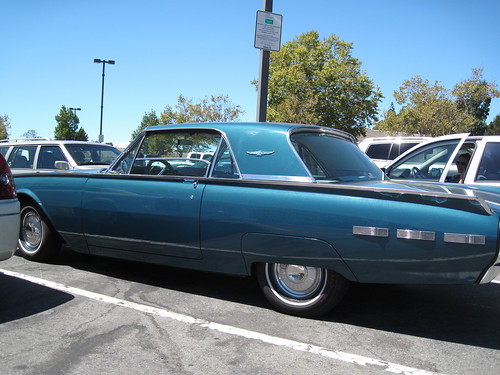
I choose not to feel out of it, stupid, and unhip. I choose to be, like the cars of the late seventies, vintage and classic.

classic*

Ignition – all my plugs throw out a spark,
My engine purrs and builds into a roar.
The pipes and pumps are working fine tonight –
Road sings to rubber on the ribbon-track.

My engine purrs and builds into a roar —
We call old “vintage” in a ride this fine —
Road sings to rubber on the ribbon-track
Croons out, “Pull over if you can’t keep up.”

We call old “vintage.” In a ride this fine,
Who cares if we must add a little oil?
Cry out, “Pull over. If you can’t keep up
Get belted in, love. Gun it and hold on.”

Who cares if we must add a little oil?
The pipes and pumps are workin’ fine tonight.
Get belted in. Love, gun it. And hold on –
Ignition – all my plugs are throwin’ sparks.

2013 Benicia 037

*with love to e.e. cummings, for “she being Brand / -new”. – You imagined us cars, e.e., but we’re in the driver’s seat.


{…there are days i wonder how on earth …?!}

“Do I like being a writer? I love it. I often tell my husband that it’s the only job I could hold now. I’m spoiled. I work at home in my own study, wearing whatever I please. I never have to call in sick. From time to time, I get to schools and other places where I meet delightful people who love books as much as I do.

But there are days when I wonder how on earth I got involved in this madness. Why, oh why, did I ever think I had anything to say that was worth putting down on paper? And there are those days when I have finished a book and can’t for the life of me believe I’ll ever have the wit or will to write another.”

~ Katherine Paterson, in a 1996 interview

Yeah, Mrs. P., I feel ya.

{“Of all the souls I have encountered in my travels, his was the most… human.”}


our love is ours
to have
and
to share

The miracle is this:
The more we share…
The more
We have.

– “You and I Have Learned”
from These Words Are For You, by Leonard Nimoy, 1981.

Did you want to be a Vulcan, too? I did. Life – emotions – are hard. Sensibly not feeling any of it seemed so… eminently logical. Strange to think how so many people related to a completely fictional struggle – but there we are again, making fiction real in life in the way that humans do it best. He told our story, did dear Mr. Spock – and Mr. Nimoy. He was, and always will be… remembered as a large-souled and decent man.

EDITED TO ADD: This little piece of fan history from 1968 made me a little teary. This is an example of a person who does his best to be a mensch in whatever role he has – sure, he was acting, but he used his celebrity to support integrity. Seriously: an amazing and great-hearted man. Would that we all could be remembered so well, when it’s our time.

{horse book-struck}

There’s kind of a cliché about tween girls – between the ages of eleven and thirteen, that they somehow go horse-mad. I was not a horse girl. Not even a little bit. While everyone else was going nuts in middle school after the Saddle Club books, National Velvet, Black Beauty and others, I was yawning and buffing my nails. Which is ironic, since from sixteen to twenty-two, I worked at a summer camp, owned and wore out a pair of cowboy boots, shoveled poo, pitched hay, picked hooves, saddled and curried and swatted away horseflies. I actually sometimes worked with horses, and every summer was one of the hapless staff at my summer camp, chosen to ride the horses during Staff Week, after they’d happily been saddle-free all winter long. Yeah. It was a real joy, as they held their breath while their cinches were tightened, slapped us with their filthy tails, stepped on our feet, kicked, bucked, bit, and tried to rub us off against fences.

So, me: I wasn’t a horse-mad tween, ever. At least, I didn’t think so. But, a conversation this weekend with Tech Boy reminded me differently:

Tech Boy, (Driving by a field of Shetland ponies,): Hey, look. Short horses. What were the people on the Shetland isles thinking, breeding pit ponies? They don’t even have mines in the Shetland Isles.

Me: Well, no, but Shetland ponies were work horses on the island anyway, and they probably traded them inland to be used for breeding ponies who could go into mines and stuff. People bred them smaller. I think they were like those Justins.

Tech Boy: Those what now?

Me: The Justins. The ponies.

Tech Boy: Justin… ponies?

Me: You know… Justin. That guy. Who bred the horses to get a really strong workhorse.

Tech Boy: …

Me: You know. Justin Morgan Had a Horse.

Tech Boy: You do know I have zero idea what you’re talking about, right?

Me: Oh, it was this book I read! On horse breeding! When I was … little. Okay, yeah, that sounds weird.

Justin Morgan

My copy looked like this.

Nah, it’s not weird at all that as a seven-year old I was obsessed with a book on 19th century horse breeding, which was written in 1945. Not. Weird. At. All. I guess by the time middle school came along, I was, as they say, OVER IT.

The funny thing is, just even thinking about that one book makes me remember others. Anyone else recall BRIGHTY OF THE GRAND CANYON… a mule book, which probably started my whole fascination with the Tennessee Walking Mule (what, you didn’t know I had one?), or, MY FRIEND FLICKA, which I also read more than once? Amusing to note – FLICKA was written in 1941 and BRIGHTY in 1957. Clearly, as an elementary school student advanced reader, I had vintage taste. (Or else, our school library had really old books. Take your pick on that one.)