Beware Hollywood Cheetah-ing…

Today’s L.A. times contains a sad story about one author who thought she saw a good thing, but it turned out to bite her in the bum. Deborah Gregory, author of the 16 book Cheetah Girls series tells the story of why she’s still living in a cramped Manhattan apartment she calls a “dump.” The moral of the story seems to be, if you deal with the devil, have an entertainment lawyer on hand. Ouch.

Oh… dear. Via the ever-newhoundy Ali @ Ypulse, we find …Jesus. Coming soon as a samurai near… you. Y’know… I’m going to just reserve judgment on this, but… first instincts? Say, “No.”

Meanwhile, via Miss I-have-a-Snow-Day-tra-la-la, I’ve enjoyed Sarah Beth Durst’s random collection of Obscure Fairy Tales — way more fun of a I-should-be-working time-waster than they should be!

If you hadn’t seen Book Moot’s Author’s Name Pronunciation link, then go thou thither. Find out how to say GAIMAN… and it’s not GUY Man, note to self. (A. Fortis, who’s met him, already KNEW that.)

And hey, speaking of the man himself, did you know he’s giving away a downloadable book? Go, choose your favorite title and wish him Happy 7th Blogoversary!

Thanks to EVERYONE who participated in our chat with Sherri Smith! Comments will be closing on Friday, so if you’d like to be eligible to win a copy of her book, please drop by with your two cents!

Guest Blogger: Sherri L. Smith!!

We’re so VERY excited to introduce YA author Sherri L. Smith!

Sherri is the author of Lucy the Giant, a novel about a tall girl from the immense state of Alaska who tries to lose herself and her past in the wilds — and finds out what it means to have someone care enough to find you. Lucy’s story was Sherri’s first novel, and one of our all-time favorite Under Radar Recommendations from last summer.

Sherri’s other novels include the 2009 Louisiana Young Readers’ Choice Award nominee, Sparrow, a novel about a young woman coming to terms with losing her “real” family and taking the risk to create her own. Sherri’s most recent novel is today’s highlighted middle grade title, Hot, Sour, Salty, Sweet. Ana Shen’s incredibly stressful, terrible, horribly funny 8th grade graduation day is filled with too much family, too little time, grudges, grumpiness, growth and acceptance — and a little bit of romance, too. Hot, Sour, Salty, Sweet lands in bookstores today!

Sherri has graciously agreed to be our guest blogger today, and A. Fortis and I are happy to join the conversation. We encourage you to join in, too, as Sherri has graciously provided us a copy of her book to give away in a random drawing! We’ll be choosing one name at random from all those who comment, so don’t forget to take your chance!

And now for the good part!


Black and White and Read All Over by Sherri L. Smith

Last fall, I taught my first writing class at a local university extension program. Several of my students asked me if it was okay to write outside of their ethnicity. Could a white woman write a convincing Latina pre-teen? Should an African-American woman write about a white girl, or for that matter, a white boy? As an African-American woman about to publish a novel about a Chinese-/African-American girl, my answer on all counts was “Yes, yes, yes!” This class of mine witnessed the birth of several young adult novels that will no doubt one day be sold as “multicultural.” But, let’s get one thing straight—multicultural is a made-up word. The proverbial “Great American Novel” by its very name is a multicultural novel—America is made up of too many different peoples for it to be otherwise.

A.F.: This is definitely something that comes up in writing classes—and I’m so pleased that your answer was “Yes!”—when usually, imagination seems to be discouraged in favor of “write what you know,” and, in extreme cases, even knowledge is discouraged in favor of “write what you are.”

It’s something that really hits home for me, too, as someone of (VERY) mixed ethnicity. I sometimes feel self-doubt about what sort of characters I “can” or “should” be writing about. And if I’m only “allowed” to write what I know, is it really authentic for me to write about either white European-American culture OR Pakistani-American culture when I never quite felt entirely at home in either? Can I write about Costa Rican families because of my stepfather? Aussie families because of my half-sister, or Chinese-American families like my husband’s?

Tad: If you start pruning down your options from that point, it can go even further. Maybe I can only write characters with certain religious ideologies, and you can only write atheists. Maybe I can only write characters who have lived in certain places, have only a specific social or economic class, and on and on and on, until what we allow ourselves to write and vicariously experience is very narrow indeed. That can’t be right…

It’s a mixed blessing that “multicultural” has become a buzz word in kid lit in the past few years, as if suddenly (suddenly!) the cleanly segregated masses started interbreeding and now we have to contend with this new species called “other people.” What will “they” read? How will “they” relate to society? Who will write for “them”? The fact is the faces of young adult readers have always come in many colors, even if the protagonists have not. The multi-ethnic audience is nothing new. It is a shame that the industry pretends otherwise. While racial bias has always existed in Western literature (ever notice how ethnicity is often only a descriptor if a character is not Caucasian, making White Anglo Saxon the default for most characters?), at least there is now a forum for discussing it and a movement toward more diversity.

Tad: Hah. I love that “Suddenly.” Suddenly we’re left with, oh dear, the faceless “them.” It really is ironic that suddenly multiculturalism is popular, even as it’s also “othered” to the extent where it seems to merely underscore that “multicultural” means “not like me.” It’s almost just an additional minority group.

AF: It’s certainly not a bad thing to move towards more diversity in literature, and there is a place—an important one—for writing that discusses these topics themselves and lets readers know that it’s okay and normal and even good, sometimes, to worry about racial and ethnic and cultural stuff.

So, if the publishing industry has been ignoring the diverse make-up of readers until now, how is it that people from all over the world have been enjoying the exact same books for years? I’m not talking about today’s heavily-marketed, printed-in-30-languages blockbusters that are specifically created to pre-sell worldwide. I mean the longstanding, tried and true novels written when the world was a bit smaller, certainly less accessible, and nowhere near as ethnically-blended as it is today. Books like J.M. Barrie’s Peter Pan or, Jane Austen’s Persuasion, or my personal childhood favorite, E.B. White’s Charlotte’s Web. Answer this question, and you have the secret to writing for a multicultural audience.


Need a hint?


Okay, I’ll give you the answer—don’t write for race, write for people. My favorite definition in the world is for the word “humanities.” You know, the classes in high school and college that cover literature, art, music, history and dance? The definition is “that which makes us human.” That’s as multicultural as you can get, and as expressive. My novel, Hot, Sour, Salty, Sweet is about a girl who is both Chinese- and African-American, but first and foremost it is about a 14-year-old girl with a crush and a family that drives her bonkers. Sound familiar? Even if you aren’t biracial?

AF: I just love this, and it’s so tellingly sad that the humanities are often the first to go when there are budget cuts in education…what then happens to our perception of ourselves as human? Of others? Of what it means to be human?

Tad: And even as I agree SO wholeheartedly with this (and YAY, Persuasion!), I find that it’s very tricky. Maybe I’ve never had to “deal” with race and ethnicity within myself — accepting my own hybridized African- and – Greek and Choctaw American has left me more open to the idea that even if it isn’t readily apparent, we’re all made up of more than one race or culture. Since my work is now scrutinized by more eyes than my own, though, I find that I get… nervous about how the race of my characters is perceived. I’ll never forget being asked by another student during my MFA program why I wasn’t “representing.” Seriously, someone wanted to know why my characters weren’t “more African American.” Who knew there was a gradient scale!

One of the reason that YA literature has had such a great appeal for me is that it uncovered the commonality of the human experience. It reminded me that everybody is ashamed, giddy, looks foolish, feels stupid, can’t sleep, gets acne or burps at inopportune times, or is so happy they feel like they can’t contain it — sometimes. We are all siblings under the skin at least once or twice a day, because humanity has some common denominators, despite its various outer wrappings.

If you write true emotions, all readers will be able to relate to them. Will you have critics? Undoubtedly. But don’t let that stop you. If the community you write about takes issue with your work, the challenge is for them to write their own stories. Encourage your critics to tell their own truths, and help you to develop a better understanding of their world. Do your research, be truthful, insightful and as accurate as you can be when writing another culture, and undoubtedly the strength of the story will shine through. Don’t let the color of your skin, or the pronunciation of your last name, keep you from writing outside the “Check one” racial identity box. We are human. We are multifaceted, and that is all the “multi”culture you need.

Copyright © 2008, by Sherri L. Smith

AF: There’s so much strength in this idea. What better way to learn about others than to teach each other, to go out there and read and research and learn? Someone’s got to be doing that research and writing, helping others learn—and the more, the merrier. Sherri, I’m so glad that you communicate such positive and constructive messages to your writing classes. It’s much more conducive to creativity and learning than insisting people stay within that “check one” box.

Tad: Exactly. I can only hope to encourage other people through my own work to step out there and find out about their own and other cultures and groups and open up dialogue about their discoveries. It really opens up worlds of potential to think that you have the right to write well any story that you choose. That’s awesome.


Sherri, thank you for stopping by. We’re feeling inspired by our conversation about ethnicity, race and writing, and we’re grateful you agreed to chat with us today!

The book is Hot, Sour, Salty, Sweet, a tasty title found at a bookstore near you as of this Tuesday! This funny – excruciating – horrible and wonderful account of Ana Shen’s 8th grade graduation dinner will appeal to everyone who’s ever been the member of a loving family — and would (sometimes) like to be (FAR far away), um, elsewhere…

Sherri’s Hot, Sour, Salty Sweet Blogtour continues! Celebrate the Lunar New Year and African American History Month with Ana Shen and her Chinese and African American families at:

February 18, 2008 @ Bildungsroman
February 21, 2008 @ The YA YA YAs
February 26, 2008 @ Seven Impossible Things Before Breakfast
February 28, 2008 @ The Brown Bookshelf.

Don’t forget to join the conversation! Jump in with your thoughts and become eligible to win a copy of Hot, Sour, Salty, Sweet. And don’t miss these other thoughtful reviews of Sherri’s work.

New Year’s Rat courtesy of A. Fortis.

Biracial: Containing or concerning two racial groups

(Please click on our poster to enjoy a larger image!)
No matter if you’re talking about readers in your library, students in your classroom, or presidential candidates, it’s fairly apparent that multiculturalism is nowadays a BIG topic. It’s a buzz-word, and people like to toss it around, some to give themselves the idea that they are ticking off all of the boxes, “identifying” all of the “groups” who have needs that need to be “met.” Instead of thinking of “multi” cultures, this week we’re thinking about… races. Being biracial isn’t something that gets a lot of ink. Under the homogenizing umbrella of multiculturalism, there are very few venues for people who identify as biracial to have a voice.

What does it mean to be biracial? What are you if your “other” race doesn’t show? Does choosing one race over the other mean that you’re “selling out” or “siding” with one or the other? Is there a way to not choose, to avoid classification, to identify with both?

Or is there a way to disassociate with both sides, and come up with something totally new?

Questions of identity and invisibility come up over and over again for people whose single body embraces two races or many. Do you have answers to those questions? Would you dare to write about them?

Sherri L. Smith did.
And that’s why she’s our guest blogger THIS TUESDAY.

Don’t miss Sherri L. Smith’s mini-blog tour for Hot, Sour, Salty, Sweet!

February 12, 2008 @ HERE, Finding Wonderland
February 18, 2008 @ Bildungsroman
February 21, 2008 @ The YA YA YAs
February 26, 2008 @ Seven Impossible Things Before Breakfast
February 28, 2008 @ The Brown Bookshelf – Sherri is the final featured author in the “28 Days Later” Black History Month Celebration of Children’s Literature.

The Sessions: Notes on a Therapist

It is a classy room, with clusters of tropical plants in the corners, a selection of plush chairs, and a glass-topped table. The lighting is discreet, as is the box of tissues on the corner of the table. The expected couch is absent. She perches on the edge of a recliner, ankles crossed, hands folded primly. Her fingers are locked into a death grip, as she watches the silent psychologist writing, and writing, and writing on that accursed pad of paper…

What is it you want to know? Can I tell you my family stories? I suppose I could, but how much of what I know is true, I couldn’t tell you. Why do psychologists always ask these kinds of questions, anyway? If I understood my family, do you think I would be here with you?

What? No, I only mean that family is the basis of the mess I’m in.


No. Really. I’m not blaming them. That’s such a cliché.


Fine, fine – don’t start writing on that pad again. I’ll tell you everything I know.

I don’t know where I get some of these stories. My dad, in his rare moments of sociability, will tell a yarn about a hunter being treed by a bear, and of his whacking the beast with the end of his rifle. (Why didn’t he shoot it? That part is never explained.) The hunter’s wife stands on the ground a ways away, shouting to the hunter to see if he’s all right. The hunter deflects all offers of help. “Help the bear!” he shouts to his wife. “Help the bear!” My father would echo that refrain whenever my mother would offer to massage the knots out of his legs after a particularly hard workout. “Help the bear,” he would grunt, forcing his stiff legs into a painful v-stretch. “Help the bear,” we would mutter after he spanked us, imaging a grizzly ripping him to shreds.

What? I’m showing some signs of aggression? No, I’m fine. Don’t write anything on the pad.

I learned some of the other stories from my grandmother, who is famous for running her profanities together in a sort of palindromic cursing. “God dog it,” she says which is somehow, of course, funnier and more whacked than just saying damn, but to her, it is much safer than invoking the Powers That Be to do any damning on her account, thank you very much. I learned the story of the bathtub from her, how that girl bathed while she was menstruating, and something happened with the plug, no, the drain –

Forget it. It was one of those weird cautionary tale things anyway. My grandmother is scandalized with bathing while bleeding. She must fear that somewhere in the city’s sewer system we are breeding some race of über humans who will come and wipe us out. Kind of like that Alligator movie, only more interesting. When I speak to my grandmother on the phone these days, she nods off, or tells me of people who have died, people I never knew in the first place. “Oh, really?” is all I can say. I’m sure they died of that bathing thing.

From Willie, my great-grandfather, I learned the greatest stories of them all. No cautionary tales there, he told straight up lies, and I believed them all, ate them down like toffee candies. He used to sing the most ribald words to hymns in church, and sit there like a pious saint while we struggled not to laugh. Once he told me that the bubbles from dishwater would cause hair to grow again on bald men. I was little and bored with the company my grandparents were entertaining. After being primed, I duly scooped up a double handful of suds from my grandmother’s sink, and deposited them on my grandfather’s head, while Daddy Willie cackled away in the background like a madman. It is a testament to the inevitability of ridiculousness in that household that my grandfather didn’t even blink, just wiped the suds off of his neck and kept talking to his guests. He never even asked me why.

For myself, I was disgusted that his hair didn’t return. It never occurred to me to that hearing a story from one bald man about what would help another bald man made no sense – but what did I know? I was six. Daddy Willie was eighty-three that year, and rode a big tricycle around town, since my grandfather had finally stolen his car keys and his car, since Willie would’ve hot-wired it had he found it. (Some of us just don’t go gently “into that good night.”) That old fox died the next year, within a day of, and in the hospital room next to my great-grandmother, Miss Emily, whom he had loved and adored and hated and reviled and divorced and followed around for the rest of his life until death did them part.

I love how their wedding vows got them in the end.


We laughed all through the hymns at his funeral.

I could tell the story about my oldest sister, but my grandmother says it’s always dangerous to speak of evil aloud. I will say this though, if she were an animal, she would be a pit bull with a diamond collar, owned by a Barbie-clone with an SUV.


What do you mean I sound hostile again? Have you met my sister?

Some of the stories I know have been archived, like the one about the teacher who kept my mother after school and kept his hands crawling up her thighs while she completed some bogus assignments he had for her. Little kids are so defenseless and so easily shamed. I didn’t hear this story until I was older, and my mother awkwardly hacked out some syntax to ease the wall around her heart. The day my grandmother called to announce that he had died, had been cleaning his gun and shot off his testicles and bled to death, my mother …danced. My God-fearing, peace-loving, mild-mannered, plain-faced, hair tucked up in a sensible coronet of braids mother laughed and laughed and lifted up her hands and whacked her thighs and laughed some more, and then, and then — waltzed out and bought red shoes, leaving us kids blinking and a little afraid of her. She grew wings that day, and has since become a hawk, running her school, swooping down and pouncing with silent talons on those who would take away any child’s dignity. That’s a true story, there, if you count truth that stands tall in the shadow of camouflaging lies.

I know a story about my Aunt Tandy, whose twenty five year marriage is such a war zone that she’s like soldier back from combat – if you slam a door, she loses the last five minutes of her short term memory. It’s horrible to say it, but I can’t stand her. She’s spineless, toadying, even with me, even with us. I thought growing up meant that no one could tell me what to do anymore; no one could force me to do what they wanted. All Uncle Brian had to do was lift his fist, and she was his slave. What if that happens to me? What if I lose myself in this relationship, and then lose my mind? God help me, that woman scares me.

Excuse me?


All right – all right. It is my own story that you want to hear, the tales that beat and surge in my own pulse. But it’s not my own stories that I can see. I know who I am – part hen, part hawk, part fox, part pit bull. We’re all the sum total of our families. My future is written in their lives just as surely as their faces in the mirror are reflected in mine.

But our time’s up? Already? Well. Thank you… No, I don’t think I’ll be here next week. No, no, there’s no need to reschedule. I think a little retail therapy might do me just as well. They’re having a sale on mirrors at Marshall Field’s… I keep thinking if I just can just find the perfect mirror, I will finally see myself…

The Sessions, Fictions,©2008

One of VLV’s free writes, 10.29.2003

Something got me thinking about a one of the authors in residence at grad school — I will NOT put his name here, since he’s the type to have Google Alerts emailed to him every time his name comes up… But I was just thinking about how much I hated his class, with all its crazy undercurrents as we all sat and tried not to stare at each other around the long conference table. Twenty or so people either acolytes of his, or silently seething at him (or at someone else, in the case of Nat and Georgette) (Still don’t quite get what all THAT was about…). So many of us hated it…but it gave me some interesting moments.

(This is as accurate an account as I can make of what was on my paper, doodles and all.)

“…but trailing clouds of glory do we come/ from God who is our home.” – Wordsworth

Home.

No matter how much time I spend on writing the word in pretty print, neat cursive, curlicues of calligraphy, it doesn’t change the fact that I’m not always sure of the location of ‘home’.

Think of the word:

“We’re going ‘home’ for Thanksgiving.”

Home has always been where my mother’s people are from (why aren’t they my people too?), where it is slow and hot, and the streets are edged not with gravel but crushed oyster shells. ‘Home’ is from where we wanted to return, as bored, hot, somewhat frightened children, “Mama, when are we going to go back to America?”

Louisiana is not home. My mother’s people are not ‘home.’

Home was never, never my father’s people. Not his two sons, who I called Dad’s sons, they no brothers of mine, not his evil mother, who doted on my eldest sister and hated me. Not them. My grandmother draped plastic on the couches and every bed of hers I slept on was made with rubber sheets. No home there.

Home… When I think of home, when I’m tired and feeling homeless, I go to you, you’re where my heart is…” If home is where the heart is, home is rather mobile – I follow it, and it follows me. ‘Home’ is applying to PhD programs, and wherever he gets in, we’ll settle. There is not so much history time-wise in this version of home, but there is a comfort, a security which belies location and architecture. But before him, ‘home’ was…

The certain crackle of my father’s arthritic knees; too many years of Old-Man basketball -. He would walk stiff-legged down the hall, kicking up the chronic angers that settled like dust on the floor of our 1960’s 3 bdrm. Bungalow. ‘Home’ was the slap of the screened door on a school morning as we three marched out and stood by the car for final inspection: hair? Check. Homework? Check. Dress length? Shoes shined? Standing up straight? Check. Check. Check. ‘Home’ was the sound of a plane high overhead, slicing blue through a summer morning; a someday sound… coming, coming, (please God) to take me away.

Two little sparkles… and a drum roll

The last pair of baubles from today are little funnies I picked up from being out and about. First is the message from Our Leader. Wait, you didn’t know we had one? It’s Mr. Ambassador. And BOY, does HE HAVE PLANS! Or else, just plans for cool outfits, swami bowing and appropriately regal waving.


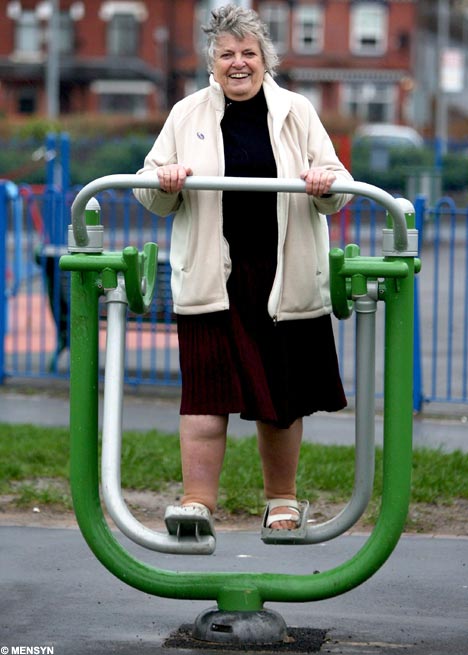
A few weeks back, I remember I just about choked on my coffee when I read about Senior Citizens playing with a Wii. Now Jason at Escape Adulthood has found one better — an older person PLAY GROUND. People — this is an idea whose time has come. That, and snow days for people over high school age are ideas that we as a people should run with. Are you with me?

DRUM ROLL PLEASE: WHO has a guest blogger coming who is cool and writes really awesome cultural investigation books? Who wants to win a free copy of a book that’s about things like running purple dye, disastrous family dinners, Hair Behaving Badly, and throwing dumplings?

Hot, Sour, Salty, Sweet: The novel. The Author! The review. Coming soon to a blog near you!

Poetry Friday: Night, Sleep, Death & Stars

A Clear Midnight, by Walt Whitman
This is thy hour O Soul, thy free flight into the wordless,
Away from books, away from art, the day erased, the lesson
                     done,
Thee fully forth emerging, silent, gazing, pondering the
                     themes thou lovest best,
Night, sleep, death and the stars.

A rather spare poem for Whitman, but one beautiful in its simplicity.

A chilly, gloomy start to the Lunar New Year, I’m hoping everyone doing lion dances and all are wearing silk thermals beneath their costumes! The ceremonies here in Glasgow are all safely INDOORS. Brrr. More heart-warming if not body-warming poetry can be found with my bud Gina at AmoXcalli.

Poems on Friday: Memory Slapping

Grief Calls Us to the Things of This World

by Sherman Alexie

The morning air is all awash with angels . . .

                – Richard Wilbur

The eyes open to a blue telephone

In the bathroom of this five-star hotel.

I wonder whom I should call? A plumber,

Proctologist, urologist, or priest?

Who is most among us and most deserves

The first call? I choose my father because

He’s astounded by bathroom telephones.

I dial home. My mother answers. “Hey, Ma,

I say, “Can I talk to Poppa?” She gasps,

And then I remember that my father

Has been dead for nearly a year. “Shit, Mom,”

I say. “I forgot he’s dead. I’m sorry—

How did I forget?” “It’s okay,” she says.

“I made him a cup of instant coffee

This morning and left it on the table—

Like I have for, what, twenty-seven years—

And I didn’t realize my mistake

Until this afternoon.” My mother laughs

At the angels who wait for us to pause

During the most ordinary of days

And sing our praise to forgetfulness

Before they slap our souls with their cold wings.

Those angels burden and unbalance us.

Those fucking angels ride us piggyback.

Those angels, forever falling, snare us

And haul us, prey and praying, into dust.

from Thrash, © 2007 by Sherman Alexie, Hanging Loose Press.


Forgetting and remembering, being slapped by fallen/falling angels, jarred into the here and now. Interesting thought. And who knew Sherman also wrote poetry? Score another point for a National Book Award winner, and an all-round nice guy who gives great interviews.

Up from the Depths

Boy, nothing like someone giving me a project to do when I’m in the middle of another one. Can you say “project jumping?” I emerge, manic, from poetry wrangling all last night. I dreamed in iambic pentameter. It was not pretty. If you’re looking for pretty, via Chicken Spaghetti we find a fabulous interview at Bookslut with poet Natasha Trethewey, whose gifted poetry straddles worlds. Colleen’s Booksluts in Training are at the School of Hard Knocks, and this month include a review of Ellen Emmerson White’s Long May She Reign, which is steadily making its way to the top of my TBR List!

I’m a bit late to Bottom Shelf Books’ review of Tuesday — but trust me, that book is quite surreal enough for the political landscape of Super Tuesday!! I remember just giggling the first time I read it — ah, the night of flying frogs — and thinking that the creators were on that wonderful, mind-tripping substance called creativity. It’s a REALLY weird, beautiful book full of possibilities that can fit in a weird, beautiful world full of the same.

Via SF Signal, a Jonathan Stroud (of The Bartimeus trilogy fame) interview at a French SF website. (No worries: it’s in ENGLISH.)

Today’s 28 Days Later is a favorite in the blogosphere, Janice Harrington, who wrote The Chicken-Chasing Queen of Lamar County, much loved and discussed by Jules @ Seven Impossible Things Before Breakfast.

Via Galleycat, it’s L Magazine’s 4th Annual Literary Upstarts Competition. New Yorkers, start your engines.


Still Helping a (big) Sister Out: Thanks for all the suggestions for MG books for the Ramona-loving little sister. Someone suggested graphic novels, and that really sparked some ideas. Now I’m looking for MG books with differently-abled protagonists. Anyone? Thanks in advance.

Good Morning Writers: This is Your Brain on Cassie Edwards


It started with the Kaavya Viswanathan thing. It got worse more recently with the Cassie Edwards thing.

These plagiarizing chicks give me the creeps. Cassie Edwards has seriously been giving me nightmares.

I don’t know why it even worries me. I never knowingly try and copy anything from anyone, I didn’t even do it in school (although yes, Mrs. Henry, in the bathroom at fourth period that one day in 8th grade, Elizabeth Williams was copying my English assignment. Sorry. I so wanted her to like me… sigh). I’m totally above board, and I know it. But I’m completely in a panic when I hear people caught copying saying it was “accidental,” and it was “unconscious.” Writing about WWII means I’m not writing in a vacuum; everybody and his dog has something to say about “the Just War” and “the most violent war in Mankind’s History.” What if I say something someone else has already said? What if my unconscious walks into someone else’s novel and goes shopping?

(My nightmares consist of a New Yorker screaming at me, and me with piles of unsold books falling on me. And they’re hardback, too… I’m going to take a guess that the Brooklyn accent is S.A.M.’s, and he’s already warned all of us in his little fold what would happen if we even had a hint of controversy about our work. Curtains, kids.)

Last week I finalized a page of acknowledgments for Novel #2, just to settle my nerves. They’re an entire page long so far, as I sought to list every book, website, magazine article, movie, photograph from the National Archives; anything that could have sparked my creativity. I almost feel like I’m trying to say, “No, it wasn’t me, it was the genius of the world that wrote this book!” But seriously: at this point, anything to stop the nightmares.

Now, just in time, the Guardian’s Levi Asher has tips on avoiding author scandals! Here are the eight things every writer should remember:

1. Do not use the word “memoir” unless you mean it.

2. If you’re not sure whether what you’re writing is a memoir or not, guess what? It’s a novel.

3. No more than half a page of plagiarism per book.

4. Don’t make up exact dates that you can’t remember. Instead, be general: “The most important day of my life was the day of my son’s birth, in the summer of 2005 …”

5. Just say no to sending a friend out in public with a wig as you.

6. If you’re in a flame war and you’re about to go sock puppet, take a 10-minute break and go to a coffee shop without a wi-fi facility. Maybe the walk will cool you down.

7. Go ahead and make up dialogue. Everybody except Tom Wolfe does.

8. Pick a name. “Benjamin Black is John Banville” is just not a good look.

I’m going to start doing a little yoga before bed. If nothing else, the extra stretching will help me dodge the falling tomes…