The lint in the pocket of the week

SF/F Alert: Tor Books has a great podcast out today, as Jon Scalzi interviews Scott Westerfeld and Justine Larbalestier (slaughtering her name genially). It’s an insane conversation, of course — from the zombies to the water to the books. Enjoy.

Further surreality can be found at in perusing the strange case of Topolino, Titty, Paperino, and Paperina, who have been counterfeiting something or other. Or so Minh says.

Via Bookshelves of Doom: the Kansas City Public Library’s new Plaza Branch is PHENOMENAL. The massive bookshelf/parking garage alone gave me chills. And the people have a BULL inside. How cool are they?

Those of us (AHEM!) who have gone away to write our book on a gorgeous island beach are home again. And she took pictures! To make us all jealous!

Not that we are ANYTHING but congratulatory, of course.

Poetry Friday: Words For Writers


“The Mind is a Hawk,” by Walter McDonald, from Night Landing © Harper and Row.


The Mind is a Hawk

The mind is like a hawk, trying to survive
on hardscrabble. Hunting, you wheel
sometimes for hours on thermals

rising from sand so dry
no trees
grow native. Some days, you circle
only bones and snakeskin, the same old

cactus and mesquite. The secret
is not to give up on shadows, but glide
until nothing expects it, staring

to make a desert give up dead-still
ideas like rabbits with round eyes
and rapidly beating hearts.

Care to read a few more samples of this poet’s brilliant work? Find more poets for everyone at Becky’s Book Reviews today. Happy Poetry Friday.

Yan, tan, tethera…

And here we go again.

“Things” by Fleur Adcock from Poems: 1960-2000. © Bloodaxe Books.

There are worse things than having behaved foolishly in public.

there are worse things than these miniature betrayals,

committed or endured or suspected; there are worse things

than not being able to sleep for thinking about them.

It is 5 a.m. All the worse things come stalking in

and stand icily about the bed looking worse and worse and worse.


Monday. Feel like I’m waiting for the gallows gate to drop beneath me as I wait on this editorial letter. Ugh. It would be something, for once, not to be terrified.

At Home in the Forest

The children’s literature ezine we all know and love is up!!


You do NOT want to miss the interview with Kevin Hawkes with Mark of Mark & Andrea’s Just One More Book!, nor A Day in the Life with children’s author Esther Hershenhorn, by Kim of Kat’s Eye Journal nor Little Willow’s awesome feature on Books That Opened Your Eyes.

By the way: BACA’s back. Color me ever-so-pleased.

I always find statistics intriguing, and the new research from Junior Achievement and Deloitte which Anastasia reports on at Ypulse really gave me pause. If you believe the statistics, there are a high number of young people who don’t mind lying and cheating to get ahead, because there is a huge pressure on them to be successful. Those of us on the SF/F Cybils nomination team were talking about some of the books we’re reading, and some of the behavior of the characters. We were discussing them in terms of being realistic (For instance, how much of being a bully is over-the-top? Does anyone’s parents, in this day and age, really allow that?), but Anastasia’s concern was an alleged lack of ethics within an entire generation. It’s an interesting discussion, you’ll want to drop in if you have time.

As part of the Cybils SF/F nominations team, I’m deeply interesting in why many people think science fiction isn’t literature.

Don’t know if you’ve been following the J.K. Rowling v. Publishing Company story, but Camille offers and update. And even though this blog is normally ALL Bear (ahem), GO Stanford!!!! Seriously — I very much respect JKR’s authorial control over her characters and books, etc., but I think she’s going after the wrong people, here.

Snippets

Coloring books have always been smiled on as quiet fun in church — but I think this is the first time the Catholic Church has put out one… and it’s on how to be safe… at church. I don’t know how to feel about that. I just… don’t.

The Herald-Mail reports that Twilight is going to be adapted to film, followed by its sequels. Should be interesting to see who plays Edward, and how they figure out that whole shiny-granite skin thing. Hm.

The best movie news of today, however, comes from Bottom Shelf Books where Minh shares the director’s comments from Disney’s Ratatouille. The artistic vision — the rodent inspiration! The… complete and utter randomness! It’ll make you smile.

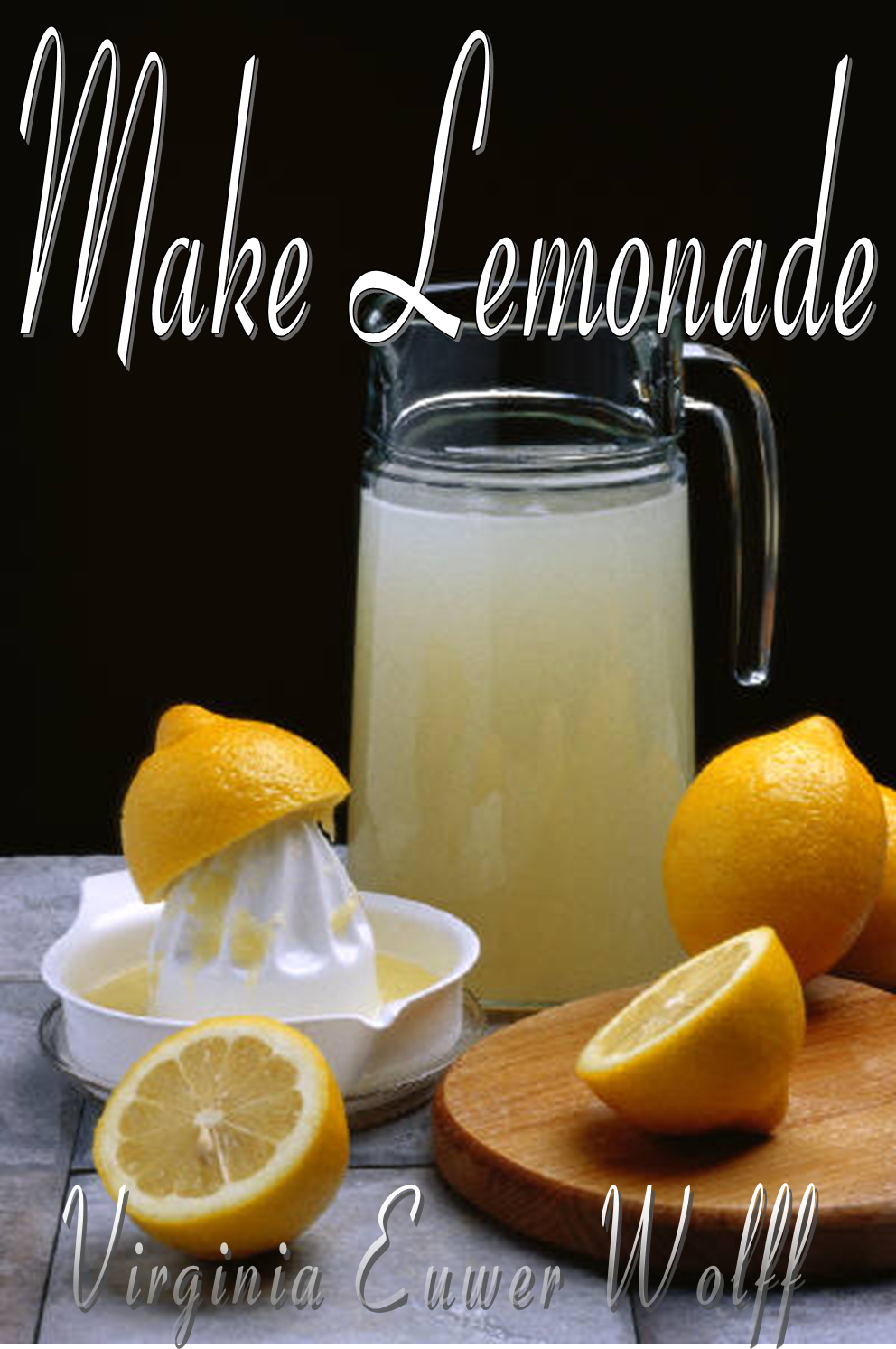
Wicked Cool Overlooked Books: The Possibility of Lemonade


“I am telling you this just the way it went
With all the details I remember as they were,
and including the parts I’m not sure about.
You know, where something happened,
but you aren’t convinced
you understood it?
Other people would maybe tell it different
but I was there.”

First lines of Virginia Euwer Wolff’s, Make Lemonade, Henry Holt and Co ©1993.

Probably my voice was shaking as I tried to read loudly but with some kind of feeling. My students were… loud, not with their voices, but with their bodies. They shuffled and pulled up the hoods on their coats. Their actions spoke of disgust and amusement that their teacher was reading them …a story. I mean, they were too old for that.

My students at Crestmont were at the school because they had been incarcerated for a variety of reasons. They were a strange mix of ancient and young, iron-hard and vulnerable, so it was fitting that I read a story that was rooted in the ground from which my students grew — the rocky ground of urban poverty. It was not a story of a person of a particular race — and my students were Caucasian, African American, Latino, and Filipino — but of a particular class, the category of “poor” into which all of my students fit. The girls in the story were poor — but one was poor and dreaming, and the other was poor and hopeless. One was a fourteen year old girl with a VERY determined mother, who’d grown up with the word COLLEGE in her house like a large piece of furniture that she had to step around during her day to day. The other girl was seventeen, already a mother of two with no mother of her own, and was advertising for a sitter.

Two girls from different sides of the street, but when their lives intersected, there was …possibility.

I deeply wanted to introduce ‘possibility’ to my students. Most of them had the idea that they were going to die before they turned twenty-one, that they would never find any other kind of life, and that this was how it had to be — nobody they knew had ever done anything different. They all wanted to somehow ascend the hill of fame, be Somebody Big, and then — die. Because they couldn’t imagine anything more than that.

And so I read them Make Lemonade.
I never really got to know what they thought of it, not really.
It wasn’t an assignment. I didn’t make them write response sheets (although our principal preferred that I had); we didn’t do any experimentation with blank verse or follow a study guide. I didn’t want them to have to do anything more strenuous than listen.

In time, they stopped moving, stopped shuffling, pulled down their hoods and were still. They listened, at times with a frightening intensity. They would ask me — sometimes in the middle of a math class, apropos of nothing, sometimes just when we were ending our session for the day — what something meant, why something had happened. I answered what I could, and others jumped in and put forth their own answers. I left those answers as they were — I didn’t try to gather them up or refine them or make them make sense. They felt too fragile — and amazing — to touch. As a group we were thinking. That on its own was enough.

With as much critical praise as this book has garnered, it maybe doesn’t warrant being a Wicked Cool Overlooked Book, but it was to me. None of the other teachers had read it. Quite a few older teachers in our system implied that “teaching poetry” to our school’s population was out of the question. But since this book was reissued in 2006, I know someone else must support my opinion: Make Lemonade is wicked cool.

I will always remember the first book I read to my Crestmont students. They listened, then like small children, they asked if we could read it again.

Thoughts on a Magnum Opus

Just out of college, I published with a very small religious press, two books. They were, in a word or two, stunningly dreadful, but I was, as I said, just out of college, and not brilliant at anything but being twenty-one and regurgitating facts to get grades. I was lacking life experience, but what I had, I was (alarmingly) willing to share. These books were rather moral-of-the-story tales where everyone was either safely and stultifying good or they were bad and justly punished, and all lived happily ever after. I like to think they weren’t that predictable, but I know for sure the narrator’s voice was wrong — the wrong character was speaking because I was too fearful to let the boldest character take over the story; too afraid to let things get that out of control. (This is a tendency I hope to avoid in the future!)

I remember just after the books were released having an acquaintance ask “Don’t you want to write something else? I mean, something better than just writing for kids?” To his mind, the combination of publishing both a slightly religious book and a book for children was just the kiss of death. I mean, no Nobel Prizes here, no borrowed glory in which he might bask. I was, of course, offended…


But then the idea took hold. Couldn’t I do better than this? Shouldn’t I? Were series the thing? Didn’t Little House get read forever? What about Make Way for Ducklings or Charlie & the Chocolate Factory. Shouldn’t I be writing a Classic?

The books faded quietly out of print, and after a bit more life and a bit more school and a lot more practice and thinking, I’ve got another chance.

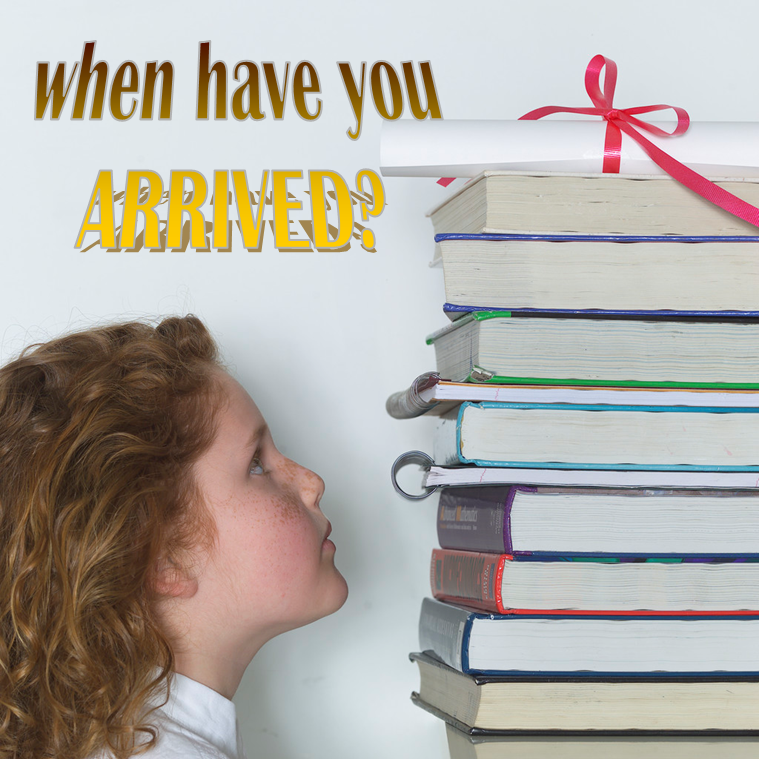
Now Read Roger has asked The Question again: “Is there a mountain a writer is expected to climb? Do you feel the need to write a Big Book?”

What is a Big Book? Catcher in the Rye, which I kind of hate? Or something close to Judy Blume’s Forever? Do we have to write The Sisterhood of the Traveling Pants? Something that gets film optioned or picked up by a television studio? What does “Big Book” mean to you? A series? An award-winner?

I could wimp out and say that I’m too new to the game to have any answers but all I can say for sure is that no matter the metaphorical size of the book, the fact that I’m able to share what I write is still a gift. Sure, I want to sell books, justify my school bills and all, maybe even one day write a Big Book, some Magnum Opus that garners me a National Book Award and a lot of flashbulbs, but in all honesty, the idea of that gives me hives. The gift to me is the ability to write — that someone is allowing me publication is still a major thrill. I’ll worry about Big Books — the next Chris Crutcher/Rob Thomas/Catcher in the Rye/Forever amalgamation — maybe next week…

‘Til further notice,
I’m in-between
From where I’m standing,
My grass is green.