Blog

{npm♦4/13}

We’re packing again for our twentieth move – who knows what the neighbors will be like? What if they tidy their lawn with scissors, contemptuous of our easy relationship with dandelions? How loud is their music? On our morning walk, will they stop, baffled by black-with-white, and stare? Will the smoke we smell be of incense and ancestors or danker weeds? Will what flies over the fence be raised voices or bubbles on the breeze?

Will they be as polite of neighbors as Canada? Will anyone ever be?

crossings

intersectional
Means no one is an island
Our pain become yours
Like smoke drift from our fires
This trouble seeps past borders


{npm♦4/12}

Ours was not an easy faith. The Sunday churches, I believed, focused on fun things like coffee hour, incense, colored stoles or, fascinatingly, ellipses – God, after all, Was Still Speaking… We got stuck focusing on guilt and eschatology, a bulky box with awkward corners and no lack of obviousness. WE knew how the world would end. We were the ONLY ones who knew. They would turn on us, before it was over.

No lack of wariness attended my religious education, but a child’s mind is flexible and bends around corners. “But, why would they all turn on us? Is it going to be like God hardening Pharaoh’s heart? But, why do people have to track us down and persecute us? But, what about the Channel 9 People? Wouldn’t the people who give to public television or who were hippies like our neighbors help us hide? How come nobody would help us when they helped Anne Frank?” Nothing of the broad strokes, black and white words we heard could gain purchase against our questioning imaginations. With no one to ask, my sister and I whispered in our bunk beds, hatching theories how we could escape.

But first they came for the *Muslims.

Rumeysa Ozturk
Mahmoud Khalil
Yunseo Chung*
Badar Khan Suri
Leqaa Kordia
Ranjani Srinivasan*
Alireza Doroudi
Dr. Rasha Alawieh
Momodou Taal

Kilmar Abrego Garcia*

WRONGFUL

Hiding their faces
Cold-hearted malignancy
Called it an arrest,
Claimed legal right to violence
Mute, we failed to even pray.

Some of the listed are not Muslim but it is notable that many people taken by ICE are.

{npm♦4/11}

My third grade teacher read aloud to us daily, and more often than any other author we seemed to read Beverly Cleary. A writer from the state just next door, she was a neighbor whose books depicted similar West Coast lives. I wasn’t as big a fan of the older books featuring Otis and Ellen, or the animal books featuring Ralph and his motorcycle. I didn’t think much of Beezus, and Ramona, I felt, authored most of her own troubles, but Henry Huggins was just my speed. He and his dog and his paper route seemed like they led a charmed life, one that I could imagine having. I dearly loved Cleary’s older books that portrayed an idealized 1950’s world where a corsage and a dance or a boy were the most important things. No matter the era she wrote was in, everything seemed so very clean and good on Klickitat Street, a street where all quarrels were solved and even mischievous childrens’ comeuppance wasn’t so very hard to bear.

Ironic that Klickitat Street in Oregon is named after the Chinookan people whose name means “beyond“.

beyond Beverly’s street

other tree-lined lanes
perhaps hear brown-skinned Beezus
sigh at her sister:
Black Exclusion Laws, repealed
left silent echoes behind

{npm ♦ 4/10}

Strubie in late 2021 was a round-headed four month old. Perfect, solid and placid, he was happy to sit and stare at my unScottishly dark skin, making fat-fisted, uncoordinated attempts at my tantalizing dangle earrings. Devoid of board books in the holiday house, I whispered the words to GOOD NIGHT MOON into his little elfin ear, unsurprised that the words came unprompted (although his parents were well impressed). Ironic, as it’s a book I’ve always disliked, especially the garish cover palette. Isn’t that the way it goes with things that bug us? Songs that we hate we can reproduce, pitch-perfect. This surreal bomb of green, yellow, and red has seared itself into the American consciousness as a classic, with its supposed-to-be-sleepy bunny glowering out from the page, vanishing socks, the cryptic old lady, congealed mush and an ominous… “Nobody.” GOOD NIGHT MOON is the weirdest little beast of a book, but I’m already planning to get the commemorative postage stamps. This book will never not going to remind me of a perfect, round-headed baby, born at the first light after a long, dark time.

Struan

time is a river
though no two thaws flood the same
mud season arrives
slick and cold. inconvenient
proof of life after life. hope

{npm♦4/9}

I was obsessed with diseases as a child. I read extensively about polio because it was A Terrible Thing that happened to so many children AND a president…. and I was terrified by the ranks of iron lungs in old Life magazine images, fearing they would come back in vogue, as treatment for… something, and I’d be trapped in one for years. I memorized the symptoms for typhoid as described by Catherine Marshall in CHRISTY, because fictional interactions with disease was apparently also acceptable. I was mildly interested in Typhoid Mary, but fascinated by Jacob Riis, and Jane Hull who lifted children out of desperate circumstance. Children can become oddly fixated on disaster and destruction sometimes. My readings on child welfare and the shaky beginnings of a nation deciding that perhaps the children of the poor should also be granted a childhood instead of being bred for endless work clash painfully today against the plummeting working age in some states, and the climbing number of measles deaths in others. Somewhere, someone voted and decided that child welfare didn’t need to treat anyone well.

the smallest always pay the price

Will anyone admit they voted for this
And decided, “Sow chaos,’cause we can!”
Now whispering “Whaaaat?” or ‘How could this happen?’
Is pointlessly past tense, and done when anywhere,
Everywhere in the rot creeps. Ready or not
our dominoes fall. Change sweeps up everything,
true – but this breaking is
brutal and once again, children are lost.


{npm♦4/8}

Tax day is coming – the day my inlaws got married, to save money, they told their children, though I don’t know how that worked. Ironic, that every April I remember them when I think about them no other day (I “took” their son; they don’t forgive this). Annually at my house, we set aside our cash to ‘give the devil his due,’ and that’s the day these giddily unromantic people chose to commemorate their union. Nothing more inevitable than death and taxes. Nothing more American than tax dodgers, fraudsters, and the like, avoiding payment for the benefit of paved roads and postal services. Silver linings, I guess, to commit to the greatest fraud of all on the day you dole out your coin, the day you return on your investment in infrastructure, a time you promise to add another pair of bricks to the foundation of the world: one called love and the other, honor.

taxing

Foundational form
this infrastructure holds us
Upright. Embodied.
Our checks, balances and spines
Keep heart and soul in tune.

{npm♦4/6}

(While I don’t often explain my poems, I thought I’d explain this one. April is Autism Acceptance Month and a young man who is otherwise non-verbal read a poem for the Presbyterian service, using an alphabet sheet which deciphered his words one by one. Far from being a vacant body, we met a poet’s soul, and it shocked some of us out of the vaguely pleasant responses we give the different and disabled. It reminded me of my brother turning eleven and deciding he wanted to read the scripture for church service. Our entire family – big old sops that we are – cried.)

We cried when they told us.

He wouldn’t ever do anything, the voices told us, kind but authoritative. They knew, and we did knot know, a child’s limitations. He would never read, never cipher, never go to college, never go any further than the colorful third grade classroom where his IEP team sat. Nobody’s fault, nothing more to do – he was such a sweet boy, so well-behaved, a credit to his family, and we should be proud of that. We cried, but there was not much time for tears, as we had work to do – lunches to pack, shoes to tie, and a small boy to send to school anyway, where against all odds he learned what a joke was, and made them up, wrote lines of shaky letters that formed shaky words and sturdier sentences. Where, against all advice, he reached higher than his grasp, and leapt – and we, eyes on the sky, set to work regluing the feathers to his handmade wings as he leapt from higher and higher perches, crashed through wobbly landings, and taught us that persistence was the difference between failing and flying.

close focused, frowning
jeans creased sharp enough to slice,
minding his diction,
warming like slow winter sun
In the beginning, the Word
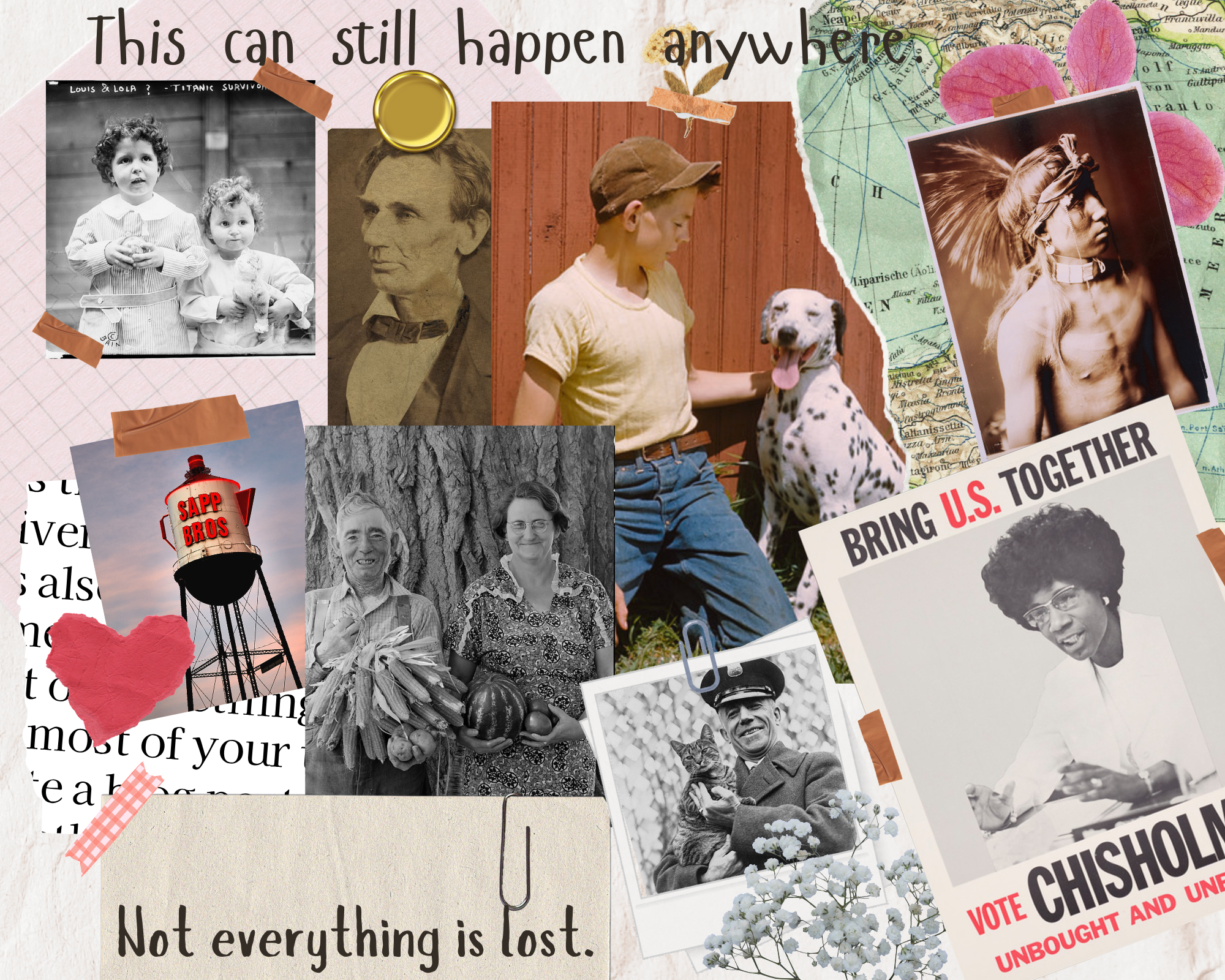
{npm♦4/5}

A black day, a newspaper (Hartford Daily Times, Connecticut) recorded it. “Friday, the 12th day of April, 1861, will be recorded as the Black Day in the history of our Republic. United States Forts firing upon United States Forts. American citizens directing the implements of death upon American citizens. The Civil War commenced. What a shocking record! O, how long will it be before this accursed state of things shall cease to exist in the memory of the People? No man can tell.” So little they knew, and so many black days since that they form their own black list. Black ops, black sites, and Blackwater, a black hole of secrets and death and deals, giving all involved country a black eye, a history and a bitter truth that nothing will ever black out. Nothing changes this history. No Spackle, sanding, or buffing obliterates that past.

All we have is now.

sleep shattered by song
mockingbird urges, Look!
today is made new

{npm♦pf – 4/4}

Tricia is raising the bar this month, revisiting her “try-random-poetry-form” posts for NPM. She shared the Venn Diagram poem today for Poetry Friday and it is BRILLIANT. Having committed to reflecting on lines from Naomi Shihab Nye’s “Gate A-4” this month, I immediately knew I had try this new form with one of my phrases.

From Process…

Of course, Tricia didn’t tell me this was going to be so HARD. I didn’t think it would be – it’s basically two Golden Shovels back to back, with the mentor poem phrase in the middle of the overlapping circles so that it both ends and begins two poems or poem stanzas. I don’t know why this took me forever to get my brain around, but – wow. Three hours to get eight lines is kind of ridiculous, but I am trying to go with the spirit of the phrase as well – so the lines needed to end with the idea that not everything is lost.

…To Poetry

TBH, that is DAILY the thing that takes the most time with these poems.

I refuse to be cheesy and write sermon illustrations that are sunny and cheery and essentially meaningless. I refuse to do the “it gets better” thing with such a great woman’s work – I don’t want to write Chicken Soup for the Beleaguered American’s Soul type of crap that says the sun will come out tomorrow and everything will be fine. Damage – so, so much damage – is being done, not just to institutions and systems, but to people. Much like the immigrant children separated from their parents the last time this administration’s brutality was left unchecked, some things will never be repaired. I grieve that as any person of morals and sense does. It will not be “fine,” but it will be…well, in the Julian of Norwich sense of wellness. Things are chaotic, and we’re brokenhearted, but all manner of things will be well – because we are still here. The grievously ill body politic may not recover, but God is still here. And, we are not done working to save PEOPLE yet.

*Ahem.* Anyway – off my soapbox, here’s the poem.

All Shall Be Well

It hurts – how can it not?
We assumed that The Dream was everything.
But found how fleeting a daydream is.
A handful of bubbles, captured, then lost.

Not by might do the best dreams come,
Everything will not yield to the bark of the gun.
Is our land solely gold-makes-rules thugs and no more?
Lost Dream, steel our spines. We know what we stand for.