International Blog Against Racism Week continues…

“But the movie just happened to be cast that way. No one sat down and decided to be racist, it just coincidentally happened that the Jewish characters were all greedy, the Hispanic ones all spoke in bad English, the Asians were sexless geeks, and the white characters were articulate, smart, sexy, and heroic!

It is quite possible that no one decided to be racist. However, movies do not descend from Heaven, untouched by human hands.”

Quoting here one of the brainiacs behind this IBAR week, Rachel Manija Brown.

So, you didn’t wake up this morning and decide to be a racist, but you are.

Yes, you. Yes, me. EVERYONE is racially biased somehow.

Racism wasn’t something overt when I was growing up. We lived and worshipped in an integrated community; our Latino neighbors brought back special treats for us when they came back from Mexico, and shared their home made capirotada with us during Lent. Our next door neighbor, Petra, taught us German swear words (thanks, Pete!) and though there were a few other Black families in the neighorhood, I’m pretty sure not many of them wrapped up in a serape to walk the dogs at night like my father did (my apologies, Rubio and Diaz families. He embarrasses the crap out of us, too.) My parents, born and raised in the South, were in grade school during the 60’s integration, and my father to this day refuses to eat at restaurants because he recalls the threat of Black chefs and busboys spitting in the entrees of White diners. My grandparents on my mother’s side were poor and less educated; my Mother’s mother only finished fourth grade before she had to stay home and help out. Thus, I expect my grandmother to be weird about race. She’s lived in the same little two stoplight town in Southern Louisiana her whole life, and, frankly, doesn’t know any better. I have always been ready to forgive her, to smooth over the oddities she said (like she told my sister, “Don’t let Pete sit on your bed, you don’t know where whitefolks’ backsides has been!” O…kay…), but when I accosted them in my mother, the Valedictorian and homecoming queen of her high school, the perfect woman I adored, I couldn’t face it.

It happened when I was fourteen. Coming back from a Youth Action trip, after building a dairy or something out in the sticks of Southern Mexico, I rode the fourteen hours on the train to the Border sitting next to a boy named Gamel Mohammed Mozeb. He was from somewhere outside of Lodi, almost twenty, the only son of his parents, funny and thoughtful and already engaged to marry a girl from back home he’d never even met.

I found him fascinating. I mean — my goodness — in this day and age, to have an arranged marriage!? I pelted him with endless questions, and he was patient and didn’t laugh too much. His deep voice carried not a hint of an accent, but he taught me a few words in his language (a Pakistani dialect which I can’t recall), and told me a little about how his wedding would go — the feasting, the sheet hung out the window (which made me just about die, poor 8th grade me), and everything. It was a world completely outside of my experience. I was glad to have met this guy.

After our trip, we kept in touch. I got a card or a phone call from Gamel every couple of weeks for a long time. He suggested I come out and visit his family. Knowing how completely strict my father was, I didn’t really think it would happen, but I mentioned it to my mother nonetheless. Her reaction shocked me, made me feel ashamed and culpable for something that hadn’t even happened.

That day in our kitchen, my mother, in her typically calm way planted doubts in my brain. She said that I should be careful of that kind of man. Man? I thought to myself. He’s only nineteen! Men from those countries, my mother informed me, the invisible quotes heavy in her voice, didn’t care how young a girl was, they wanted to marry them. Gamel wasn’t really my friend, or an innocent kid who’d been raised in the States and was being sent to Pakistan to meet his wife. My mother inferred that he was a shyster, and sexually depraved, and he was probably sizing me up to be his second wife.

Admittedly, I had mixed emotions about this. To be totally honest, I had a mad crush on Gamel, the kind you can really only have in junior high. I really liked his big warm solidity, his deep thrumming voice, his interesting conversational skills, his history and culture that were nothing like mine. But I could sooner see space travel that converting to Islam, and I’d sooner go without air than think of marriage, when no one had even ever kissed me more than on the cheek. I couldn’t imagine myself as a wife, much less a second wife. I was anxious and nauseous and flattered. I could hardly talk to Gamel when he called, and my anxiety began to communicate itself to him. Pretty soon he didn’t phone at all anymore.

I guess I shouldn’t be melodramatic – he had a weding to go to, after all, and that fall he went off to unknown climes to meet his unknown wife, but I should have liked to have met her myself and have known the end of the story. Coming back to the States in her pretty salwar suits and being plunked into the middle of Acampo must have been a massive culture shock to the girl. Was she as young as me? Did she speak English? Did she like Gamel as much as I did? I like to think I could have been her friend. But I doubted myself, I doubted Gamel’s motives, and I lost a chance.

This is not a good memory. Even now I am cringing in my chair, so uncomfortable setting my mother in such a bad light, but there it is: she said or inferred all of that, and I believed her. I know: no mother of a 14-year- old in her right mind lets her daughter date a boy who is almost twenty, I know, I know. Mom was just doing her best to shield me from… me? From him? From people of ‘his kind?” If we had remained friends, maybe nothing would have come of it. Maybe something would have. Either way, I wish things hadn’t ended that way, with a taint on the memory… I wish I could have made up my own mind without insinuations about people from those kinds of countries. I wish I’d been a little more mature, a little smarter… I wish…

Here’s a quote from SF Chronicle columnist Jon Carroll:
“What matters is behavior. We are all racists, but we do not need to act as racists do. Tolerance is a daily act. If we try to remember the spark of humanity that lives in every person, we manage to get along. If we tell our own truths, understanding that our truths may not be the Truth, so much the better. ” – Jon Carroll, 2/17/01

Tolerance is a daily act.

In a day-to-day world where now in the Central Valley it is a scary and dangerous thing to belong to a mosque, where you can be hassled for wearing a turban or arrested just for looking too South Asian or Arabic, I think of my old friend Gamel, and wish him well.

A Big Ol' "DUH!" and other random commentary

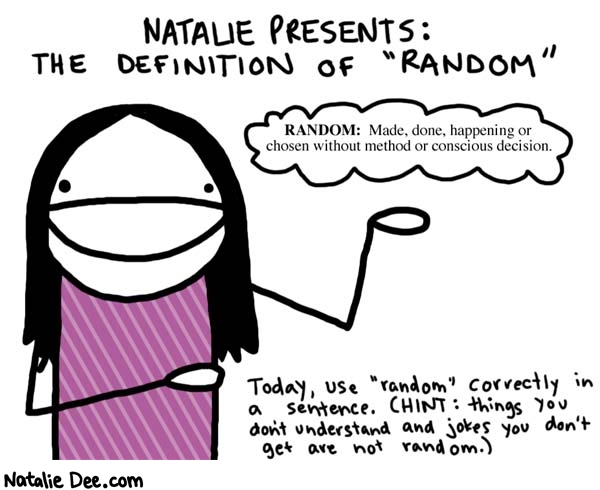
(For the record, I do know what random means. Honest.)

My big “duh” moment was realizing I had not listed Pooja Makhijani’s book Under Her Skin: How Girls Experience Race in America as part of our International Blog Against Racism Week. Of course, my list dealt with the fictional, but this is an important book, especially for me as a writer, as it sharpens my recall of trying to blend in, wishing for another name, another identity, another race, and enables me to recreate that longing and internal dissent within my characters, to address it honestly and write it through. Incidentally, this author also has an online article on Paper Tigers, a website which highlights young readers lit for the Pacific Rim and South Asian. You can find her piece on YA lit for South Asian teens and kids here. Also don’t miss Mitali Perkins’ piece, A Note to Young Immigrants.
~~~~~~~~~~~~~~~~~~~~~~~~~~~~~~~~~~~~~~~~~~~~~~~~~~~~~~~~~~~~~~~~~~~
Previously I’ve blogged about that YA “kernel of hope” thing that was pounded into my head during MFA days. Now over at Rosemary Graham’s blog, the question is being discussed: Must YA work have a happy ending? Polly Shulman postulates in the July 9 New York Times Sunday Book Review that that’s all YA writers do: make up tidy endings and moralize little lessons for YA readers to take away and ponder. Ms. Graham’s question, then, is do writers actually feel compelled to write happy endings through editorial pressure, etc.? And do readers of YA lit expect that happy ending?

Well, I know we were told that’s what YA lit is — stories about life, only told from a hopeful point of view. Of course, the stuff I read isn’t artificially hopeful… I tend to throw books across the room if they appear not to be heading towards a satisfying ending — and by satisfying, I don’t mean the girl always gets the guy, or vice versa. What goes up, must come down, is my take on the matter. If my author is manipulating reality, I get ticked off, and feel manipulated as a reader. A manipulated reader doesn’t read for long… they feel betrayed.

In many ways, writing is manipulating facts, etc., for the purpose of entertaining or enlightening your readers. And I agree that painting the world with nihilistic ashes is a depressing and somewhat self-defeating thing for a writer writing specifically for young adults to do. I don’t want my work not to have a lesson – because life is about learning things. On the other hand, I read enough didactic fiction growing up, and I know how offensive it is. Instead, I think my goal is to create fiction that creates level ground… so the reader can say, “Oh, my life is kind of like that, too.” And maybe the way the fictional character deals with things can be of some help to someone. Or not, you know? Either way, life provides no tidy resolutions, so let’s hope our art always imitates life.

A Big Ol’ "DUH!" and other random commentary

(For the record, I do know what random means. Honest.)

My big “duh” moment was realizing I had not listed Pooja Makhijani’s book Under Her Skin: How Girls Experience Race in America as part of our International Blog Against Racism Week. Of course, my list dealt with the fictional, but this is an important book, especially for me as a writer, as it sharpens my recall of trying to blend in, wishing for another name, another identity, another race, and enables me to recreate that longing and internal dissent within my characters, to address it honestly and write it through. Incidentally, this author also has an online article on Paper Tigers, a website which highlights young readers lit for the Pacific Rim and South Asian. You can find her piece on YA lit for South Asian teens and kids here. Also don’t miss Mitali Perkins’ piece, A Note to Young Immigrants.
~~~~~~~~~~~~~~~~~~~~~~~~~~~~~~~~~~~~~~~~~~~~~~~~~~~~~~~~~~~~~~~~~~~
Previously I’ve blogged about that YA “kernel of hope” thing that was pounded into my head during MFA days. Now over at Rosemary Graham’s blog, the question is being discussed: Must YA work have a happy ending? Polly Shulman postulates in the July 9 New York Times Sunday Book Review that that’s all YA writers do: make up tidy endings and moralize little lessons for YA readers to take away and ponder. Ms. Graham’s question, then, is do writers actually feel compelled to write happy endings through editorial pressure, etc.? And do readers of YA lit expect that happy ending?

Well, I know we were told that’s what YA lit is — stories about life, only told from a hopeful point of view. Of course, the stuff I read isn’t artificially hopeful… I tend to throw books across the room if they appear not to be heading towards a satisfying ending — and by satisfying, I don’t mean the girl always gets the guy, or vice versa. What goes up, must come down, is my take on the matter. If my author is manipulating reality, I get ticked off, and feel manipulated as a reader. A manipulated reader doesn’t read for long… they feel betrayed.

In many ways, writing is manipulating facts, etc., for the purpose of entertaining or enlightening your readers. And I agree that painting the world with nihilistic ashes is a depressing and somewhat self-defeating thing for a writer writing specifically for young adults to do. I don’t want my work not to have a lesson – because life is about learning things. On the other hand, I read enough didactic fiction growing up, and I know how offensive it is. Instead, I think my goal is to create fiction that creates level ground… so the reader can say, “Oh, my life is kind of like that, too.” And maybe the way the fictional character deals with things can be of some help to someone. Or not, you know? Either way, life provides no tidy resolutions, so let’s hope our art always imitates life.

IBAR: International Blog Against Racism Week

Thanks to fabulous YA author E.Lockhart for the heads up on this guerilla campaign to talk about/blog about/ or whatever about race.

It’s kind of funny … during my MFA days the question of race in writing came up over and over and over again. Could we as writers of whatever color or stripe slip into the lives of writers of other colors and cultures? We wrangled this topic as we chewed through novels by the old guard, the canon, who were writers of paleness who tackled characters found in Robinson Crusoe, characters like Uncle Tom and also Jim, from Huck Finn. We explored our discomfort with novels like The Bluest Eye, tested our perceptions of race and gender and kept asking. Finally, the answer emerged:

If you’re going to do it, do it WELL.

This seemed reasonable. We did not stop to question each other anymore as we embarked on our literary journeys. True, there were mostly Caucasian students at the school, who mostly wrote stories about Caucasians, which would possibly be sold in bookstores and read by other Caucasians, encouraging those Caucasians to write…a self-reinforcing circle, but there were glimmers. We were less afraid, now, to explore. And, we were merciless with each other: caricatures of race or gender, no matter if they were done by a person of said race or gender were usually shot down (as well as storylines with holes in the plots, and sometimes perfectly good stories if someone was in a sucky mood. Fortunately there weren’t many days like that.). These were good times, for the most part, and made us forget that the rest of the world isn’t really like that.

My agent was one of the first to remind me of the world outside the embrace of school. I wrote a novel which he admired and enjoyed, except that the character was biracial. He hemmed and hawed and finally asked me straight out if I were. (We’ve never met, as we have one of those bicoastal things going.) Were what? I wondered. He finally coughed it out… “Biracial.” I told him no. He seemed to relax. “If you’re plain old black, you should probably just leave your character that way,” he counseled me patiently. “It’s a fascinating topic, biracialism is, but it really just adds too much to your plot — it’s too burdened. I keep expecting her to deal with it sometime, and she doesn’t.”

Deal with it? I scrambled for a reply, telling him she could “deal with it” if he felt that was relevant, but adding that I only felt it worth a sentence or two. To me, it just wasn’t a big deal. Ironically, we heard from Hyperion Books for Children and the editor who reviewed it said that she loved that the character wasn’t hung up about being biracial. As a matter of fact, she called it “refreshing.”

My agent still wasn’t comfortable with it, and in the end, I took it out. Mistake? I don’t know. The character being biracial isn’t really germane to the plotline – changing it has had the impact of changing a character’s sock color, so it doesn’t so much bother me. There are so many other edits about other things that I did, the whole incident faded from my mind. It wasn’t that important, right?

The second novel my agent reviewed practically rocked him back on his bum. The characters were — gasp — CAUCASIAN!! How could I… What did I… How would he… I mean, he was really shocked. He kept saying, “But you did it well, you did it well,” as if I needed to be somehow reassured. I began to ask myself if a.) I was just weird, b.) my agent was a racist, c.) if my perception of race and writing was different from “normal people’s” (because that’s what we do: when in doubt, accuse ourselves of abnormalities). I was relieved that I wasn’t asked to change the characters, but my agent did suggest that I remove overt racism from the two adults. “They’re smarter than that,” he objected. And again, because I was making myriad other edits, it worked out better if their objections weren’t because of race. BUT. I am beginning to see a trend. My agent is Jewish, and the cultural history of racism is close to him as well. He seems to want to head me off from sort of ‘making waves’ in my writing. I’m not sure how I feel about that. Confused, mostly… I’ve dealt with people more ignorantly and blatantly racially biased as my characters in this case and I was a little surprised that he felt that was over-the-top. I’ve seen worse. I’ve heard worse. My partner’s parents told me we’d have “little ugly yellow children like O.J.’s” if we were ever to breed. My character wasn’t that over the top. But my agent was uncomfortable, and I do trust his judgment, so…

Understandably, writing about race is sticky and tricky because we’re all racially biased in one way or another. Certainly we’re culturally biased. I am biased against people who don’t use proper punctuation… if I see ‘your’ vs. ‘you’re,’ I automatically assume I’m reading the words of an idiot, not just someone who was in a hurry, isn’t good with punctuation or doesn’t have spell-check (which, incidentally, doesn’t really catch usage errors.). If I see people with saggy pants or using slang, or blasting music that shakes the asphalt, again, I assume that person has a certain level of education and intelligence that doesn’t necessarily measure up to mine. Humans make assumptions. What makes SMART humans is acknowledging those assumptions, and thinking again…

Have you ever felt that people expect certain things of you because of your race? I kind of feel like my agent expects me to write Black novels. My characters must always be having ‘the Black experience,’ whatever the heck that’s supposed to be. And I don’t know how to let them have it any other way than I’ve had it, which is surrounded by Caucasian and Latina and Asians, mixed and mingled in with plain old Life — that’s my experience. And I can only write my experience.

Two new novels in progress are both peopled primarily with African Americans, although one character is biracial Black-Filipino. I expect to hear something from my agent soon (eye roll, sigh), but I don’t think I’m going to change anything. Not unless he has a really good reason to say something. What makes me nervous now is wondering if my version of ‘the Black experience’ is authentic enough for him… for others. Crazy, crazy, crazy-making this is. I hate even having these thoughts. And I used to think that writing about religion would be the hardest thing I’ve ever done. But I’m going to keep what I’ve written, keep talking about this and thinking about this, and carry on. That’s my goal.

Don Tate, a Texas children’s book illustrator and author asked the question, “Where are the books for African American boys, those who fight off dragons; who defeat the bully; who spend their summer vacations bucking broncos?” Don was blogging about a dearth of books for boys of color, but I realize anew that there is a dearth of books for kids of color that has them involved in ordinary adventures. My every day life is not about forcing school districts to let me go to class or sit in the front of a bus. Mostly nobody’s life is like that all the time… so why do most books about people of color focus on problems like poverty and teen pregnancy and hypersexuality and drug abuse? Is that all writers can think of for people of color to do?

I came away from that blog with the thought that I have a lot of writing to do to create a balance against the ‘crack-baby’ books… to people the literary world with the characters I create, knew, and grew up with… ordinary Jills and Joes, people of color, and people of the dominant culture who. just. live.

And that’s my two cents during International Blog Against Racism Week. Join in the discussion on your own blog and then comment and post your link at Rilina’s Live Journal IBAR round-up. Think about it, talk about it, and thanks for listening.

Blog Against Racism Week

At E.Lockhart’s blog I read that it’s International Blog Against Racism Week, and though I’m late, I wanted to participate. Writers — especially writers of YA and Children’s Lit have to be really aware of the world that they live in, a world in which racism seems to be here to stay. It’s the world our readers live in, and so it’s relevant. There are many excellent historical novels that deal with racism in a certain time or place… Trudy Krishner’s Spite Fences, Christopher Paul Curtis’ The Watsons Go To Birmingham, Baseball Saved Us by Ken Mochizuki, Roll of Thunder, Hear My Cry and the other books in that trilogy by Mildred D. Taylor, Karen Hesse’s marvelous Witness, or many novels by Yoshika Uchida or Lawrence Yep come to mind) but I find the discussion of race as portrayed in modern fiction more engrossing. The reader isn’t expecting something as obvious as a white sheet, an interment camp, kristallnacht or burning crosses.

My favorite middle grade/YA books that deal with racism in a more modern world are, in order of no particular relevance:

The Moves Make the Man by Bruce Brooks, which is a fabulous mystery as well as a story about friends and their differences — and similarities.

*Iggie’s House by Judy Blume. This story still has such power to make me cry, even though I have read it over and over again.

* The Great Gilly Hopkins, by Katherine Paterson. Gilly learning to love people she thought previously were unlovable — herself included — make this a seriously tremendous book, and the language is really spot on. All of it.

Marie G. Lee’s If It Hadn’t Been for Yoon Jun, and Finding My Voice, are brilliant and painful to read, allowing us to see what reverse racism does to a person — hating yourself and who you are for what you are in opposition to the dominant culture in your school.

Chris Crutcher’s Whale Talk is my almost-favorite Crutcher novel… Definitely a tough novel; you cry, and you laugh, and you cry again as you do in all Crutcher novels, and though the story is dark, the glimmers of light throughout make the tears well worth it.

…doubtless there are MANY more novels, but these are just a few off the top of my head. Feel free to add to my list! And don’t forget to join in the discussion. Follow the directions at E.Lockhart’s and then link your blog here.