{fortress}

Under the ruins of a walled city
Crumbling towers and beams of yellow light
No flags of truce, no cries of pity
The siege guns have been pounding through the night
It took a day to build the city
We walked through its streets in the afternoon
As I returned across the fields I’d known
I recognized the walls that I’d once made
I had to stop in my tracks for fear
Of walking on the mines I’d laid

It’s Old School Friday! You know you remember this song from way back when. It was on autoplay when I was about sixteen, and my friend Molly was the world’s biggest Sting fan. She found him to be So Profound (insert eye roll), thus, she had a Sting song for every occasion. Funny how much our friends’ musical choices shape ours. I know many of the words to many of his songs by heart, even though I wasn’t the superfan. Ah, well. Sting’s largely disappeared from my world, except for a the albums left on Brainradio, one of which is Island of the Blue Turtles where this song, with its imagery of war and hearts, is found.

Anyone who has grown up with challenging parents feels the war thing a bit more keenly than most. If you grew up where voices were raised, objects were thrown or swung with astonishing accuracy – or lack of said – or if you could hear yourself breathe, from holding yourself so quiet and still, and felt like your room, in a closet, was your personal foxhole, you might know how confusing it is to wonder if …the war’s over.

And if I built this fortress around your heart
Encircled you in trenches and barbed wire
Then let me build a bridge
For I cannot fill the chasm
And let me set the battlements on fire

I used to laugh at how on Crash Course, John Green would occasionally address commentary to Me From the Past, the younger, undeniably dumber John Green who was the hapless soul who made non-logical conclusions, dork moves with girls, and in general was a git. My “Me From the Past” has never been quite so clearly identifiable a character, but she exists in my head when I think of my childhood. Especially when I think of my childhood as compared to now. Sometimes – and we all do this – we let Me From the Past be the narrator in our heads that tells Me in the Present how things are going to go down. Occasionally – frequently – my Me From the Past is just as full of dork moves and non-logical conclusions as John’s. She believes that nothing ever changes.

And, sometimes she’s right.

Negotiating a relationship with someone who consistently hurt you, consistently disappointed you, consistently told you that you weren’t good enough, smart enough, or worthy enough is tricky as hell. Now, smart money’s on people like my friend, A., who can just …not do that. She opts to have NO relationship with those family members. But, I … I have, quite frankly, guilt complexes, questions of “am I being a good person” and an inability to let go. Also, I don’t want to hurt anyone. The thought horrifies me.

(This is not, by the way, proof that I’m a good person. This is proof that I have a whisper of Machiavelli in my personality and want to retain the moral high ground at all times.)

Me From the Past stands ready, in the back of my mind, at all times. Me From the Past believes her job is to remind me of things – to supply dates and details, if necessary – so that I don’t make the same dork moves I did back then. That’s okay; I accept that she feels that’s her job. Me in the Present, however, likes to reserve the right to overrule her. And, that’s where the problem lies. How much do you overrule your past? How much do you ignore what you know as truth from situations you’ve already been in?

Then I went off to fight some battle
That I’d invented inside my head
Away so long for years and years
You probably thought or even wished that I was dead
While the armies are all sleeping
Beneath the tattered flag we’d made
I had to stop in my tracks for fear
Of walking on the mines I’d laid

It bothers me to be in my well-past-thirties, and still resentful about parts of my childhood. Our older relatives age; mine are nearing seventy. Some of those problematic people can show themselves to be lovely and affable now; storytellers, bakers of special treats, complimentary and, frankly, changelings that cause me tremendous guilt. Me in the Present wonders who these people are. Me From the Past reminds me that I know this version of these people, too. And that I’ve watched the rebounds happen over and over and over and over and over and over and over again. Me From the Past reminds me, as always, that it is best to feed these people with a long spoon. Me in the Present feels guilty and wishes she could shorten that spoon, get back within arm’s reach. This is troubling to both versions of my self.

Part of maintaining sanity is honoring Me From the Past enough to accept that her experiences are valid enough for Me in the Present to make decisions from. Me From the Past isn’t delusional. Me From the Past is young and goofy, yeah, but she is real and didn’t make overblown statements about what was, simply on a whim. But, sometimes, it’s not about questioning Me From the Past’s judgment entirely, though. Sometimes, it’s just wondering if Me in the Present can ever make the choice that Now is safe. If Me in the Present can ever say to Me From the Past “You can come out now. It’s safe to put your full weight down on your heels, and to not be prepared to run, because the land mines have all been collected.”

This prison has now become your home
A sentence you seem prepared to pay
It took a day to build the city
We walked through its streets in the afternoon
As I returned across the lands I’d known
I recognized the fields where I’d once played
I had to stop in my tracks for fear
Of walking on the mines I’d laid

And if I built this fortress around your heart
Encircled you in trenches and barbed wire
Then let me build a bridge
For I cannot fill the chasm
And let me set the battlements on fire

The one thing Me From the Past and Me in the Present agrees on is that, so far, not even the UN has managed to collect all the landmines after wars from sixty years ago. Nobody ever collects all the landmines after a war. And, you’ll NEVER KNOW ‘TIL THEY EXPLODE.

Is it discounting Me From the Past’s experiences to want so badly to believe in change? Me in the Present is always afraid of being looked on as a cynic… but sometimes, you are what you are.

I’m pretty sure someone wrote a YA novel about this…
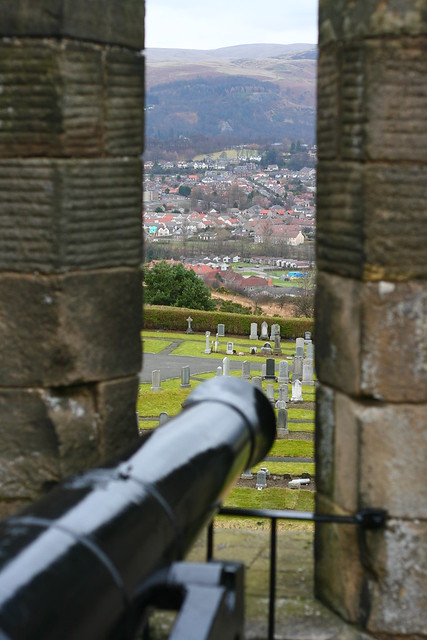
Stirling Castle 192

{Mills College YA Contest: the next “now”}

So, I’m one of the judges for the annual short story contest for my alma mater, Mills College, an urban liberal arts school which has a rich history (since 1852!) of educating women in the Bay Area. I’m the sole judge in the YA section, and I’m looking at graduate and undergraduate stories. Upper and underclassmen have to be judged separately, of course, and I realize I’ve been… stalling.

It’s funny – I don’t hesitate when I’m judging for the Cybils Awards, but somehow, knowing that these works are entirely unpublished, and that the writers are not just putting their words, but their hearts out on their sleeves causes me to …well, slow my roll a bit. In order to stop myself flailing, I’ve come up with the trick of reading the first paragraph of …all of them, in no particular order. And noting which ones stand out.

photo-8

I’ve never been a proponent of ALL of the writing rules – you know, “write what you know” “kill your darlings” blah, blah, blah. I’ve ignored the rules, the ones that talk about the first chapter/first lines, not writing in first person (or doing so), writing disconnected from the internet, use a thesaurus, always stop when you’re in an action scene and want to keep going — I’ve pretty well ignored other people’s maxims, and put aside their Artist’s Way, their Bird by Bird, their If You Want to Write. Not that these people don’t have a lot of good things to say – they do; they’re brilliant. But, I find that I’m generally paralyzed by good advice – because I cannot take it all. However! I am now learning that when one is creating short stories – or at least short excerpts – the rule about the first three-to-five sentences? Applies. For me as a judge, examining just those first few sentences or opening paragraphs really shortens the flailing period significantly. First sentences — first paragraphs, really — count. They arrest and engage, or allow you to look away. I don’t want to look away from something that’s grabbing me with rising stakes. Obviously, I want to know more.

However, it’s not a guarantee of a good story — not in any way. The writer still has to get through the middle and the end of the novel, after a sterling beginning. It’s a frequent argument, in my writing group, about where a story starts — and there are always people prescriptively – but lovingly – trying to suggest, “You know, I think you should start the story THERE!” as if the previous six chapters you’ve written are full of nothing much of importance (and hey – they might be) – so a first paragraph doesn’t mean I won’t get bored later, definitely not. However — it certainly ensures my interest now. And “now” is all you’ve got to hang onto. Until the next now. And then the next.

*goes back to reading about a missing sigil in a spell, and the ensuing shenanigans which will result*

{saying something}

“The social pressure on people of color to keep the peace, not get mad, just make sure everyone keeps having a nice time — even when we hear these remarks in public, at our workplaces and schools, in our own homes and from our friends’ mouths — can be overwhelming, bearing down on us in so many situations we do not see coming and therefore cannot avoid. What does our dignity matter, what do our feelings amount to, when we could embarrass white people we care about? When our white relatives or friends or colleagues might experience a moment’s discomfort, anxiety, or guilt?”

– Nicole Chung, The Toast

Sonoma County 21

When I read The Toast managing editor Nicole Chung’s hoilday-dinner-racism piece What Goes Through Your Mind: On Nice Parties and Casual Racism last week, I was especially struck by how well she articulated what seems to have been the central tenet of my childhood instructions: Be Nice, Make Nice, Don’t Rock The Boat, Ever. I concluded this past summer that these concepts were at the core of why my father was so hard on us growing up. Nicole wrote of her humiliated non-response to the situation in a way that resonated strongly with me, as she spoke about the tremendous residue this leaves, the immense pressure to keep things light, pleasant, and inoffensive for others who might be upset by our defending ourselves, or pointing out offensiveness. However, many readers were troubled by her response.

This morning when NPR’s Leah Donnella mentioned Chung’s piece in a CodeSwitch report on housing segregation and the legacy of everyday racial history in the U.S., she added her own experiences:

Reading Chung’s piece reminded me of a potluck I was at in Philadelphia last summer with my then-boyfriend, who is white, and his crew of white friends. I had gotten back from the beach a few days earlier and was several shades darker than usual. Everyone was busy gossiping about their summer adventures when one guy turned to me and asked, “So, did he realize you were black when he started dating you?”

In that moment, my instinct was to say something snarky (“Did he realize you were a doofus when he became your friend?”). But like Chung, I didn’t want to ruin a good time. So I laughed, poured myself a drink, and let everyone move on.

– Leah Donnella, NPR “CodeSwitch”

Because Tech Boy is white, and I am not, we frequently have discussions about this type of thing. When I shared the CodeSwitch piece with him, he said, “You know, this business of not making people uncomfortable? White people need to pick up the baton on that one. White people need to use their privilege to smack down the idiots, they’re too busy being ashamed, in those moments, of their whiteness. They need to do something.”

I agreed, of course, until he added, “Just a casual ‘Racist much?’ ought to do it.”

Them’s are fightin’ words. Calling someone a racist in a social situation, even as the person with privilege, aims a loaded, evocative, defense-triggering word at a half-open conversational door… and slams it, locks it, and nails boards across it. At that point, the conversation is over.

I’ve seen it happen on social media, in conversations, around books and lately in kidlit publishing: the minute someone starts swinging the word “racist” is the moment the issue is obfuscated. Like a squid spewing ink so no one sees it disappear into a crack, telling a person in company that they’re a racist leaves the issue unclear. It’s like throwing up a bucket of ashes — everyone is stained, everyone is blinded, and everyone is shouting and flailing at cross-purposes for a bottle of eyewash. You might think you’re schooling someone, to coolly call them out, that you’re standing up proudly and throwing down as an ally. But if you have any hope of actually creating a teachable moment, of changing a perception or behavior and empowering change and not just counting up verbal blows – I would try another way.

Pleasant Hill 153

I discussed this with friends who suggested questions as a good method of creating an opening. “The reporter could have said, ‘Do you think my boyfriend’s a racist, that my ethnicity would matter to him?’ or something like that,” one suggested. I might have even asked a more personal question, that if seeing the woman darker made the asker feel uncomfortable. That’s getting kind of messy, but then, I’m all about the deal-with-your-here-and-now Gestalt therapy approach when I’m defending someone.

“You know what,” another said, “if you were to write up a script & publish it out there, that would be nice. Just, Dear White Friends, When you hear some idiot being racist, please pick up the conversation and deal with it, because you’re operating from privilege whereas we of color cannot challenge because of x, y, and z. And then give a few examples of how to respond or to engage with people who’ve swallowed their feet. I think that would be a good contribution to the conversation.”

I kind of laughed, mainly because there’s already a Dear White People thing (website? book? movie?) which purports to inform people of how to behave toward people of color, and to my mind, those sorts of things only work conceptually. In reality, I am not the arbiter of race relations. Unlike Gee Dubya, I am not “The Decider” and should not be the one to set the narrative on interracial incidents. However, Teaching Tolerance has a lot of wisdom on the topic, and when I need to, I often check in with them.

Dr. Frances E. Kendall, author of Diversity in the Classroom and Understanding White Privilege: Creating Pathways to Authentic Relationships Across Race wrote a little piece called How To Be An Ally If You Are A Person With Privilege which others might find helpful.

Finally, Alternet has “11 Things White People Can Do To Be Real Anti-Racist Allies.”

The thing is, somebody needs to say something, but most of the time, none of us knows the right thing to say, and we’re so afraid of saying the wrong thing that we sit in shame – and say nothing at all. Which, especially if we’re a person of privilege, is just not ideal. Nobody has all the answers – and certainly no one person of any underrepresented group speaks for everybody – but we each of us has the responsibility – and the honor – not to swoop in and save the day, but to speak up, in good faith, for someone when they cannot speak up and be heard for themselves. In doing so, we will each try to look at the world through the lens of our privilege and of an idealized equality, and bring about more truly the dream of a just world. WE WILL SCREW UP, probably publicly. If we are wise, we will own it, apologize, listen better, and learn. And couldn’t we all benefit from that.


thanksfully 3.0 ♦ remnants}

Skyway Drive 328

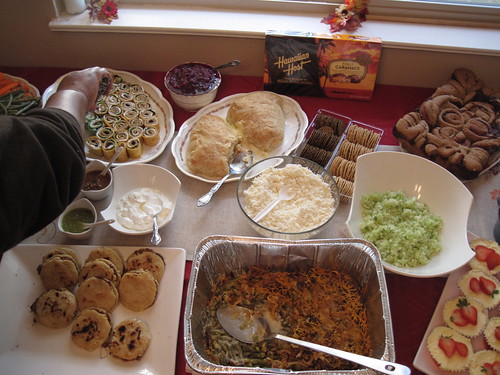
Leftovers, on every available surface. Odd pairings of foods that shouldn’t go together, but work because… you’re eating them. This week we’re happy to nibble on what’s left of Sunday’s feast. Because the sister’s surgery is Wednesday, I’m feeling a little guilty that she will be on water Tuesday until midnight, and then ice chips after that, but I’m grateful she had this feast when she could.

It is strange to look at this holiday from the vantage of already having had the main portion of it… and now to discover what else remains.

{thanksfully 3.0 ♦ art unexpected}

One of the wonderful things about living in a large city for five years was all of the civic art. There were brass plaques with bits of poetry, quotes etched in sidewalks in some obscure part of town, carved granite proverbs on the front of old buildings. Here in suburban California, we’ve got the odd mural, but in an old, old city like Glasgow there are plinths and statues, museums all over, the odd bit of stained glass in a hallway window of an old pub… art was just everywhere.

Glasgow Cathedral 30

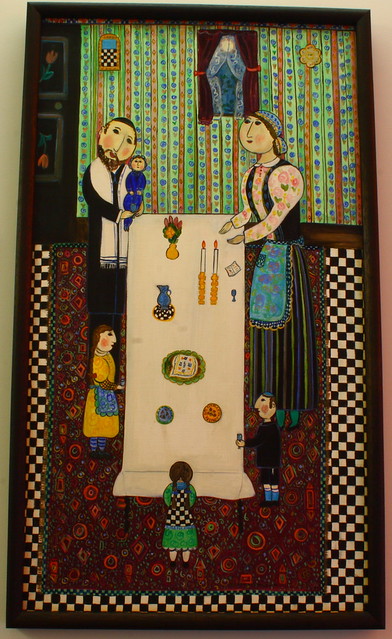
I love this painting. It’s called The Sabbath Candles, by Dora Holzhandler who was born in 1928 and died last month in West London. I didn’t know she was famous… I thought the painting was just a wonderful thing I’d discovered.

The description says, “An evocative painting, depicting the artist’s warm personal memories of a Jewish family’s traditional Sabbath meal.” I love this painting. I found it tucked away in a tiny gallery on the grounds of The Glasgow Cathedral, just on a walk one day, wandering the grounds to get out of the rain.

Important or obscure artists, “discovered” by nobodies. I’m grateful that beauty is all over, and that finding it makes us all equal.

{thanksfully 3.0 ♦ stuck that way}

Scone Palace 15

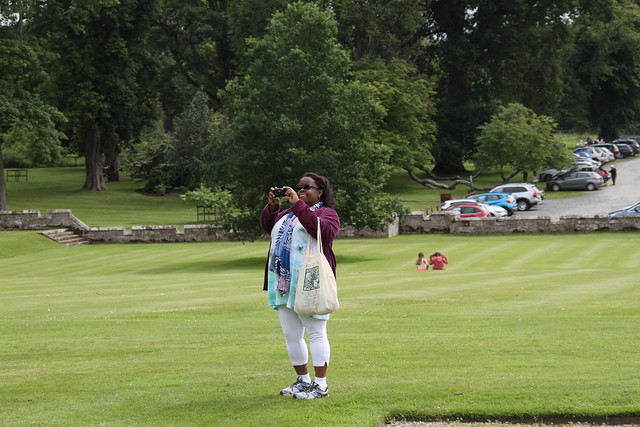
Remember when you were little and your mother said if you kept making that face, it would stick that way? Well, now you know that the face doesn’t stick, maybe, but the habit of MAKING faces… does. And I had no idea I do this when I’m taking pictures, and yes, indeed, I look completely ridiculous, but it was a lovely summer (never mind the jacket) afternoon I spent taking pictures of palaces and peacocks, walking the maze with Liz and the Weasels (which really does sound like a cover band). Today I’m grateful to own my dorky expressions and the lines I was once afraid they’d leave on my face – today I’m grateful to shrug and ask, “Who cares?” Because seriously: who does? And who says they matter?

thanksfully 3.0 ♦ continent, not country}

Blair Drummond 038

Africa is a stranger, even – especially? – to the African American; a dark blot on the page in history which signaled the *shameful Middle Passage; a claustrophobic “Dark Continent” of literature modeling colonialism; a shotgun shack porch onto which the awkward mixed child is tossed; a crowded box into which many are stuffed, stamped, Return to Sender; the place we’ve never been and aren’t sure we have the means to discover.

Africa is the uncomfortable sibling, the ignored twin, from whom too many of us wrest clothes and custom, accessories and art, rooting thoughtlessly, tossing her things without looking, without asking, without first knowing her, or her true name.

A continent, not a country. A continent not a country. Shall I say it again?

A choir of many voices, a volume with many pages, a series with sequel after sequel after sequel. Like us: original. Like us, similar. Like us.

Africa is…

Africa is.

New music I have sampled and surprised myself into tasting again, and again – African. New voices, poets I have discovered and rediscovered – African. Picture books! Fashion. Philosophy. Innovations. African. After years and years and years of turning away, of cringing discomfort, of outright shame, I am grateful today that of the many inner worlds which we inhabit, there is still something new to discover in the outer one, and that I have finally developed respect and affection for the continent from whence – even centuries ago, even not knowing the country code or address – I came.

This poem by Kenyan-born Somali poet Warshan Shire is popping up around the internet this week, and goes nicely with my thoughts about the ubiquity of African talent being noised about in the world which uses without acknowledgement of Africans.


what they did yesterday afternoon by warsan shire

they set my aunts house on fire

i cried the way women on tv do

folding at the middle

like a five pound note.

i called the boy who use to love me

tried to ‘okay’ my voice

i said hello

he said warsan, what’s wrong, what’s happened?

i’ve been praying,

and these are what my prayers look like;

dear god

i come from two countries

one is thirsty

the other is on fire

both need water.

later that night

i held an atlas in my lap

ran my fingers across the whole world

and whispered

where does it hurt?

it answered

everywhere

everywhere

everywhere.

The poetry of Kenyan born Somali-British poet, Warsan Shire, can be found on her blog and at her Tumblr.

*The “shame” of Africa in American history is that Africa’s presence was shown to many African American children ONLY in terms of colonialism. Africa was NOTHING but a place from whence came slaves, and of which there is no story but of amusingly naked tribal folk in thatched huts with innocently godless ignorance who barter cows for wives and can be bought, like tiny children, with bright pieces of worthlessness, of mindless violence, dire poverty and/or famine. That is a lie, and a source of shame to many black students and a missed teachable moment for EVERY student, and darn it, teachers, you must do better, no matter what curriculum you’re handed. < / rant>.

{thanksfully 3.0 ♦ work}

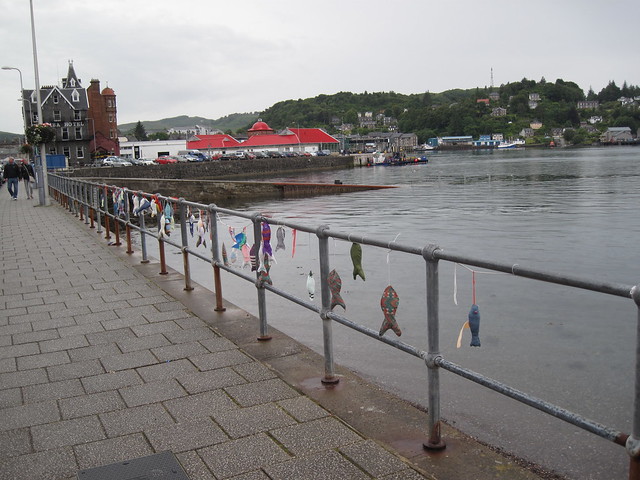
Oban 104

PALADIN OF SOULS, the novel which earned Lois McMaster Bujold both a Nebula and her fourth Hugo for Best Novel, has a moment in there where the main character, Ista, is resentfully realizing her life is at a standstill. It seems she’s been called to a place where her hands seem tied. “What am I suppose to do now?” she rages in the loosest of paraphrases. And the answer she receives is, “work.”

Today I am grateful for the things which occupy our hands when our hearts and our minds cringe from the news.

{thanksfully 3.0 ♦ keeping faith…}

3children4

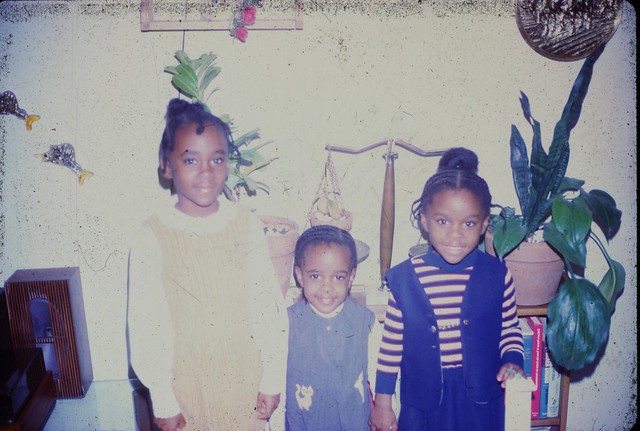
Monkey in the middle, with apologies to my siblings, who didn’t ask to be on my blog.

This photograph needs work, needs me to crop and center, balance the colors, sharpen the focus, maybe eliminate the age spots – but at the end of the day, it stands best as it is; a testament to times past and bad photography. (Also, can we talk about the set of scales? And the potted plants of Justice and Mercy? And what looks like either turkey legs or metal fish on the wall? What is with the preponderance of metal wall art of that time period?? Ah, the seventies. So much for which to answer.)

At three, I already had church shoes, church dresses, and carried a church purse. When I was dating Tech Boy, my mother sent him a snapshot of me at the age of two, red tight-clad legs crossed, felt Bible on my lap, feet clad in shiny patent leather, head tilted to listen attentively. (I think that was a less-than-subtle clue that I was a Church Girl. Read into Mother Actions what you may.) At that point, I already knew all the songs for my set, a great many of the stories, and The Reason we got up and got dressed early on a weekend morning when it seemed that no one else in the entire neighborhood had to move. I was raised in the church.

This week, I read a piece in Slate about the “Nones;” parents who want to raise their children “in faith” but who have abandoned their faith and just want to keep the connection. Not surprisingly, the desire for children raised with church seems to be a desire for mainly its customs. When so large a percentage of the dominant culture in America is either busy appropriating another culture, or denying the need for anything but a bigger melting pot, there is still an active minority with a deep and vibrant wish to enroll their kids into a history, a collective greater than their individual selves. They want them to share the same stories and songs, to know and to value the same aphorisms, to pick up and tie into a long abandoned, frayed and knotty cord which once bound us in a nostalgic, *largely imaginary “one nation, under God.” And for that, they’re willing to send them with grandma, and/or schlep them to synagogues and sanctuaries themselves.

It strikes me, again, what a disguised blessing not conceiving has been. From observing the deep cracks in the foundations of primary school education (oy, Common Core math!) to seeing the battle for control of speech and expression and belief on university campuses this week — I quail. I would be well out of my depth to guide any progeny through faith issues. I am reading the news of the day and trying to keep up, and can barely find greater comprehension for myself, much less for another, whose choices and experience would need to be curated and vetted. And yet, when she was far younger than my old self, my mother did do all the things I’m too troubled or anxious or uncommitted to do. She did raise me in faith.

Though our Venn diagram of beliefs have less overlap than they might, though any denominational tenets I disagree with I tend to …ignore in a ridiculous and thoroughly immature way, though I’m not sure I’m actually all that good at this organized religion thing, nor can I embrace the fiction that mine is any better than yours (except for those whose faith require sharing from door to door – as an anxious introvert, that wins the WORST), I’m here. I am here. I am part of a collective, greater than myself. I know songs that a lot of other people know, and have had the experience of believing whilst singing. I have, in a manner of speaking, the privilege of faith culture, though not a mega-church thing; we’re small and weird, and that’s okay, too. Religion, a cup with its cracks and crazes (or is that just crazies) and obvious flaws – is a graceful vessel which holds something life-giving, a thing which still has value if it teaches us to think deeply of what we do not understand, and to accept broadly that we never will, and may not need to do so. As a mile marker that points me “along a trail that’s rising always upward,” it shows me the path where others have gone before. And even when I don’t care to walk where or how they have walked, I am convinced this road has value. I am grateful for being raised “in the church.”


*Keeping in mind that the phrase “under God” was added to the declaration in the relatively recent past of 1954, and that neither civil rights nor civil liberties were established for anyone but white males at that point, we cannot possibly say the nation was “under God” then, nor is it now, as a democracy isn’t a theocracy. Thus, my description of it as “largely imaginary.” I don’t doubt that the Mayberry version of Christian American existed for someone somewhere, but not for the entire nation by any stretch.

{thanksfully 3.0 ♦ anxiety}

I actually had a less personal post in mind today, but at this moment, I am observing myself actively spin up (down?) into an anxiety …episode.

I’m going to talk about it, so should I say “trigger warning?” No? Okay: if watching other people melting down sends you there, LOOK AWAY. Visualize some calm, k?

I’m not sure that I can call what I go through an “attack,” as if it’s some vileness that comes from outside of myself, instead of this, in-house, home-grown variety. Panic, yes, that indeed is straight-up, blindsiding, wake-me-at-3-a.m. attack stuff, but for the moment, we’re not above DefCon 3, so it’s just anxiety.

Hah. “Just,” she says.

Anyway, so, I’m having A Thing, wherein I have nine half-started emails opening, twitchy muscles, a tapping foot, and am conscious of dwelling on how much cleaning has to be done before we can have people over, and the first of the holidays is immediately on the horizon, and I have shopping to do and food to prepare for the Sunday before Thanksgiving, and my brother’s birthday is coming the Saturday after Thanksgiving (what does he want?), and eldest sister’s surgery the day before Thanksgiving, and yesterday she told me what to do with her clothes in case she dies (a donation to ThredUP, if you’re interested; she thinks they’re amazing) and on a loop it crosses my mind that my niece is flat-hunting, and older sister is completely stressed out job-hunting, and there’s the usual family fol-de-rol and I’ve got stuff to do and I was going to go have another cup of tea, but maybe caffeine is not A Good Idea, because I can actively feel pressure, in my chest, over all of these things, and I started spot-cleaning the floor, which probably makes it just look dirtier, and I know I am dwelling on the cleaning thing, even though it is a random Friday morning well before the holidays and no one has died, and the likelihood of anyone dying this minute is very, very small, despite the fact that alive organisms die by minuscule degrees at all times, and there is nothing in the world the matter with this bright, bold autumn day, and I actually slept okay last night, but I am nonetheless spiraling down (up?) into this… nonsense.

Again.

Like the swing of a pendulum, like the shift of the tide, here we go and back, forth, and back again.

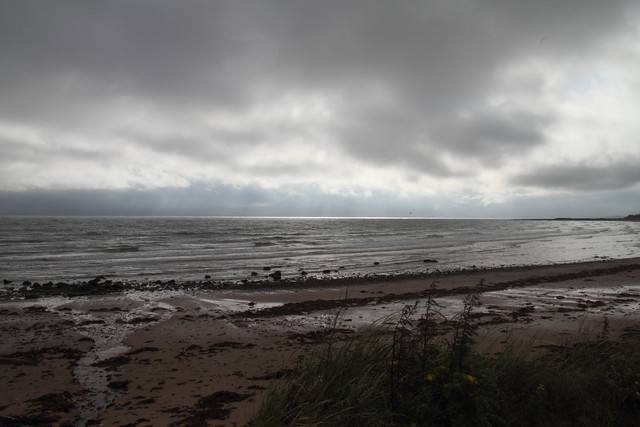
West Kilbride 16

Look at this calming, empty water. On the other side, Ireland. Somewhere.

What’s funny is that writing the above took me roughly four hours. What’s funny is during the above anxiety diatribe I had to get up and go into the entry way to pace and then I noticed that the summer hats were still on the hat tree in the entry way, and I needed to weed them out and just leave out the felt hats for warmth, but honestly, it’s still sunny and California so maybe not all the straw hats have to be packed away it’s not like I’m somewhere with serious weather like Nebraska, so I picked up five hats and put back three. And the hat tree is really dusty, and probably all of the hats, too, and I felt a hitch in my breathing and sure, I know people are coming to see me and aren’t judging me because this holiday is celebrating gratitude and the diversity of experience of coming to where we are in this country but every culture has cleaning and words for bad cleaners and did I say that we really need to do some cleaning before people can come over…?

On second thought, that’s not funny, that’s… me. There is no escaping ME. None. And in the midst of this, if I just think about writing, or doing anything which is, like, WORK, it’s like going through an intersection and being t-boned by a semi. So, I don’t go there, if possible. I breathe. I breathe. I breathe.

And, it will pass. Maybe now, maybe two hours from now, maybe two months from now, God forbid, two years. But, it. will. pass. It always does.

And, maybe you don’t get how I can be grateful for anxiety, and honestly, I do see where you’d wonder exactly how masochistic one would need to be to be grateful for this mess that is sometimes my brain. But, it’s my mess. It’s me, another in a long line of anxiety sufferers, yet unique from everybody else. Fearfully, wonderfully, me. Today, I’m grateful for all the anxiety and fracturedness that makes me who I am. I’ll take me, warts and all.

(Side-note: I meant what I said about that trigger warning; while you’re having an anxiety episode is possibly not the time to look up the symptoms of anxiety. Just a tip.)