{overweight & invisible}

Bets continues the conversation at the School Library Journal Blog.

Most of the time authors have little or no say in reference to covers — while I had the pleasure with HAPPY FAMILIES in seeing a cover concept I worked on with the book designer come to life in the hands of professionals, this is rare indeed. We have zero control, and can only say, “Yes, we like!” or “No, I don’t…” and neither matters, if marketing has had their say.

I always wanted Lainey to be a little more rounded. I hoped that for the paperback cover, we’d have another shot at that. There are so many beautiful round and curvacious girls — surely that was not the worry, of not finding a teen model pretty enough for the traditional YA Female Half Face cover? Thinking about it, Flavor of the Week, by Tucker Shaw was the first book I read about a heavier boy — and the cover copped out and showed a chocolate dipped strawberry. Fat Boy Swim depicts a swimming pool and the top half of a swim-cap wearing, goggled face, and K.L. Going’s most excellent Fat Kid Rules the World shows us a muddy sketch with half of body and a bunch of drumming equipment. So far, we can say the word — about boys, at least. But we still can’t bear to look.

In Middle Grade fiction, I think the last book I saw with an overweight character on the cover was … Judy Blume’s Blubber… and really, her unattractiveness stemmed from the aggressively ugly covers of the 70’s. Even then, through a series of at least six covers that Dell and Scholastic used, before settling on a whale motif, Blubber is never depicted as truly heavy, thus confusing the reader into the thinking mean girl Jill and her fellow hectoring classmates are either blind or of limited intelligence.

Post-Blubber, there seems to be nothing in terms of well-adjusted curvy girls and big guys in cover art. If the character is larger sized and happy, they seem to be either slimmed down so that they can star on the cover, or something like a car, a mirror, an article of clothing or equipment, or a piece of food stands in for them.

FOOD!!!!

We believe strongly that teens and young adults should be reflected in their literature. No, we do.

In YA and children’s lit, plus equals minus. Book designers can and will erase anyone outside of the dominant culture size “norm.” Please read Betsy’s piece and keep thinking about this. I believe it’s important.

{all of a size}

My bud Adrienne recently pointed me back to the February 2011 issue of The Horn Book Online. I should point out that I don’t get the HBM, but I get the little preview emails that come out to point me to articles, and I should have seen this article by Kathryn Nolfi long ago – but there really is just a lot in this world to read.

Nolfi’s piece on YA Fatphobia was a bit eye-opening. I hadn’t realized there was so much scholarship directed toward the research and exploration of sizeism in young adult and children’s literature, and I was glad to see it, as I would be glad to see any research toward dispelling other -isms. She talked a bit about how sizeism excludes, how teens and young adults as always, always, always need to see themselves reflected in their literature, so that they know that their experience is reflected in the larger world. She also mentioned specific books which she felt met the criterion for inclusive reading, while also pointing out some subtle pitfalls in books which were preciously considered to be size-celebratory. A closing quote in Nolfi’s piece adds:

“It is possible to write compelling and unsentimental stories for teens without casually insulting fat people, without relegating fat characters to the side, and without portraying fat teens as irretrievably damaged. To rely on the easy fat joke is lazy and oppressive writing. As the fat acceptance movement grows, I hope to see more positive and honest portrayals of diverse characters and less fatphobia and sizeism in YA novels.” – Nolfi, HBM, Feb. 2011

Reading this collided coincidentally with reading Marjorie Ingall’s piece On Fatness and Blackness, and the alleged correlation thereof in Ezra Jack Keats’ The Snowy Day, in which one critic complained that Keats made the child’s mother resemble an upholstered couch, drawing on the Southern “Mammy” ideology to correlate blackness with fatness. I have nothing but love for Keats’ work, and for that book in particular, so I found the idea somewhat shocking. Regardless of color, some Moms are heavy – especially when their kids are as small as Peter in The Snowy Day appears to be. Others, like my friend Jenny, revert to a slender silhouette promptly after the birth of each child. As Keats’ depiction could hardly be used to argue causation in terms of size, I was able to simply view the critical opinion as a warning consideration. After all, an author must always be on guard for any kind of sloppy thinking, as that’s where the most asinine of assumptions are made.

Initially, these two articles percolated through my mind in a thoroughly satisfactory manner. I was not exactly smug, but pleased with my own views, and though I perceived some bias in the first piece, in that she saw some lazy assumption-based prose where I had not previously considered it, I felt my thoughts would ramble along and reach a pleasing conclusion, and then I’d go on to something else.

But.

As always, I tried to apply my thoughts to my own work, and there I ran into a problem.
When I wrote A LA CARTE, I was in the middle of one of my endless excursions into dieting, thus writing about food was a lot of fun. Hey, if I couldn’t eat it, I could at least describe it in excruciating detail. Lainey’s mother complains to her that she doesn’t need to tax herself so harshly about food, as she’s a size fourteen woman of African American descent who, at sixteen, is pretty much done growing, and as far as her mother is concerned, is well-shaped and perfectly size. Lainey, however, can ignore her mother because — well. She’s just her mother, and aren’t they sort of paid to say nice things?

While I received compliments on ALC’s not making a big deal of Lainey’s race or ethnic culture, and for normalizing her vegetarian diet, no one said, “Gee, I wish you hadn’t made her obsess about her body and dieting so much. I know a lot of teens do it, and a lot of media makes much of girls of ethnic minorities having big bums, wide hips, and big busts, as well as being overall several sizes larger than their lighter-skinned counterparts, but did YOU have to go there? Did Lainey have to push herself until her legs were wobbly, and eat cheesecake when she just didn’t care anymore?” And to answer that, I have to say, “I could have done much better at evading stereotype.” Mea maxiuma culpa.

Much of what I wrote at that time was what I believed at that time: that people should always be striving to improve their bodies. Well. Either I have gotten a lot more lazy (could that be even possible?) or a lot more prosaic (more likely): I believe that people should be as strong and as healthy as they can be, period. If working toward that means people’s bodies change, so be it. If not — well. It’s not one of those correlation-causation things; sometimes if you’re strong and healthy, you’re still considered to be outsize of the societal ideal. My thoughts now are that if that’s true, one should become comfortable with oneself, because there are more important things to fuss about. (And really, if you start looking outward, you’ll see that more people in the world need your focus on things that don’t have to do with you, and your perceived imperfections. Look ahead. Look up. Look anywhere but at your own navel. This has been a Public Service Announcement.)

Fiction-wise, I believe that there are some enormous pitfalls inherent in writing characters who are both a.) female, b.) ethnically diverse and c.) young adults. In regard to desires and appetites – for food, for sex, for whatever else, girls are taught prudence and restraint. We simply aren’t meant to enjoy anything too much — if we like our food, we’re disgustingly fat heifers, if we like the expressions of our bodies — skeevy little sluts. Female characters are meant to be apologetic about their desires, as females in our society are encouraged to be.

Wow, am I against that!! And I’m sure you are, too, when it’s spelled out clearly in that manner. But things like that are often hard to see, hard to perceive. And we make mistakes.

For myself, I will continue to make my characters of all sizes and visible, and make an effort toward even greater varieties of person. I’m done with the mention of diets in reference to female African American characters. (I could even extend that to referencing all girls, period.) I’m taking a look at how I view weight, and plan to examine the idea of male characters and characters without an African American background having body types outside of the dominant norm. I’m still going to make mistakes… but I like the idea of going in with my eyes open, thinking.
{sometimes, you have to look at the whole, dumb list}

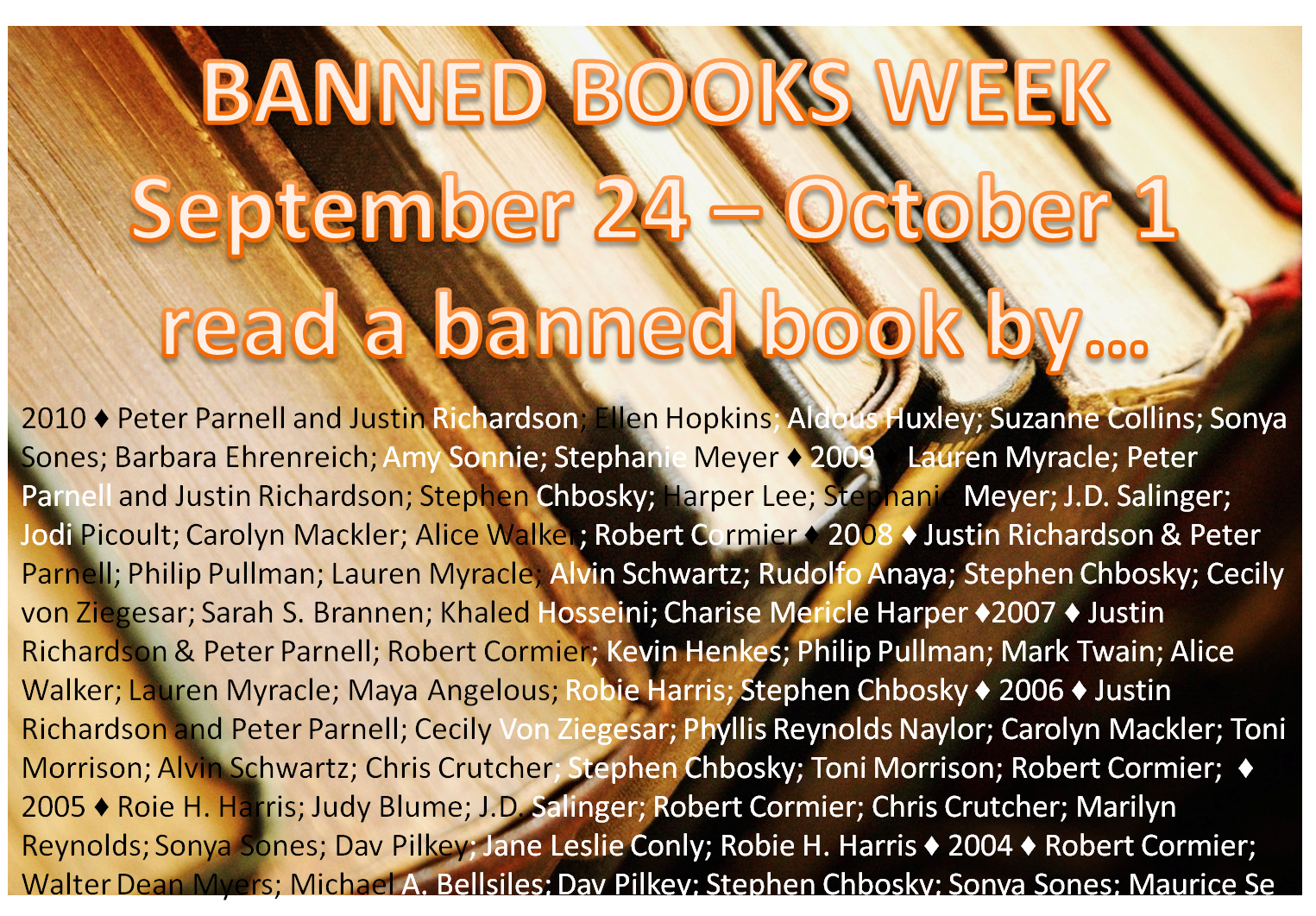
There’s a theme in this list, isn’t there?

Recurring names. Recurring books. Recurring ideas, which make the associated communities shriek with outrage.

A recurring issue, dealt with the same way every time, and held up for censure repeatedly.

Seriously? Time to get a grip.

And I say that with all intended kindness. I’m not a parent, but I can understand, I think, the urge to protect one’s child. The only issue there could possibly be with that is when one parent tries to fill that job for a whole community. Not going to happen — you take care of your kid, and I’ll take care of my imaginary kid. Teachers and librarians who find books offensive, in this better world I’m imagining, would remember that their job is to disseminate information, not to judge it, and they would act accordingly. School board members would read young adult literature, spend time with teens and tweens and Kindergartners, and be less afraid of what the world holds for the young, because they would know firsthand about their resilience and intelligence, and feel that they could trust them a little more. They could hold out books to them to read, with guidance. Maybe they could read along with them.

Man, I like my imaginary world.

Imagine.

{dear b&n}

Dear Barnes & Noble,

Honestly: thank you for the love. But HAPPY FAMILIES doesn’t come out until MAY. Is anyone seriously pre-ordering it this far in advance?????

Yours in utter bewilderment,

The Author

P.S. *I* just got the final copy for the cover image. I’m not allowed to show it yet. Once I see that you have it, all bets are off, mmmkay?

{a library is a gift}

Crisp air this morning. My breath steams out in clouds. And yet, the sun shines, and the sky is blueblueblue. Perfect autumn morning. Ahhhh.


Have you heard that Edinburgh book spaces are being gifted by a lovely artist? Someone is making book-and-paper sculptures and leaving them in libraries, book museums, and other public spaces — for the library staff and patrons. Poetrees, grammaphones, theaters, and more, these are fragile, exquisite, and look time-consuming… and they’re being freely given, and left around the city. Are they not beautiful? Surely, a whimsy-full world is a glorious thing.

Meanwhile, I’m in denial… I’ve answered yes to far more than four of the following questions…

– I have read fiction when I was depressed, or to cheer myself up.
– I have gone on reading binges of an entire book or more in a day.
– I read rapidly, often ‘gulping’ chapters.
– I have sometimes read early in the morning or before work.
– I have hidden books in different places to sneak a chapter without being seen.

– Sometimes I avoid friends or family obligations in order to read novels.
– Sometimes I re-write film or television dialog as the characters speak.
– I am unable to enjoy myself with others unless there is a book nearby.
– At a party, I will often slip off unnoticed to read.
– Reading has made me seek haunts and companions which I would otherwise avoid.
– I have neglected personal hygiene or household chores until I have finished a novel.
– I have spent money meant for necessities on books instead.
– I have attempted to check out more library books than permitted.
– Most of my friends are heavy fiction readers.
– I have sometimes passed out from a night of heavy reading.
– I have suffered ‘blackouts’ or memory loss from a bout of reading.
– I have wept, become angry or irrational because of something I read.
– I have sometimes wished I did not read so much.
– Sometimes I think my reading is out of control.

…which means that yes, I am at high risk for Literature Abuse.

You, however, may need to read on to find help and support. There’s all kinds of information here, including What to do if you suspect your child is becoming an English major:

– Talk to your child in a loving way. Show your concern. Let her know you won’t abandon her — but that you aren’t spending a hundred grand to put her through Stanford so she can clerk at Waldenbooks, either. But remember that she may not be able to make a decision without help; perhaps she has just finished Madame Bovary and is dying of arsenic poisoning.

Well, you know. These things happen.

Though the social costs are high, I refuse to go into recovery…

Hayford Mills 052

{Mare’s Girls, part of Women at War, in The Atlantic}

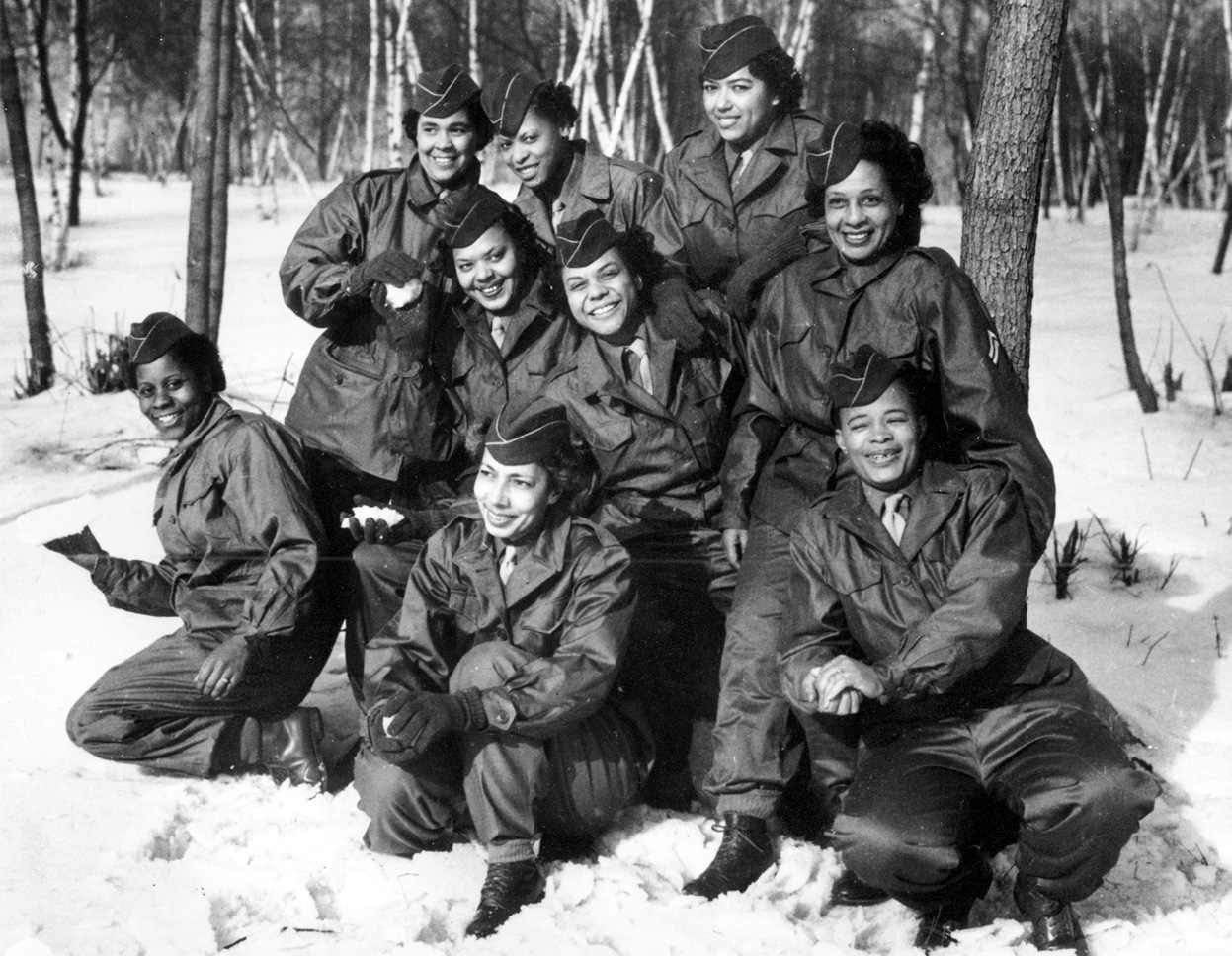
The Atlantic is doing a pictorial series on WWII, Women At War, and I was thrilled that they had a single picture of the 6888th at Camp Shanks — and one I’d never seen before!!

Members of the Women’s Army Corps (WAC) pose at Camp Shanks, New York, before leaving from New York Port of Embarkation on Feb. 2, 1945. The women are with the first contingent of Black American WACs to go overseas for the war effort From left to right are, kneeling: Pvt. Rose Stone; Pvt. Virginia Blake; and Pfc. Marie B. Gillisspie. Second row: Pvt. Genevieve Marshall; T/5 Fanny L. Talbert; and Cpl. Callie K. Smith. Third row: Pvt. Gladys Schuster Carter; T/4 Evelyn C. Martin; and Pfc. Theodora Palmer. (AP Photo, click to enlarge.)

In this photograph, I see Dovey, Ida, Ruby, Gloria and Peaches, don’t you? I could stare at these girls for hours.

DO check out the rest of the series; there are some real stunners in there, and you’ll learn things that you didn’t know. There are some scary ones, too; one that especially struck me was of a girl getting her head shaved — by men — for being an alleged collaborator.

Always intriguing, pictures like these, and they always resurrect the question in me: what would I do, in a world at war, were I called upon to take part? “All gave some,” as the saying goes, “but some gave all.” If necessary, what could I give?

Deep thoughts on a Wednesday.

Hat tip to Elizabeth Wein (check out the new website!) for the heads-up on the piece.

{a walk through the clouds}

Hayford Mills 046

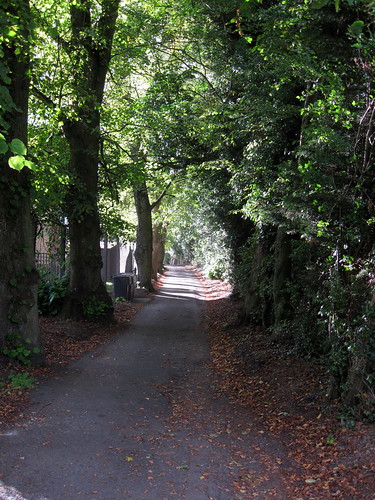
Well, since you won’t be dropping by anytime soon, I thought I’d take a wander with you through the neighborhood.

Technically, our neighborhood is on the outskirts of a small village which has five shops, a church, and a library.

Despite the fact that everything is organized alphabetically there — not by genre (aaargh!), I’m really excited about the library.

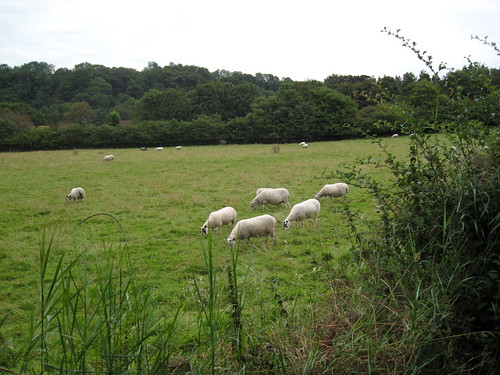
Not much happens in this wee town, but every day, the football players practice … soccer. (Well, they had to call it something, and I guess soccer didn’t occur to them.) The butcher calls and delivers waxed-paper packages to some households, and the post man makes his rounds with his red bag slung over his shoulder.

It’s quiet enough to hear chickens clucking as they announce their newest egg, quiet enough to hear the bleating of the sheep, and the shrieks of kids as they play on their scooters. (Oddly, the kids and the sheep at times sound a lot alike.)

Stirling 90

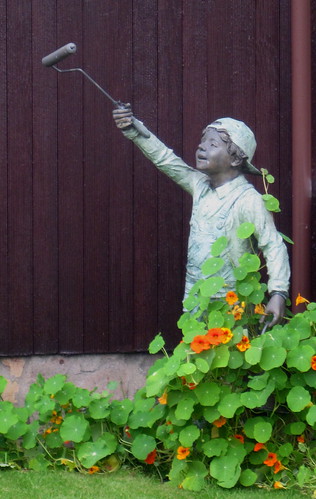
Ah, statuary. In our wee village, it’s EVERYWHERE.

In terms of wildlife, there are the cutest, softest looking, big-eyed bunnies, all sleek and swift, and shy. We’ve mentioned the sheep, and the chickens. Did we mention the spiders the size of East Anglia??? And that they occasionally come in the house, and appear bewildered as to why they are not welcomed? This is what it means to live… in the country. Or, at least across the path from great whomping swathes of countryside…

Hayford Mills 050

I can see these dudes from the kitchen.

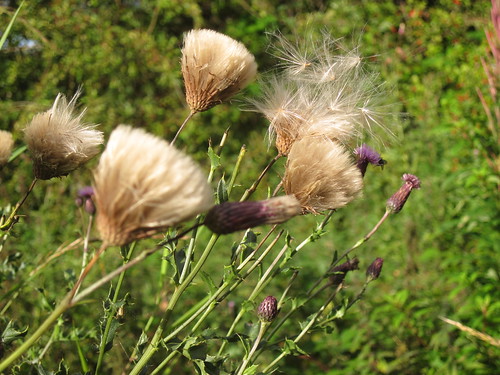
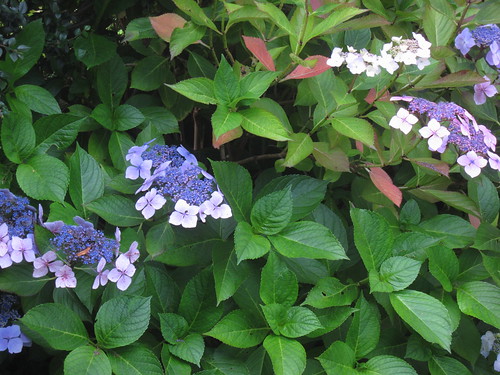
While elsewhere in the world, people are harvesting the last odd vegetables – in some cases, very odd, and the harvest still is ongoing, we are really feeling the sharp nip of cold at night — ALREADY — and gearing up for autumn. Unlike where we lived in the city, however, autumn here means windy, stormy weather, and just as frequent sunshine — sometimes mid-rain. The quality of light probably draws artists to this region — it’s amazing how the light changes… even the weeds are beautiful.

Hayford Mills 043

Okay, technically, this weed is also the national symbol of the country, but … it still grows on the side of the road, and in the cracks of buildings. That equals weed, yes?

I won’t apologize for not blogging much lately – I’m revising THREE NOVELS AT A TIME. One might think that doing that many at a time means that one isn’t doing anything very well… er, that might be true. (It also might be true that when I wrote them initially, I wasn’t this distracted. Will revising whilst newly moved actually work better? Will I ever find a way to begin a novel that includes only necessary information, and not a lot of fluff? Will I keep being sent back to the woodshed on this?? Only time will tell…) Things are kind of chaotic at present, but I really need to get things sent out to publishers before the inevitable work stoppage of the holiday season. We’ll see if I finish it all. Meantime, very busy on the weekends as well, still trying to organize the closet to my satisfaction, tidy the garage, catch up on cooking and laundry, and enjoy the season.

Stirling 87

And really, no matter how stressed I sound … I am enjoying the season. The spiders, not so much.

Until the workload settles a bit, I remain,

Crazy. Busy.